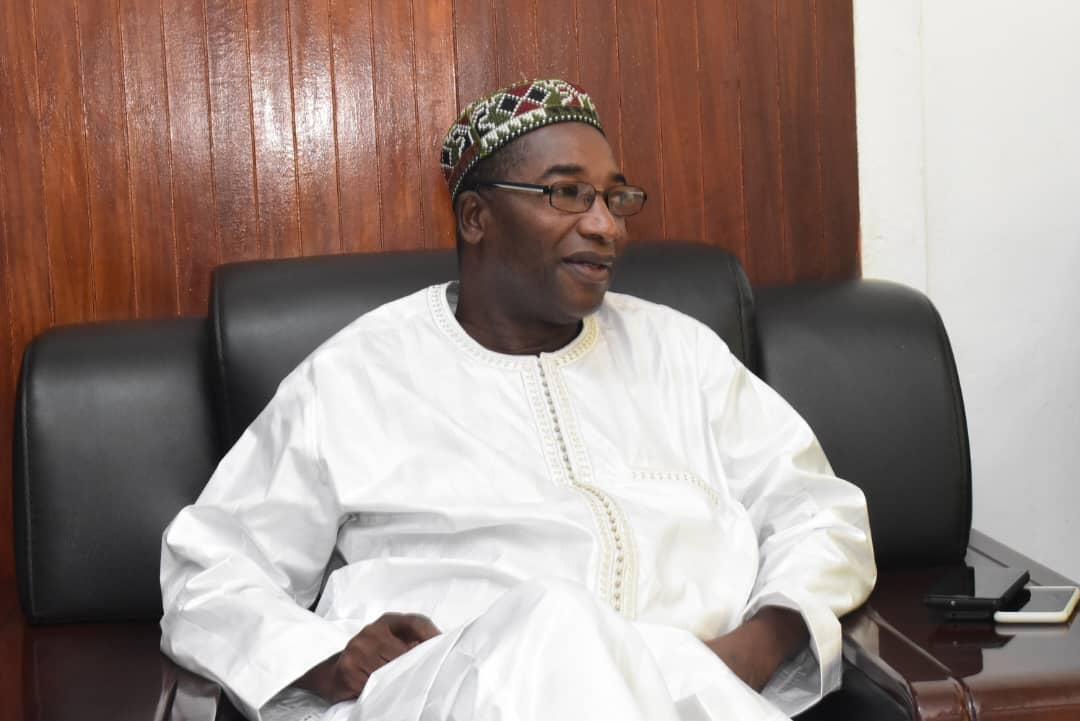
Former Permanent Secretary at the Ministry of Finance and Economic Affairs and ex-Deputy Head of Mission to Guinea-Bissau, Lamin Camara, has sharply criticized the government’s handling of fuel prices, calling for an immediate reduction in the fuel levy and for bold austerity measures to ease the burden on citizens.
Camara challenged the authorities’ claim that they subsidized fuel by D500 million in April and May while simultaneously collecting D16.00 per liter in revenue. “You are taking D16.00 per liter as revenue and still telling us you subsidized about D500 million for the months of April and May. How much revenue did you collect in the two months from the same fuel sales?” he asked. “This action is simply taking from the same source you claim to be subsidizing.”
Camara proposed a practical alternative: reduce the levy from D16.00 to D6.00 per liter, which would immediately lower pump prices by D10.00 per liter. He argued that any resulting revenue shortfall could be offset through strict fiscal discipline rather than passing the cost to consumers.
Among his recommendations is reinstating a strict vehicle policy to maintain a small fleet for essential government operations. He also called for drastic cuts in fuel allocations and allowances, citing examples from the Ministry of Agriculture where a minister’s fuel allocation reportedly stood at D40,000 plus an additional D15,000–20,000 from the CPCU. “If this still exists, such ministers will not feel the suffering of the masses,” Camara said. He warned that similar practices across sectors were draining the national budget.
The former senior official further advocated streamlining numerous uncontrolled agencies, commissions, and centers by merging them with parent ministries to reduce subsidies. He urged a comprehensive review of recurrent expenditure, particularly entertainment budgets, vehicle maintenance costs, and government travel. “Be strong with the government travel press release,” he said. “This takes a lot of government funds. Imagine a minister traveling twice a month with first class and a per diem of 300 pounds.”
Camara stressed that these austerity measures would neutralize the impact of lower fuel revenue without derailing fiscal operations. He warned that failing to act now would prove more costly, as higher fuel prices would drive up the cost of essential commodities, increase NAWEC tariffs, and worsen the livelihood of ordinary Gambians amid unpredictable economic risks.
“Now that we are in a very difficult time… a revisit of the budget is critical,” he added. Acknowledging the political difficulty of austerity, Camara urged boldness: “In difficult times like this, one should boldly face it.”
His comments come as many Gambians continue to grapple with the effects of the recent fuel price adjustment, reigniting debate over fiscal priorities and relief for citizens.