By Momodou Gagigo
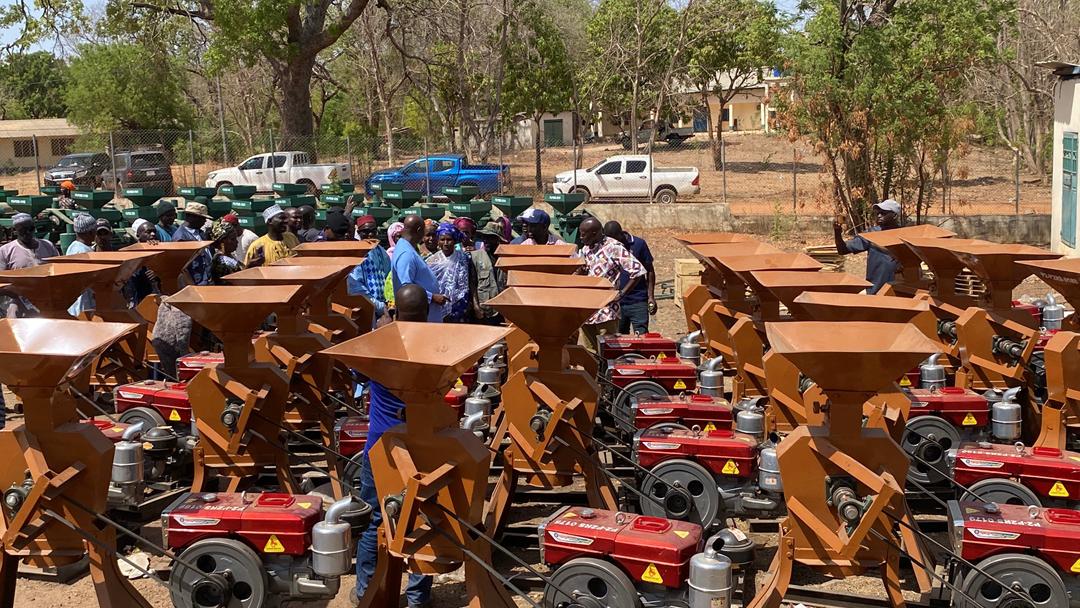
After years of frustration, farmers in Saapu are finally seeing renewed hope and optimism as the P2P2RS initiative brings modern post-harvest processing machines directly to their communities.
For generations, farmers in this part of the Central River Region have battled significant challenges after every harvest season. Without suitable machinery, they depended almost entirely on labor-intensive manual methods to process their produce. These traditional techniques proved not only time-consuming but also highly inefficient, resulting in substantial post-harvest losses. Much of the harvest would spoil before it could reach the market, forcing farmers to sell whatever remained at rock-bottom prices. This cycle severely undermined household incomes and threatened the overall livelihoods of entire communities.
The arrival of the new processing machines under the P2P2RS project marks a turning point. The equipment is designed to handle key post-harvest activities more efficiently, reducing waste, preserving quality, and increasing the market value of local agricultural produce. By bringing the technology to farmers’ doorsteps, the initiative eliminates the previous burden of transporting raw materials long distances to distant processing centers.
Ebrima Boye, one of the beneficiaries, could hardly contain his excitement. “This support has come at the right time,” Boye said. “For a long time, we have been struggling after harvest. With these machines, we can now process our produce faster, reduce losses, and earn better income for our families.”
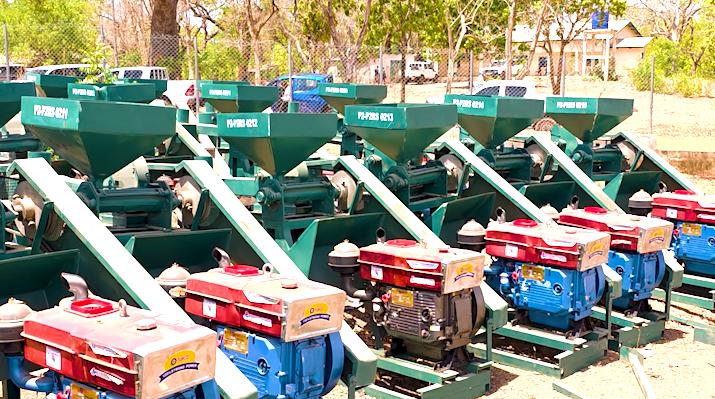
Community leaders have also hailed the intervention as a major boost to local agriculture. They believe that reliable access to modern processing tools will not only raise productivity but also inspire more young people to take up farming as a viable and attractive career.
Ansumana Njie, Director of Programs at P2P2RS, explained the project’s rationale. “This is part of our plan to make livelihoods easier by empowering farmers with post-harvest processing machines that address their practical, everyday challenges,” Njie said. The initiative focuses on strengthening rural economies by providing tools that deliver immediate and tangible benefits on the ground.
Agriculture Minister Demba Sabally urged the farmers to make the most of the opportunity. “The government has played its part. Now it is up to you, the farmers, to use these machines for their intended purposes and take good care of them to ensure they last,” Sabally told the gathering.
Officials expect the intervention to create a lasting impact in Saapu by improving food security, raising household incomes, and building greater economic resilience. As farmers prepare to put the new equipment to use, many are already anticipating a shift from subsistence farming to more sustainable and profitable agricultural enterprises.
The development has injected fresh energy into the community, with residents expressing confidence that this support will help transform agriculture in the Central River Region for years to come.