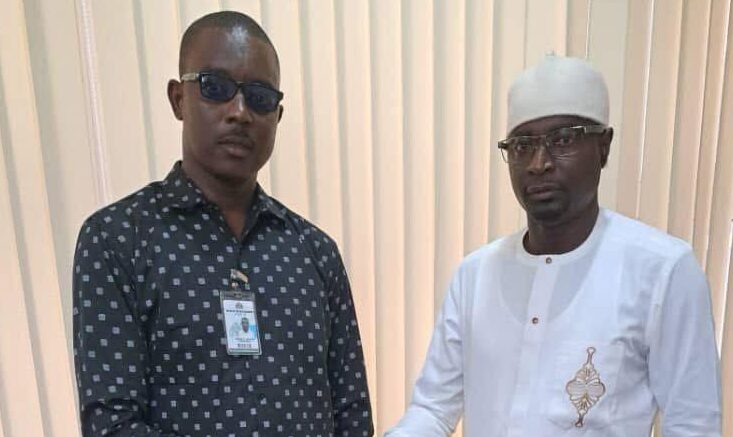
A bitter public exchange has erupted between National Assembly Deputy Speaker Seedy Njie and former GRTS journalist Omar P. Jallow, centering on a leaked audio recording that has ignited accusations of tribalism, abuse of power, and political interference in The Gambia.
The controversy began after What’s On Gambia published a leaked audio purportedly capturing Njie in a private meeting with elders from Niamina, including Jallow’s father. In the recording, Njie is heard making remarks about the Mandinka ethnic community, questioning promotions based on ethnicity, and claiming influence over appointments and dismissals at state institutions, including blocking Abubacarr Darboe’s appointment as GRTS Director General and opposing the advancement of a Mandinka official allegedly linked to the opposition UDP.
Jallow, who reportedly lost his position at GRTS amid the fallout, has come forward strongly, accusing Njie of orchestrating his dismissal through undue influence. In a detailed response statement released on social media platforms, Jallow dismantled Njie’s earlier defense, arguing that the Deputy Speaker failed to deny the audio’s authenticity and instead focused on self-preservation.
“I have taken note of the statement issued by Deputy Speaker Seedy Njie,” Jallow wrote. “While he attempted to portray himself as a victim of misinterpretation, his own statement and apology reveal a different reality.” He emphasized that Njie’s admission and apology confirmed the remarks, dismissing claims that public outrage over tribalism lacked basis. Gambians, he said, could judge the recording for themselves.
Jallow criticized Njie’s apparent preoccupation with how the scandal might affect his standing with President Adama Barrow, suggesting the response prioritized “damage control and self-preservation” over genuine remorse for offending thousands of Gambians. He also alleged a pattern of victimization, claiming many from Nianija had reached out privately to share similar experiences of Njie’s “divisive approach to politics.”
The journalist highlighted inconsistencies in Njie’s account of a visit to Sare Gainako, where warm hospitality was extended. Despite acknowledging the reception, Njie reportedly left abruptly without notice upon learning that Kanifing Municipal Council Mayor Talib Ahmed Bensouda had been invited. Jallow portrayed this as evidence contradicting Njie’s self-description as a “unifier and peacemaker.”
Particularly damaging was Jallow’s reference to Njie’s claim of intervening to prevent his full dismissal from GRTS. “He failed to explain… on what legitimate grounds I could have been dismissed in the first place,” Jallow stated, raising concerns about undue influence and lack of professionalism in public institutions.
Calls for accountability have grown. Jallow urged President Barrow and authorities to take disciplinary action to protect national unity. He reaffirmed his commitment to peace, justice, and equality regardless of ethnicity or affiliation.
Njie has previously issued a statement expressing regret and attempting to contextualize his comments as misinterpreted, while denying broader tribal motivations. However, the audio’s release has drawn widespread condemnation from opposition figures, civil society, and citizens, with some demanding his resignation as Deputy Speaker.
The saga has amplified existing debates about ethnic politics, media freedom, and accountability in public office in post-Jammeh Gambia. As the war of words intensifies on social media, many observers worry it could deepen divisions ahead of December polls.