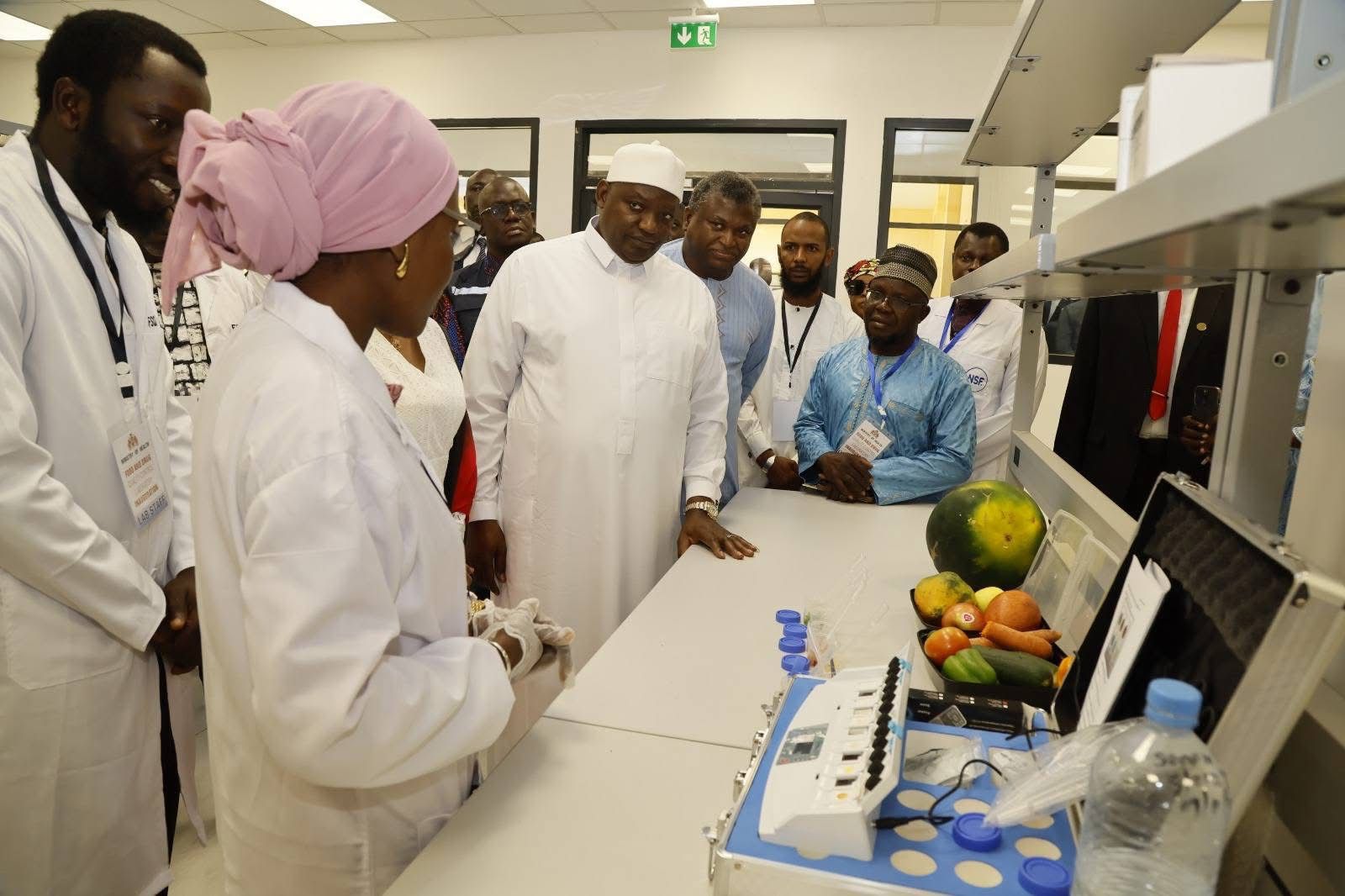
President Adama Barrow on Saturday officially commissioned the country’s inaugural National Food and Drug Quality Control Laboratory, a landmark achievement designed to strengthen public health safeguards and consumer protection across The Gambia.
The state-of-the-art facility, funded by the World Bank and implemented by the Ministry of Health, represents a major milestone in the government’s National Development Plan “Yiriwa.” Speaking at the inauguration, President Barrow described the laboratory as a concrete step toward building a resilient, self-reliant, and prosperous nation.

“A healthy population is central to our development agenda,” the President said. “Citizens must consume the right mix of foods and have access to safe, effective medications. This modern laboratory, equipped with advanced technology, will enable us to detect harmful elements and bacteria in foodstuffs and medicines, ensuring higher standards of safety for all.”
President Barrow urged the business community to view regulatory compliance not as an obstacle but as a pathway to sustainable growth. He pledged continued collaboration with manufacturers, importers, and processors to ensure consumer goods meet required standards before reaching the market.
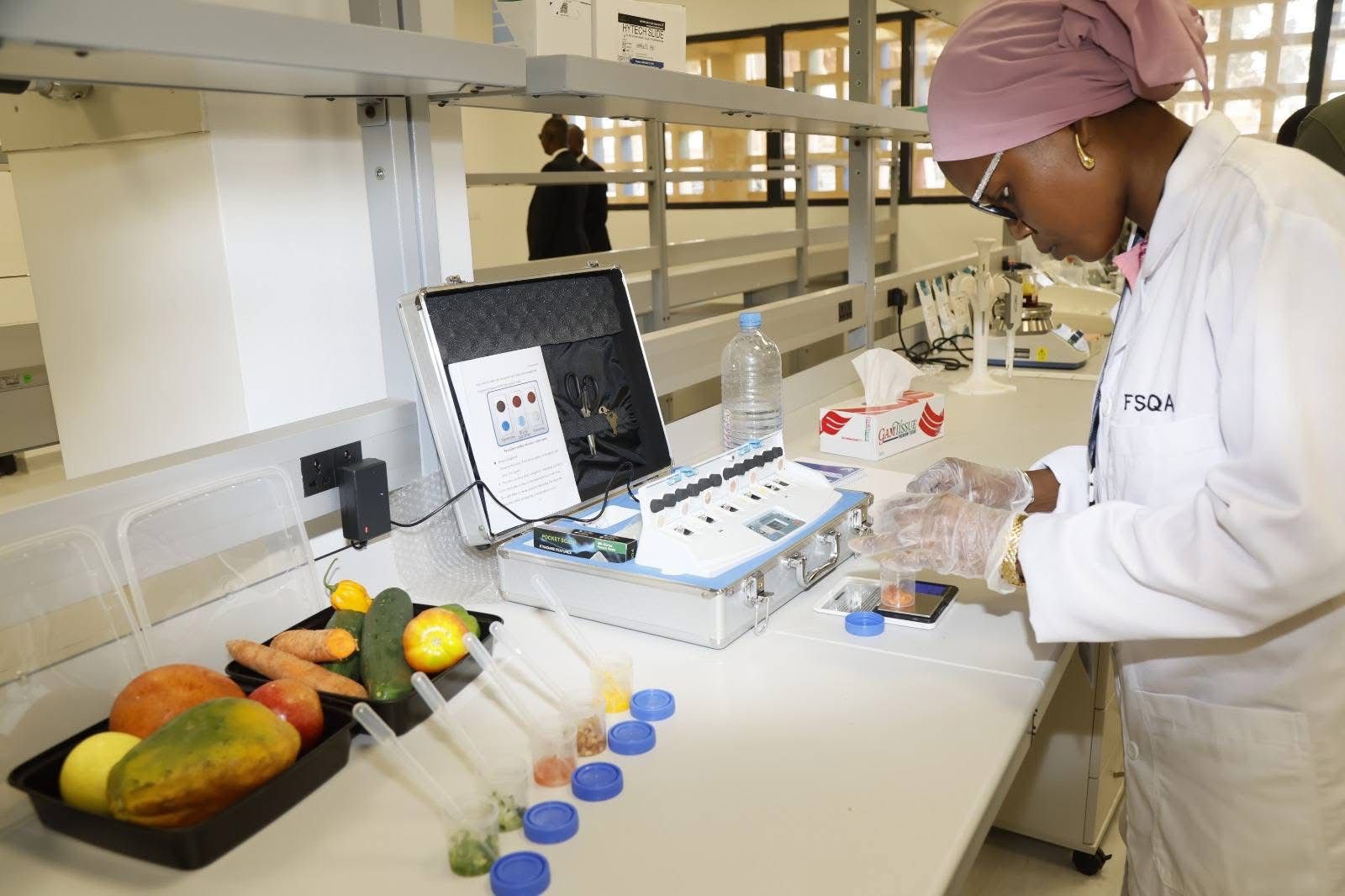
The President expressed profound gratitude to the World Bank for its financial support and commended the Ministry of Health for the successful execution of the project. “The Gambia will no longer depend solely on foreign laboratories to verify the safety of our medicines and food,” he declared. “We will test them here, certify them here, and protect the citizens and residents of our country.”
Strategically located in Brusubi in the West Coast Region, the laboratory enjoys easy access to major population centres experiencing rapid growth. Officials believe its proximity will enhance efficiency in routine testing and emergency response.
The establishment of the National Food and Drug Quality Control Laboratory underscores the government’s commitment to public health sovereignty. It marks a significant stride in reducing reliance on external verification systems. Health authorities say the facility will play a pivotal role in safeguarding Gambians against substandard and counterfeit products while supporting local industry standards.