By: Kebba Ansu Manneh
The Gambia Standards Bureau (TGSB) has unveiled a comprehensive new strategic plan to strengthen quality infrastructure and support every sector of the national economy, from agriculture and tourism to industry and trade.
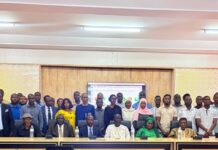
Dr. Ernest Aubee, Chairman of the TGSB Board of Directors, announced the initiative during the official validation workshop of the 2026-2039 Strategic Plan held at a local hotel in Banjul. He emphasized that the long-term blueprint is designed to cover all facets of the Gambian economy, ensuring that standards keep pace with rapid private-sector growth.
“Our economy is expanding. From 2010-2011 when this Bureau was established… we have seen a lot of industries coming up, a lot of investors in the agricultural sector, in the service sector, even in tourism,” Dr. Aubee said. “It is therefore necessary that the Standards Bureau also lives up to its responsibility by ensuring that the strategic plan covers all aspects of the Gambian economy.”
Since its inception, TGSB has developed over 500 standards across multiple sectors. The new plan, according to Dr. Aubee, will serve as the definitive roadmap for quality infrastructure, standard setting, and conformity assessment, directly contributing to the country’s economic transformation. He highlighted major government investments, including the electricity and lighting laboratory in Abuko and the newly inaugurated national food and drug laboratory, as critical assets for the Bureau’s effectiveness.
The Board Chairman also noted growing international confidence in The Gambia’s quality systems, citing recent high-level visits from the International Organization for Standardization (ISO) and the Organization of Islamic Cooperation (OIC). He urged all stakeholders to collaborate in refining the draft document. “Validation meetings give us an opportunity to be professional, to be frank and open… We cannot afford to have a substandard document that is unacceptable,” he stressed.
Director General Papa Secka described the strategy as one that creates value for customers, suppliers, partners, and employees while remaining firmly rooted in the Bureau’s results-oriented culture. The plan includes clear goals, objectives, actions, targets, indicators, and a robust monitoring framework. It aligns with The Gambia’s National Development Framework, the African Union Agenda 2063, and the United Nations Sustainable Development Goals.
“Cognizant of everything in the Gambia Standards Bureau Act and the experiences and feedback from our stakeholders… we now have clarity in our goals and objectives,” Secka stated. He added that the strategy will enhance the value of Gambian products and services, drive conformity assessment, and support national priorities including consumer protection and sustainable development.
Permanent Secretary at the Ministry of Trade, Regional Integration and Employment, Lamin Camara, described the validation exercise as a significant milestone. “The strategic plan we are here to validate will not only guide the Bureau’s work over the next… years, but will also strengthen its capacity to effectively fulfill its national mandate in standardization, conformity assessment, metrology and consumer protection,” he said.
Camara emphasized that standards are strategic instruments for economic transformation and international competitiveness. “In today’s increasingly integrated global economy, countries compete not only on price, but also on quality, safety, reliability and compliance with international standards,” he noted. He added that a strong national quality infrastructure helps businesses access regional and global markets, attract investment, and build consumer confidence—priorities that are especially vital as The Gambia pursues export diversification, industrialization, and deeper integration under the African Continental Free Trade Area (AfCFTA).
The validation workshop brought together stakeholders to review and strengthen the draft plan before its final adoption, marking another step toward positioning The Gambia as a competitive, quality-driven economy in the region.