By Fatou Dahaba
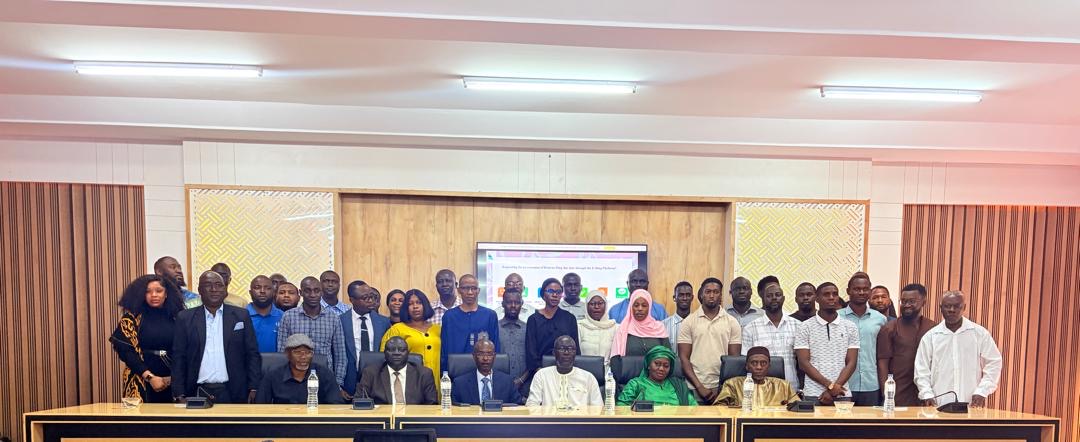
The Gambia Revenue Authority (GRA) has taken its ambitious digital tax reform drive to the heart of the country’s financial services industry, convening insurance companies, microfinance institutions, and foreign exchange bureaus for a high-level sensitization workshop on the Integrated Tax Administration System (ITAS).
The one-day engagement, held as part of a broader rollout strategy, aims to transform how taxpayers register, file returns, make payments, and access services—making compliance simpler, faster, and significantly less costly.
Deputy Commissioner General Essa Jallow, who opened the session, emphasized that the reform represents a fundamental shift in how the GRA operates. “We at GRA do not want to sit in our own quiet corners, plan, design and execute programmes and projects that, at the end of the day, are not entirely for GRA,” Jallow said.
He stressed the importance of involving taxpayers from the earliest stages so the final system is practical, user-friendly, and widely embraced. “Gone are the days when such treks should be made. It should be such that at your convenience, you get all that wherever you are,” he added.
Jallow described ITAS as a dual-purpose platform designed equally for tax administrators and the businesses they serve. “If you look at this system, there is a component that relates to GRA in terms of our day-to-day work as tax administrators. But there is a whole lot that has to do with the taxpayers, because without the taxpayers, the existence of GRA is meaningless,” he noted.
He urged participants to provide candid feedback. “Bring your input so that they are aligned, so that as we are going on, we are building and we are improving. By the time we deliver the final product, it will be a final product that all of us will embrace and all of us will celebrate.”
Samba Sallah, Project Manager for ITAS, reinforced the collaborative approach. “We want your inputs and your understanding to be embedded in the system from the start, so that once the system is completed, it will not be a GRA tax administration system. It will be a tax administration system for the whole Gambia,” Sallah told the gathering.
The Integrated Tax Administration System is funded by the World Bank through the Ministry of Finance, with the GRA as the implementing agency. Officials say the platform will modernize tax administration, reduce compliance burdens, and improve overall efficiency.
Participants were actively encouraged to ask questions and share ideas that could refine the system’s design ahead of full nationwide rollout. The workshop forms part of an ongoing stakeholder consultation process that will extend to other sectors through continued sensitization and tax education campaigns.
The GRA’s digital push comes at a time when many African revenue authorities are embracing technology to widen the tax net, curb leakages, and foster greater transparency. For Gambia’s financial institutions, the successful implementation of ITAS could mark a new era of seamless interaction with tax authorities while supporting broader economic development goals.