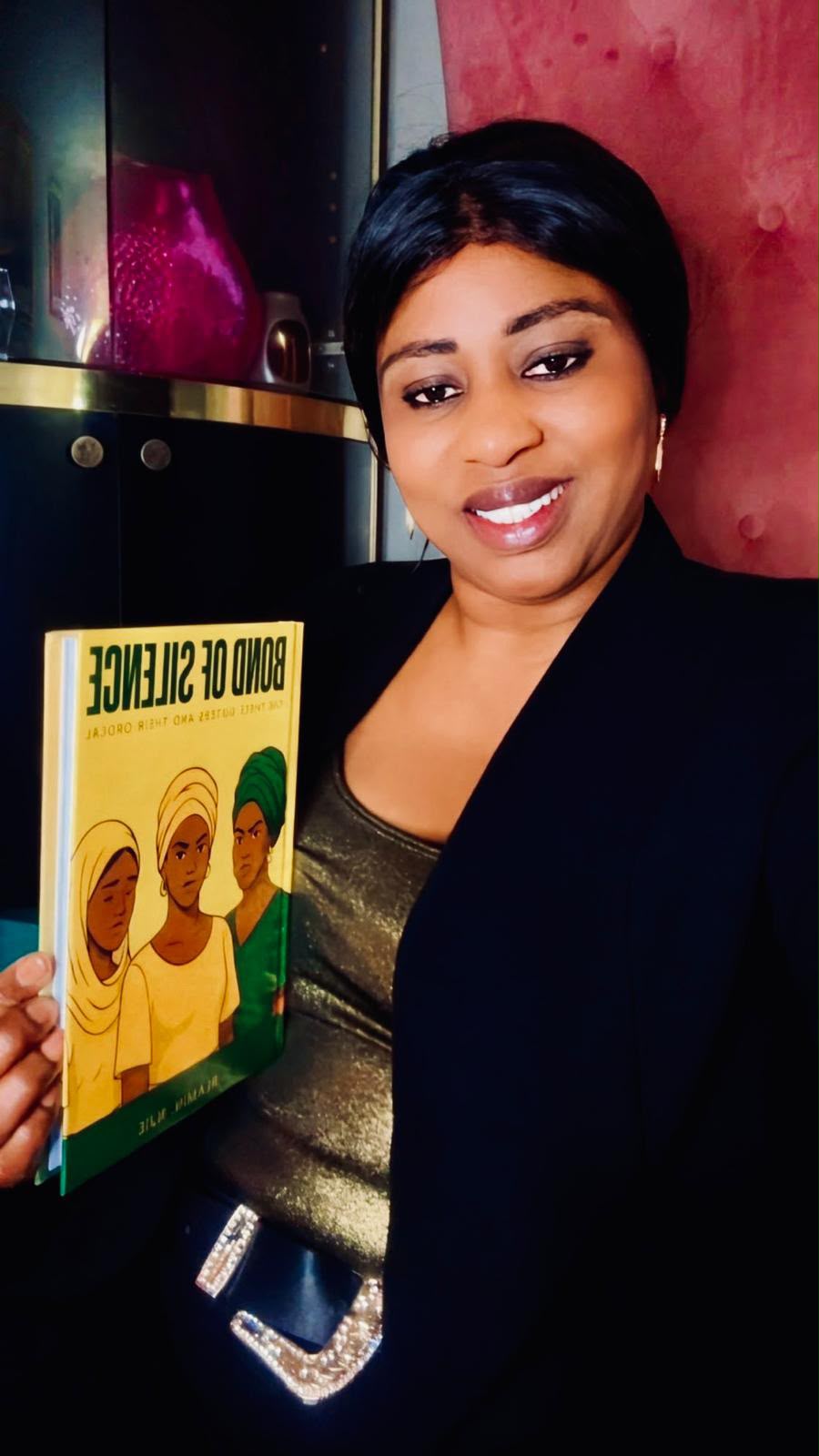
Rohey Lamin Njie, a Gambian immigrant, author, and advocate living in Charlotte, North Carolina, is bringing her powerful story of trauma, resilience, and hope to one of the world’s most visible stages.
On September 21, 2026, she will host a special luncheon and book launch for Bond of Silence: The Three Sisters and Their Ordeal in Times Square, aiming to transform private pain into a public call for change.
Njie moved to the United States seeking a safer, more hopeful future for herself and her family.
Adjusting to a new culture while raising children and building a life was challenging, but the freedom she found in Charlotte helped her discover her voice. “Living here helped me realize that I could use my freedom not only for myself, but also to speak for women and girls who are still suffering in silence,” she said.
Growing up in The Gambia, Njie experienced a society where family and tradition mattered deeply, but painful practices affecting women and girls remained unspoken. Female genital mutilation (FGM) was treated as a private matter survivors were expected to endure quietly. For years she carried her own experience in silence. Becoming a mother, particularly to a daughter, shifted everything. “I could not bear the thought of my daughter or another young girl experiencing what my sisters and I endured,” Njie explained. That realization propelled her to confront the past, write her story, and advocate for others.
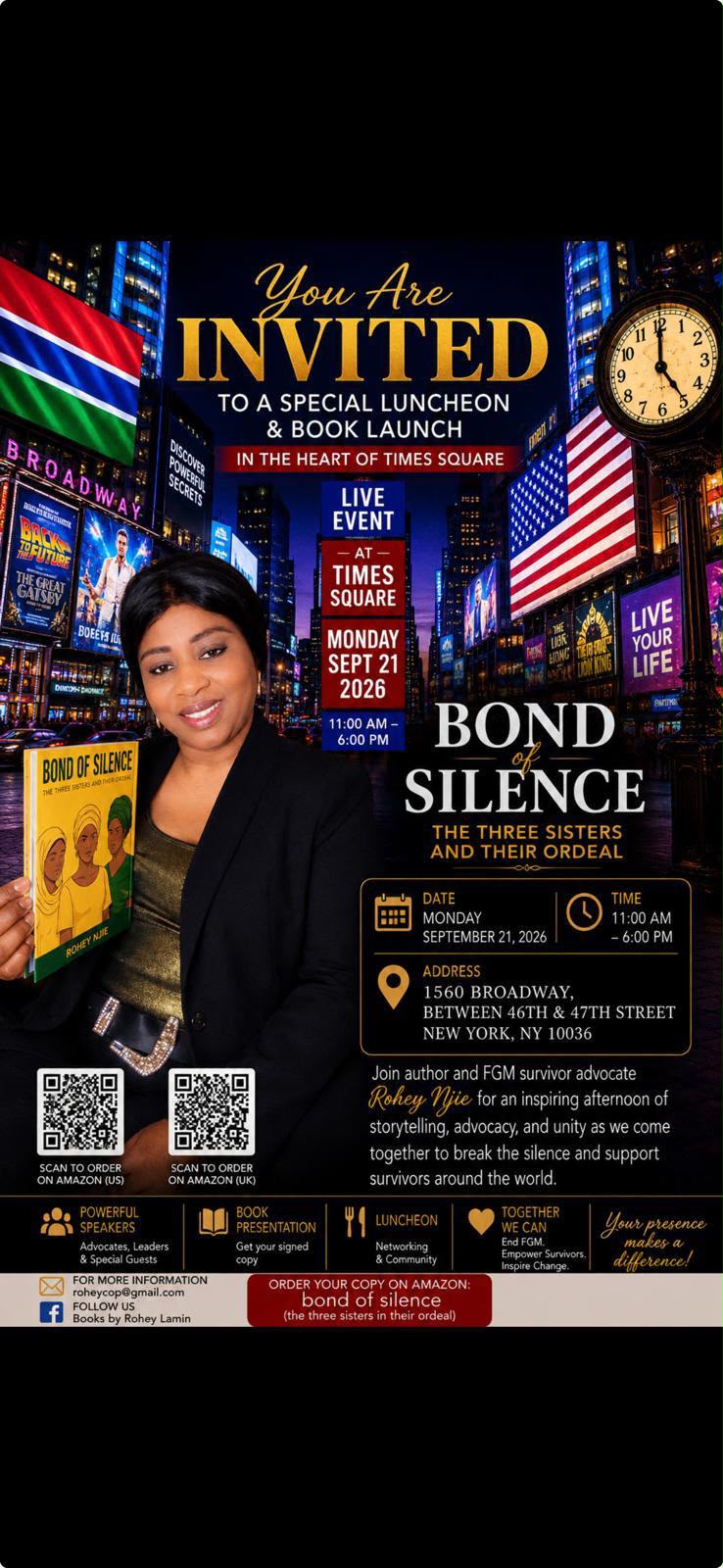
Bond of Silence centers on three sisters whose ordeal reflects the experiences of many families touched by FGM, trauma, secrecy, fear, and cultural expectations. Though presented as storytelling, the narrative draws deeply from personal experiences and observed realities. “I wanted to give language to experiences that are often hidden and to show the emotional, physical, and psychological consequences that can continue long after the original act,” Njie said.
The title captures an unspoken agreement within families and communities, forged by fear, shame, loyalty, and pressure to remain silent. The sisters are bound not only by blood but by what they endured and were expected to keep secret. Breaking that silence, Njie emphasizes, is essential because healing cannot begin while pain stays hidden. “Silence protects harmful practices, while honest conversation can protect future generations.”
Writing about such trauma proved emotionally demanding. Njie paused when memories resurfaced, allowing time for reflection, prayer, and rest. She approached the subject with dignity and compassion, stressing that her goal is not to attack her culture or country. “I love The Gambia and value many parts of my heritage. My purpose is to challenge a harmful practice while respecting the humanity of everyone involved. We can love our culture while still having the courage to change traditions that cause harm.”
As an FGM survivor advocate, Njie wants diaspora communities—including those in places like New York—to understand that the practice is not a single childhood event that fades away. Its physical, emotional, psychological, and sometimes medical effects can last a lifetime. Moving to a new country does not erase the trauma; survivors need compassion, culturally sensitive care, and safe spaces free of judgment.
Living in Charlotte’s diverse community has shaped her approach. Advocacy, she believes, requires education, listening, and partnership with survivors, parents, young people, community and faith leaders, healthcare professionals, and policymakers. Lasting change comes not through condemnation alone but through explaining harm, challenging misinformation, and supporting healthier ways to celebrate culture and womanhood.
Njie hopes the book becomes a voice for survivors who have not yet found their own words. “I want every survivor who reads it to know: ‘You are not alone. What happened to you was not your fault, and your life is not defined by your trauma.’” If it prompts one parent to protect a daughter, helps one survivor begin healing, or encourages one community to question a harmful tradition, the book will have served its purpose.
Launching in Times Square holds special meaning. The iconic location represents visibility and the power of being seen. “This is bigger than launching a book. It is a public declaration that survivors will no longer be invisible,” Njie said. She hopes attendees leave with a deeper understanding of FGM’s lifelong impact, renewed hope, and recognition that everyone has a role—whether educating others, supporting survivors, protecting girls, or simply listening with compassion.
To other Gambian or African immigrants carrying similar experiences in silence, her message is clear: “You are not alone, and you do not have to carry your pain in silence forever. What happened to you does not take away your dignity, your value, or your right to live a joyful and fulfilling life. Speaking does not mean betraying your family or rejecting your culture. Sometimes speaking is how we protect those we love.”
After the launch, Njie plans to take the message further—speaking at schools, universities, conferences, and human-rights forums. Through Breaking the Silence Projects, she aims to create safe spaces for survivors via conversations, mentorship, workshops, and partnerships. Her long-term vision is a world where no girl is harmed in the name of tradition, and every survivor has the chance to heal, speak, and live freely.