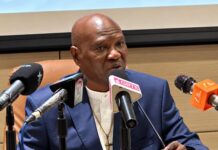
The United Democratic Party says it will continue objecting to questionable voter registrations through the courts, arguing that protecting the integrity of The Gambia’s electoral roll is not hostility toward immigrants.
The party said the 2026 Supplementary Voter Registration and Revising Court exercise is underway. UDP officials said their legal and electoral teams identified serious concerns about the authenticity, eligibility, or how some national documents may have been obtained. They described the objections as a lawful use of the Independent Electoral Commission’s calendar, which provides for challenges, appeals, and hearings before Revising Courts.
Party lawyers have presented evidence in several cases. Courts have upheld several of the UDP’s objections. In some hearings, the evidence has raised questions about how certain individuals obtained Gambian national documents, including voter cards, and whether those documents were secured specifically to vote despite doubts about eligibility.
UDP leaders insisted the issue should not be framed as anti-immigrant sentiment. “There is a fundamental difference between respecting immigrants and allowing people to be improperly documented or used as electoral instruments,” the party said. It maintained that every person deserves dignity, fair treatment, and access to lawful processes under Gambian law.
Some members of the UDP legal team are providing pro bono assistance to individuals who appeared as defendants before the Revising Courts. Where circumstances suggest a person may qualify for naturalization or another form of regularization, the party said they should be helped to pursue that path through the proper authorities rather than left in legal uncertainty. Gambian law already provides routes to citizenship by registration and naturalization, subject to statutory requirements.
The statement also addressed political hesitation. UDP officials said some actors may avoid electoral objections for fear of being labeled “anti-immigrant.” The party rejected that framing. Its concern, it said, is not a person’s origin but whether the law was followed and whether the electoral process was respected.
UDP leaders warned against recruiting, documenting, or granting political rights to people solely to influence an election and then abandoning them afterward. That approach, the party argued, exploits vulnerable individuals and undermines public confidence in national institutions and the electoral system.
The party summarized its position as three linked principles: protect the integrity of the vote, respect the dignity of every individual, and treat everyone according to the law. Those principles, it said, are not contradictory; they are essential to a functioning democracy.
UDP says it will keep pursuing legitimate objections in court while supporting lawful regularization for people who may have been caught in questionable documentation practices and who appear eligible. “Democracy requires both an honest voters’ register and respect for the rights and dignity of every person,” the statement said. “We believe The Gambia can and must uphold both.”