
By: Fatou Dahaba
Tobacco taxation can reduce smoking and raise government revenue at the same time, but only if it is backed by firm enforcement and sustained spending on public health, the head of the Gambia Revenue Authority said this week.
Yankuba Darboe, Commissioner General of the GRA, made the case at a stakeholder meeting organized by the Public and Environmental Health Association of The Gambia at the Sir Dawda Kairaba Jawara International Conference Center. The gathering examined the link between non-communicable diseases and tobacco taxation under the theme “Non-Communicable Diseases and Tobacco Taxation: Aligning Fiscal Policy with Public Health.”
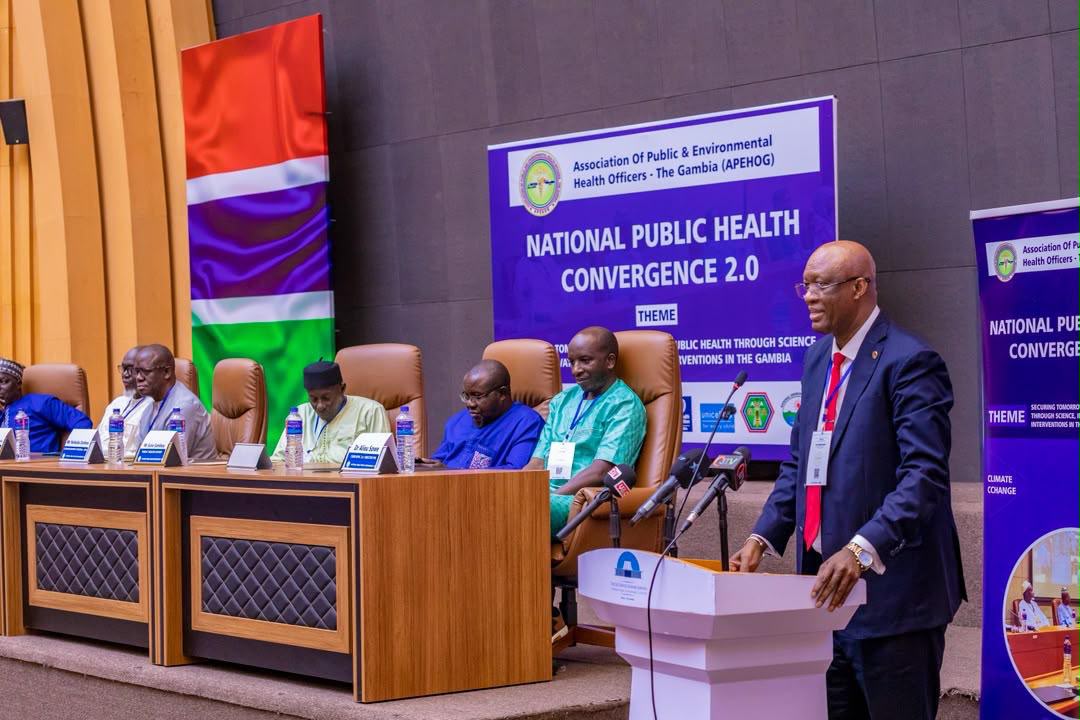
Darboe argued that tobacco tax should not be treated simply as a revenue tool. Unlike most taxable goods, he said, the policy aim is ultimately to shrink consumption of the product even while the state collects duty on what remains.
“We want the revenue, but ultimately, we want less of the product that generates that revenue,” he told participants. Success, he added, should be judged by whether fewer young people start smoking, whether existing smokers cut down or quit, and whether the burden of tobacco-related disease on the health system declines.
He reviewed The Gambia’s tax reforms. In 2013 the government replaced a largely weight-based structure with a specific excise of D5 on a pack of 20 cigarettes. That rate has since risen to D45 per pack, and the environmental tax and Tobacco Control Levy have also been adjusted.
Citing World Health Organization data, Darboe said the changes produced clear results. Tobacco import volumes fell from about 1.12 million kilograms in 2012 to 0.44 million kilograms in 2016, a drop of nearly 60 percent. Over the same period, government revenue from tobacco rose from roughly D155.32 million to D420.06 million.
“That experience teaches us that we do not necessarily have to choose between protecting public health and mobilizing domestic revenue,” he said.
He cautioned, however, that higher rates alone will not hold if enforcement is weak. Illicit cigarettes can undercut both revenue and health goals by flooding the market with cheaper, unregulated products. Darboe pointed to the Digital Excise Stamp now applied to cigarettes and other excisable goods as a practical response. The stamps, he said, improve authentication and traceability and should be seen as a public-health measure as well as a revenue-administration tool.
He also pressed for the money raised from tobacco taxes and levies to be put to a clear purpose: funding tobacco-control programs, prevention campaigns, public education, surveillance and enforcement. Without that link, he suggested, the fiscal gains risk being detached from the health objectives that justify the tax in the first place.
Darboe called for closer coordination among the Ministry of Health, the Ministry of Finance and Economic Affairs, the GRA, the World Health Organization and other partners so that tax policy continues to serve both health and development goals. Reducing non-communicable diseases, he said, requires taxation, regulation, education and enforcement to operate together if The Gambia is to cut preventable illness and protect future generations.
The remarks place the GRA at the center of a debate that has grown sharper across low- and middle-income countries: how to use price to discourage a harmful product without creating a parallel illicit market that erodes both revenue and the intended health gains. Darboe’s account of the 2012–2016 period offers local evidence that the two aims can move in the same direction, while his emphasis on stamps, enforcement, and earmarked spending signals the conditions he believes are required for that outcome to last.