By Alieu Ceesay (QTV)
Ahead of the December 5 presidential election, the question is no longer whether Gambian women participate in politics. They do. The harder question is why their enormous presence as voters, mobilizers, and campaign workers hasn’t translated into comparable power in political decision-making.
In December, Gambians will return to the polls to elect a president, with nomination and campaign taking place in November.
Well, as political parties prepare for the campaign season, there is one constituency that deserves far greater attention than it often receives:
Gambian women
They make up more than half the population and have historically accounted for about 57 percent of registered voters, according to the Independent Electoral Commission.
Despite constituting the majority of the electorate, it is evident that women remain a small minority of those occupying positions where laws are made, budgets scrutinized, and national priorities are decided.
The issue isn’t whether Gambian women are politically engaged. The issue is whether Gambian politics is prepared to move them from the campaign trail to the decision-making table.
The National Assembly’s current composition illustrates this most clearly. The 2022 parliamentary election produced just three directly elected women out of 53 elected members. With two additional women nominated by the President, women make up just 8.6 percent in Parliament.
In 2022, only 19 of the candidates contesting parliamentary seats were women. Sadly, most of them were put up in constituencies where those parties lack a strong support base.
Equally, in the 2021 presidential election, none of the six nominated presidential candidates was a woman, and it’s highly likely to repeat in the December polls. Marie Sock had become the first Gambian woman to file for the presidency, although she did not meet the nomination requirements, according to the IEC.
The statistics therefore reveal that the problem is not simply that women are reluctant to participate in politics. The political system has not consistently converted women’s participation into representation.
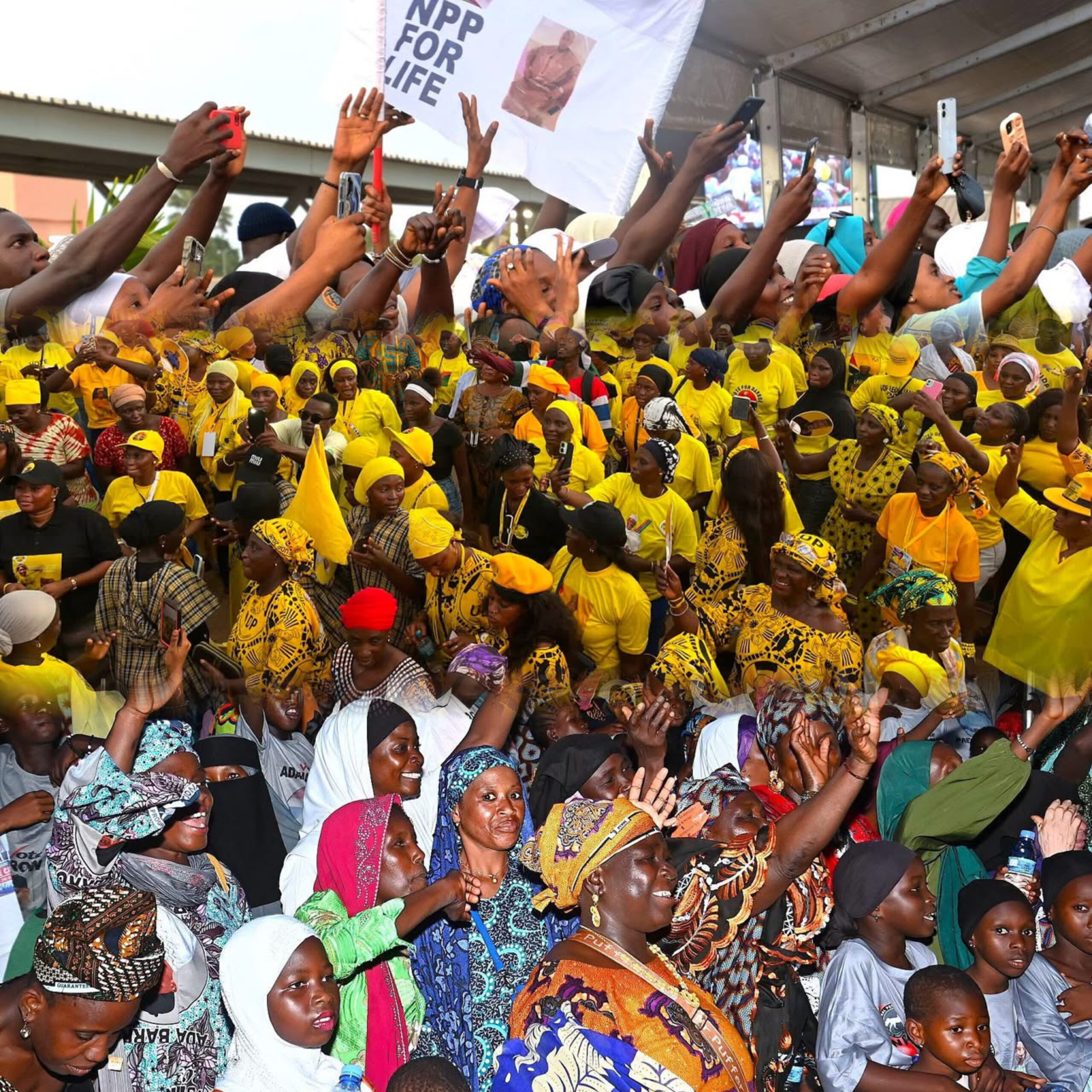
Attend Gambian political rallies, and you see women are everywhere. They organize. They mobilize. They sing. They dance. They prepare food. They distribute t-shirts.
Yet when the rally ends and serious negotiations over nominations, parliamentary seats, party leadership, and Cabinet positions begin, the number of women at the table often fades.
The media cannot remain a spectator
This is where the Gambian media has an important responsibility. Journalists do not decide who wins elections. They should not campaign for women or against them.
But journalism can influence whose voices enter the national conversation and what questions society asks about leadership.
We can either reinforce political stereotypes or interrogate them. For example, when interviewing a male politician, journalists routinely ask about the economy, public debt, infrastructure, constitutional reform, employment, education and healthcare. A woman politician deserves exactly the same treatment. Her political competence should not be reduced to questions about family, marriage, appearance, clothing, motherhood or whether her husband supports her political ambitions.
Those may sometimes be legitimate human-interest questions. But they should not become the dominant frame through which women politicians are presented.
A 2021 election observation report by the Westminster Foundation for Democracy on The Gambia noted that women were less visible in campaign reporting, while female speakers were often associated with promoting their parties rather than directly attacking or debating political opponents.
These observations deserve renewed attention in 2026. The question for editors and reporters should be simple: When voters finish reading today’s newspaper or watching tonight’s news or political program, have they heard enough from women to understand what they think about the country’s future?
Women journalists’ role
The transformation cannot come only from women politicians. Women journalists are also critical. Their increasing presence in the media industry can broaden the questions asked, sources consulted, and stories pursued.
But having women behind microphones and cameras is not enough. They also need to occupy editorial and managerial positions where decisions about coverage are made.
The Gambia Press Union and the current president of the Women Journalists’ Association, Annette Camara, have highlighted and continue to highlight this imbalance.
A 2020 study cited by the GPU found women accounted for 37 percent of media workers, while editorial board and decision-making positions remain dominated by men.
Women journalists themselves have also spoken publicly about gender stereotypes in Gambian newsrooms, including perceptions that demanding or complex assignments are more appropriate for men while women are given “lighter” assignments.
Gambia has an example to build on
Gambian women have repeatedly demonstrated that they can occupy the highest levels of public life.
Isatou Njie-Saidy served as Vice President for two decades, becoming the first Gambian woman to hold that office.
Fatoumatta Jallow-Tambajang became Vice President early in President Barrow’s presidency.
Isatou Touray also broke another barrier when she became the first Gambian woman to seek the presidency in 2016. She had also served as Vice President under President Barrow.
What should change before and after December?
Political parties should ask whether their women’s wings are genuinely leadership pipelines or simply mobilization structures.
The media should ask whether women receive comparable opportunities to articulate policy positions.
Editors should monitor how they describe women candidates and whether gender stereotypes are creeping into headlines and stories.
Journalists should challenge every candidate, male or female, on policy and performance.
Women should be given opportunities to contest winnable constituencies rather than being encouraged only to mobilize votes for male candidates.
Political parties can also develop a transparent mechanism to identify, mentor, and finance women candidates.