By: Alieu Ceesay
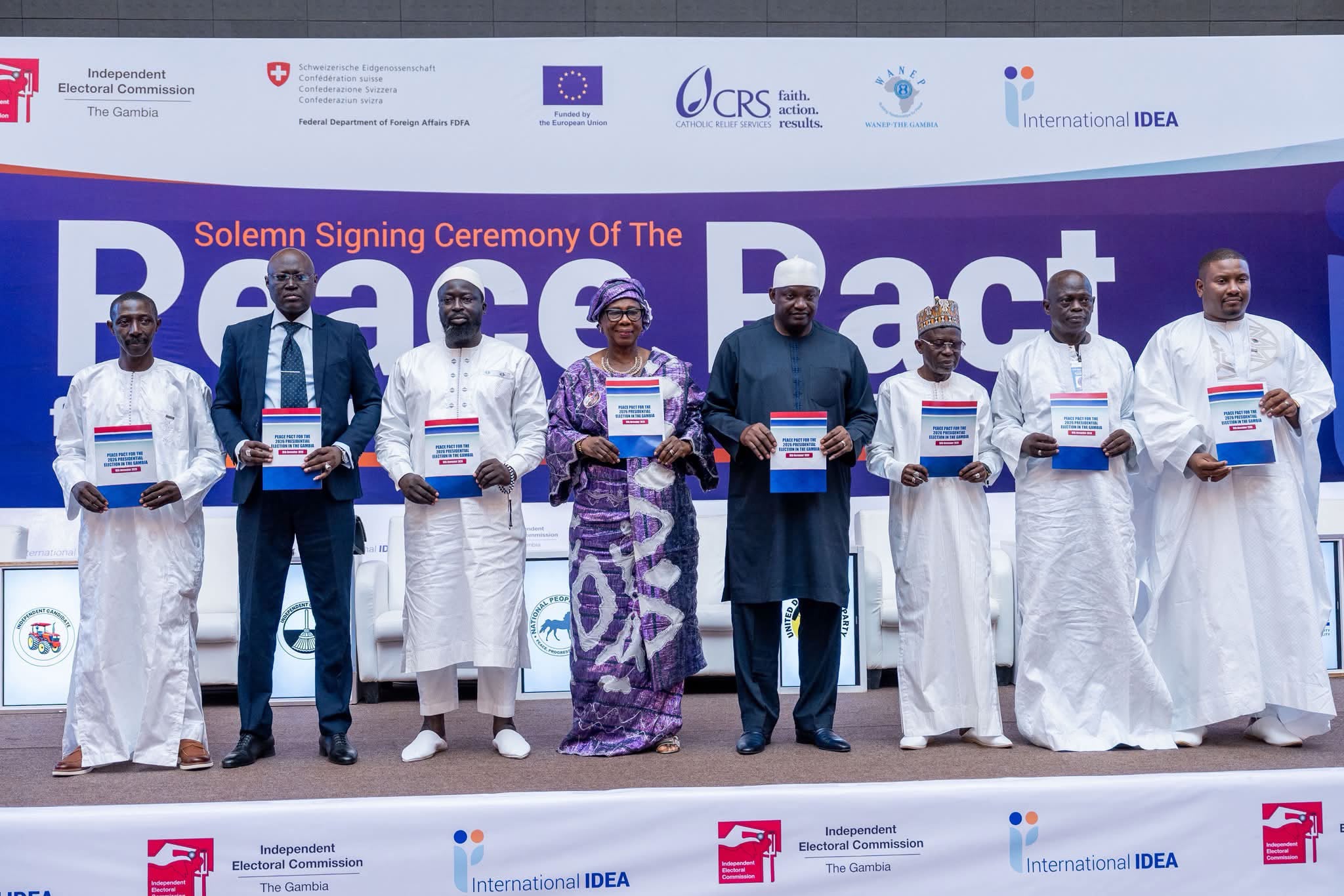
In a solemn ceremony at the Sir Dawda Kairaba Jawara International Conference Center, eight of The Gambia’s cleared presidential candidates signed an 11-article Peace Pact committing themselves to peaceful, issue-based campaigns and the rejection of violence, intimidation and inflammatory rhetoric ahead of the 5 December 2026 election.
The agreement, facilitated by the Independent Electoral Commission (IEC) and International IDEA, was signed just hours after the official campaign period was set to begin on 17 November. Incumbent President Adama Barrow of the National People’s Party and his main challenger, United Democratic Party candidate A.N.M. Ousainou Darboe, joined six other contenders in pledging to uphold free, fair and credible polls and to safeguard national stability before, during and after the vote.
The remaining signatories were People’s Alliance Party candidate Ebrima Tabora Manneh, UNITE Party and Coalition 2026 candidate Talib Ahmed Bensouda, Alliance of Progressive Citizens candidate Modou Lamin Sima, and independent candidates Dr Isatou Touray, Almameh Gibba and Lamin J. Darbo. The IEC cleared all eight following the nomination process.
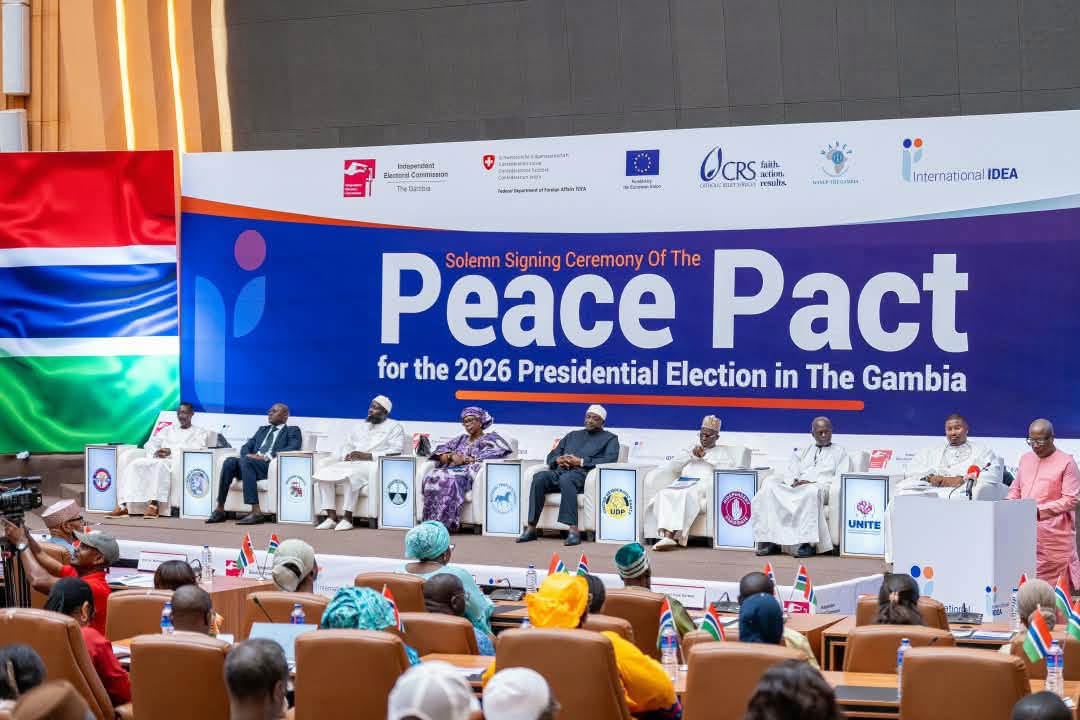
The pact requires candidates to run peaceful, issue-based campaigns; reject hate speech and tribal bigotry; respect press freedom; and ensure the responsible use of digital media and artificial intelligence. It also addresses accepting results and handling electoral disputes. Organizers described the signing as both a formal commitment and the symbolic launch of the campaign period.
International IDEA Country Director Mrs Jainaba Faye cautioned that the document’s value would depend entirely on the candidates’ subsequent conduct. “But the pact remains only paper until it is lived,” she said. “The quality of today’s ceremony will not measure its value, but your words and actions before, during, and after the elections.”
David Darrow-Tommy, Chairman of the National Elections Response Group, reminded the leaders that elections are “the heartbeat of democracy” and “a festival of civic choice” in which the sovereign people of The Gambia exercise their power. He urged them to place national interests above personal and political ambitions and warned that their words would carry immense weight with supporters.
“In the coming weeks of the campaign, your words will carry immense weight. When you speak, your supporters listen. When you show restraint, your followers practice restraint,” Darrow-Tommy said. “This peace pact is not merely a formality or a piece of paper to be signed and forgotten.”
Switzerland’s Ambassador to The Gambia, Pedro Mona, underscored the importance of respecting democratic institutions and ensuring that political opponents never become enemies. He noted that democracy thrives on competition yet remains an unfinished process requiring constant attention, commitment and renewal. Across Africa, he added, traditions of consultation and dialogue continue to shape democratic governance, but each country must develop its institutions according to its own history and aspirations.
“Democracy thrives on competition, but political opponents must never become enemies. This is precisely why today’s peace pact matters,” Ambassador Mona said.
Representatives of the Economic Community of West African States (ECOWAS), the European Union, the African Union and the United Nations attended the ceremony. They reaffirmed their continued support for The Gambia’s democratic journey and efforts to consolidate peace and stability.
President Barrow, in remarks at the signing, stressed that signatures alone were insufficient and that peace would depend on concrete actions beyond the ceremony. The candidates collectively pledged to conduct themselves professionally and patriotically, promote national unity and respect political differences as the country enters the final weeks of the presidential contest.
The ceremony took place 72 hours after the IEC announced the final list of cleared candidates. With the official campaign period now underway, the Peace Pact is intended to serve as a binding framework for political competition in what remains a closely watched election in West Africa’s smallest mainland state.
Observers note that the agreement builds on previous efforts to maintain electoral calm in The Gambia, a country that has conducted successive multiparty contests since its return to democratic rule. Whether the commitments translate into practice will be tested in the weeks ahead as candidates and their supporters take to the campaign trail ahead of the 5 December vote.
The eight candidates left the conference center after placing their names on a document that both the IEC and international partners hope will reinforce public confidence in the electoral process and protect the country’s hard-won stability.