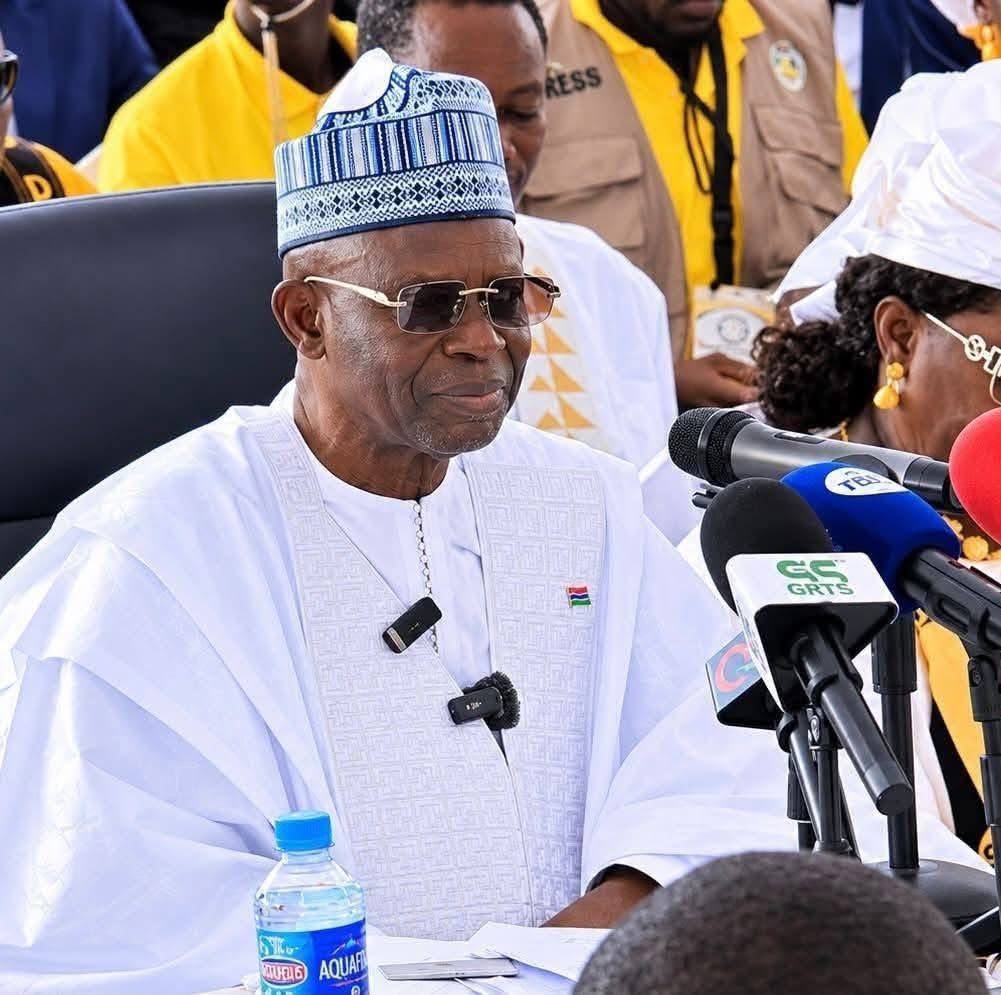
Lawyer Ousainou Darboe’s final presidential bid closes the chapter on a life defined less by the office he never held than by the democratic space he helped keep alive.
Born on 8 August 1948, the 78-year-old human rights lawyer has led the United Democratic Party (UDP) since founding it in 1996. He has stood for the presidency six times—1996, 2001, 2006, 2011, 2021, and now 2026. Each earlier contest left him as runner-up to Yahya Jammeh or, later, to Adama Barrow. He has never been president. Yet few Gambians have done more to make competitive politics possible after the 1994 coup.
The Struggle
Darboe trained as a lawyer in Lagos and Ottawa, entered private practice, and defended opponents of the First Republic. After Jammeh seized power, he became the most consistent civilian challenger. The UDP suffered arrests, harassment, and violence. In June 2000, his campaign convoy was ambushed. In April 2016, after UDP youth leader Ebrima Solo Sandeng died in custody following a protest for electoral reform, Darboe led a further demonstration demanding Sandeng “dead or alive.” He and others, including his daughter Fanta, were arrested, tried, and sentenced. He spent months in prison while the opposition coalesced around Adama Barrow—then UDP treasurer—who defeated Jammeh in December 2016. Darboe was released days after the vote.
He later served as Foreign Minister and, from June 2018 to March 2019, as Vice President under Barrow. The alliance collapsed. Darboe returned to opposition. Throughout, he has been both the symbol of resistance and a lightning rod for criticism over the party’s long leadership and internal democracy.
A Party That Produced Rivals
The December 2026 ballot contains a striking pattern. Four of the men cleared to stand once belonged to the UDP:
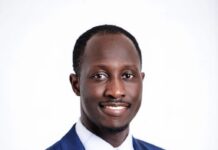
- Adama Barrow, the incumbent seeking a third term under the National People’s Party (NPP). He was a long-time UDP member and treasurer. While Darboe was jailed, the party and a broader coalition selected him as the 2016 candidate; he resigned from the UDP to run as an independent. He later founded the NPP.
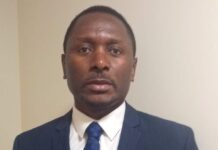
- Talib Ahmed Bensouda, former mayor of Kanifing and candidate of the United Movement for Change. He rose within the UDP, served as National Organizing Secretary, and was re-elected mayor on the UDP ticket. In 2025, he left after withdrawing from the UDP flag-bearer contest and launched his own party.
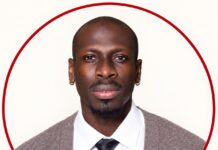
- Lamin J. Darbo, independent candidate backed by Team Gambia. A human rights lawyer, he was a UDP member and flag-bearer aspirant who resigned, citing entrenched leadership and weak internal democracy. He later led the National Unity Party before stepping down to contest independently.
- (The fourth is Darboe himself.)
This is not simple fragmentation. It is evidence that the UDP, under sustained pressure, became a training ground for political leadership. Men who learned organization, mobilization, and opposition politics inside the yellow party later judged that their ambitions or visions required new vehicles. Whether one views the departures as healthy pluralism or costly division, one thing remains: one opposition party incubated several serious contenders on the 2026 ballot. In a country whose post-Jammeh politics have often been personalized, that is a form of institutional success.
Why This Last Attempt Matters
Darboe has stated clearly that the 5 December election is his final presidential nomination and that, if elected, he will serve only one five-year term. He has framed that term around institutional legacy rather than personal tenure: re-tabling a new constitution (drawing on the 2020 draft), security-sector reform, civil-service and public-service changes, anti-corruption measures, and economic measures to reduce debt and a the foundation for growth. He has offered a 20 percent cut in the presidential allocation as an early signal.
At 78, after three decades at the head of the main opposition, repeated electoral near-misses, imprisonment, and a brief period in government, the decision carries weight. It is the attempt of a man who has already outlasted the dictatorship he opposed and who now seeks to convert residual political capital into binding institutional change before he leaves the stage. Win or lose, the campaign is his public argument about what the transition still owes Gambians: term limits that actually bind, professional security services, and a constitution that reflects the post-Jammeh settlement rather than the 1997 document.
Legacy Beyond the Presidency
Powerful independent assessment begins with proportion. Darboe is not a flawless figure. Long leadership of any party creates tensions over succession and internal contestation; several capable younger politicians concluded they needed their own platforms. The UDP’s electoral ceiling has also been tested. Yet the broader record is hard to dismiss. He helped keep organized civilian opposition alive under Jammeh. He paid a personal price in prison. He accepted a subordinate role under Barrow when that seemed the route out of dictatorship, then returned to opposition when he judged the project incomplete. The very existence of multiple serious candidates who once shared his party is itself a measure of the political culture he helped sustain.
Whether Gambians choose him on 5 December or prefer the incumbent, a younger reformer, or another voice, Darboe’s place is already larger than the result of any single election. He is one of the politicians whose contribution to the country’s democratic possibility exceeds the office he has sought. At 78, this final attempt is less about a last grab for power than about the unfinished business of the transition he spent decades fighting to open.