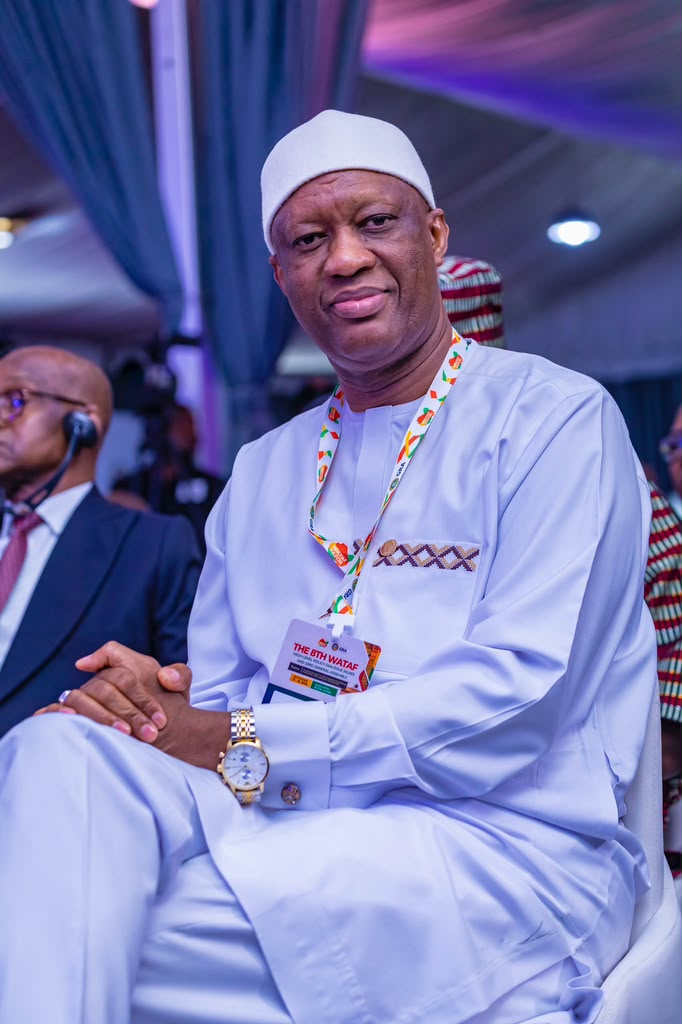
Africa cannot outsource its development and should not confront multinational tax avoidance with 54 competing national voices, Gambia Revenue Authority Commissioner General Yankuba Darboe has told West African tax chiefs meeting in Accra.
Speaking at the West African Tax Administration Forum’s High-Level Policy Dialogue, Darboe said leadership, policy coherence and regional cooperation are not separate agendas. Africa needs sustainable development; development needs sustainable financing; and financing, he argued, depends on stronger domestic resource mobilisation.
“Africa’s development cannot be outsourced,” he said. Partners, foreign investment and concessional finance will remain important, “but ultimately, African countries must progressively finance a greater share of their own development.”
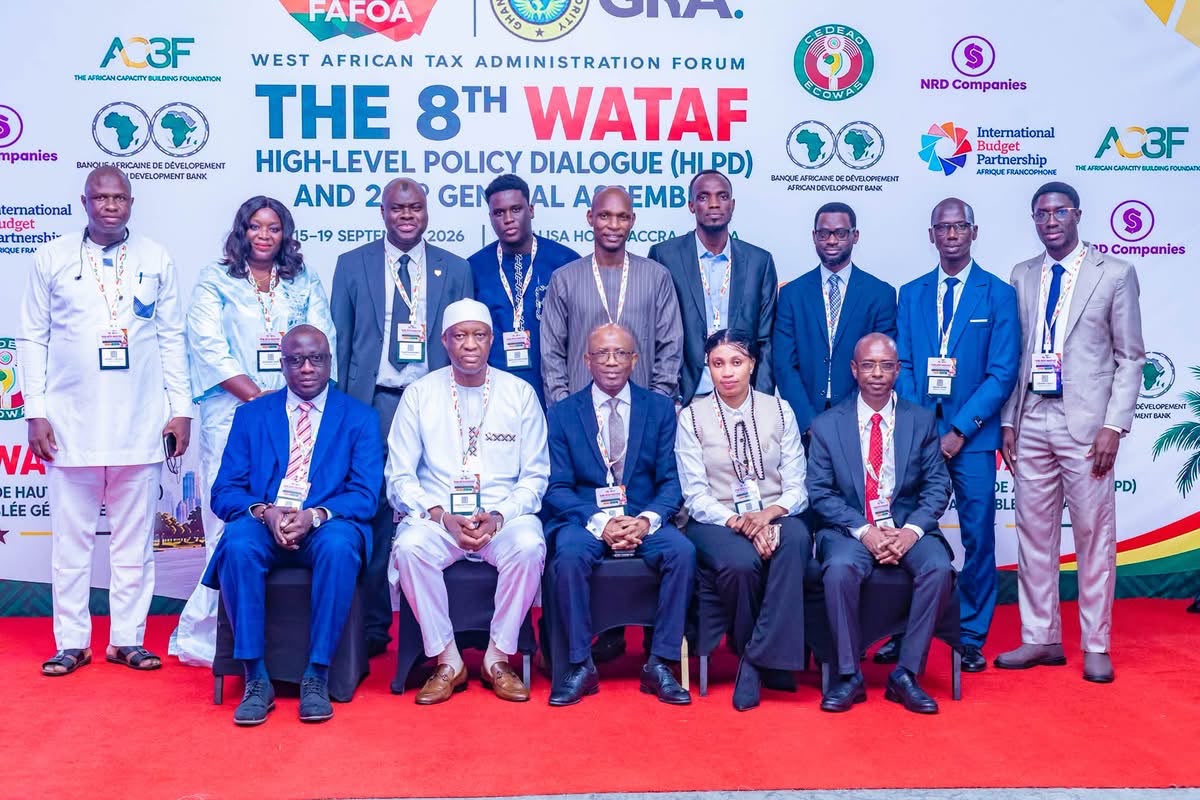
The Accra meeting, hosted by the Ghana Revenue Authority from 15 to 19 September 2026, marks WATAF’s 15th anniversary and brings together commissioners-general, policymakers and partners. Darboe’s address focused on leadership and regional cooperation for sustainable development.
Tax collection, he said, is not an accounting exercise. Revenue pays for education, hospitals, roads, electricity, security and the infrastructure that growth requires. Illicit financial flows, aggressive tax planning, trade misinvoicing, base erosion and profit shifting are eroding those gains.
Citing UNCTAD, Darboe said that about US$88.6 billion leaves Africa each year through illicit capital flight—some 3.7 percent of continental GDP. Much of it, he said, stems from commercial practices such as abusive transfer pricing and artificial profit shifting.
“We cannot speak about mobilizing Africa’s resources without also speaking about protecting Africa’s tax base,” he told delegates. Nor can countries protect that base on their own. Capital, digital businesses and tax-planning structures move across borders. Tax administrations largely do not.
“The taxpayer may be multinational, but the tax administration remains national,” he said. A scheme may be regional or global, while the information needed to understand it is scattered across jurisdictions. That imbalance makes cooperation essential.
Policy coherence, he stressed, does not mean identical laws or rates. It means recognizing shared interests and coordinating around them: aligning tax, investment and trade policy at home; closing gaps that firms exploit between neighboring systems; and presenting a common African position on international rules that affect taxing rights.
He pointed to negotiations toward a United Nations Framework Convention on International Tax Cooperation. African countries, acting through the African Group at the UN, had helped push for a more inclusive system in which developing countries have a stronger voice.
“When Africa identifies a common interest, coordinates its position and speaks collectively, Africa can influence the international agenda,” he said. The same lesson, he added, should guide work on the digital economy, transfer pricing, tax transparency, beneficial ownership, treaty talks and illicit flows.
Darboe commended the African Tax Administration Forum for building technical capacity and amplifying Africa’s voice internationally. WATAF, he said, must now move from cooperation in principle to cooperation in practice: sharing information and intelligence; building regional networks of transfer-pricing experts, investigators, auditors and data specialists; and spreading digital tools and expertise from one administration to others.
“Our cooperation must become as sophisticated as the taxpayers and transactions we administer.”
None of that happens without leadership. Technology can modernize systems, he said, but “leadership sustains reform.” Institutions do not transform themselves; people do, and people must be led. The modern commissioner-general must be more than an administrator — a strategist and reform champion who understands technology, develops talent, protects institutional integrity and grasps the international environment in which domestic tax systems operate.
Reform is rarely comfortable. Digitalization changes old practices, automation reduces discretion, and compliance measures close loopholes. Resistance should be expected.
“If you embark on a major reform and nobody resists it, perhaps the reform is not ambitious enough.”
A lesson from the Gambia Revenue Authority, he said, is that political ownership matters. When political leaders understand why a reform is needed, institutions are better placed to sustain it when opposition appears.
National revenue interests are now bound up with regional ones. A scheme that succeeds in one country today may appear in another tomorrow. When negotiating international rules, commissioners should ask not only what their own country wants, but where Africa’s common interest lies.
Darboe urged WATAF, entering its next chapter, to become a stronger instrument for practical cooperation, technical capacity, policy coordination and collective action.
“Africa has fifty-four countries and fifty-four national tax systems,” he said. “But on the fundamental issues where our interests converge, Africa does not need fifty-four competing voices.
Africa needs one coherent voice” — one capable of defending taxing rights, protecting the revenue base, and ensuring that wealth generated in Africa contributes fairly to Africa’s development.