By Sainabou Sambou
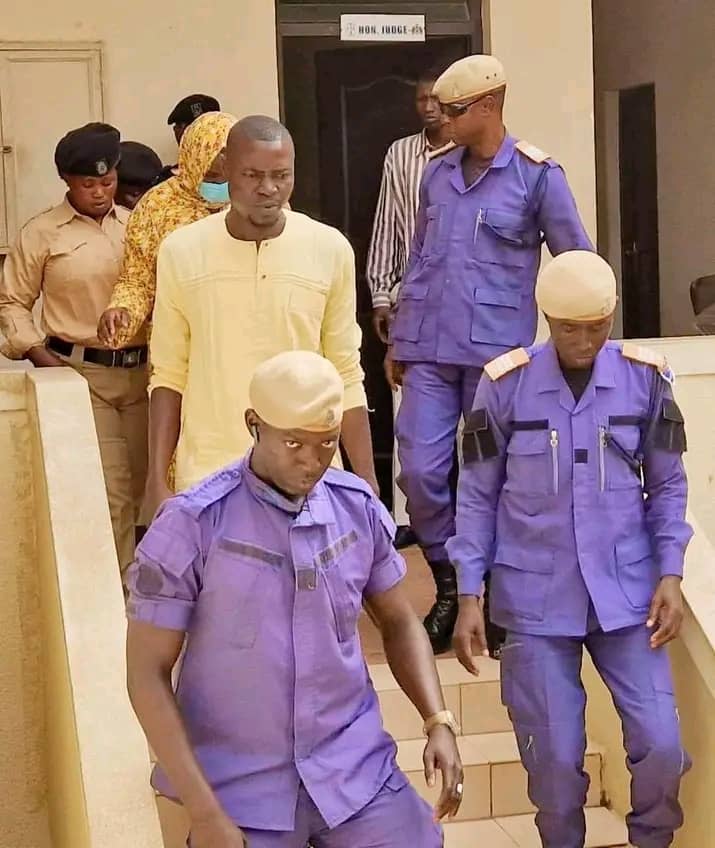
The Court of Appeal on Monday adjourned the high-profile appeal involving Ousainou Bojang and Amie Bojang, who were freed by the High Court on allegations of killing two police officers, to June 15, 2026, directing defense counsel for the second respondent to formally file written objections and serve all parties by Tuesday, June 9.
A three-member panel comprising Justices N. Salla-Wadda (presiding), Basiru V.P. Mahoney, and Amina Saho-Ceesay presided over the proceedings, which centered on procedural wrangling over the competence of the appeal and the proper mode of raising objections.
Director of Public Prosecutions A.M. Yusuf, accompanied by F. Touray, represented the State. B.M.O. Badjie held brief for J. Darboe on behalf of the first respondent, while L.K. Mboge appeared for the second respondent.
The hearing was dominated by arguments over whether the appeal was properly before the court and whether oral objections from the defense could be entertained without a formal affidavit in opposition.
At the outset, Justice Salla-Wadda inquired whether Lawyer Mboge had filed an affidavit opposing the motion. Mboge confirmed he had not, stating his intention to challenge the motion purely on points of law. He sought the court’s leave to raise the objections orally, arguing that the appeal itself lacked competence and could not stand.
The presiding judge acknowledged counsel’s right to raise objections but stressed that such submissions must be formally documented in writing to be properly recorded and considered by the court. Justice Salla-Wadda permitted Mboge to proceed with his arguments while reiterating the requirement for a written filing.
In his submissions, Mboge urged the court to first determine the preliminary issue of the appeal’s competence before delving into the substantive motion. “Hearing the motion without resolving whether the appeal is properly constituted would amount to an academic exercise if the appeal is later found to be incompetent,” he submitted.
Mboge referred the court to Part III of the Court of Appeal Rules on Criminal Appeals, particularly Rule 43, which outlines the procedure for commencing appeals. He explained that a person appealing against conviction or sentence must file a notice of appeal with the registrar of the lower court, while applications for leave to appeal require a separate notice in the prescribed forms contained in the appendix to the rules.
He further drew the court’s attention to Section 322 of the Criminal Procedure Act 2025, which allows the Attorney General to appeal against an acquittal on a question of law or, with leave of the High Court or Court of Appeal, on other grounds. Mboge maintained that strict adherence to these statutory and regulatory requirements was mandatory for the appeal to be valid.
Throughout the exchanges, Justice Salla-Wadda repeatedly reminded counsel that while oral submissions were allowed, the objections must ultimately be reduced into writing and served on all parties for the court to give them due consideration.
At the close of proceedings, the Court ordered Lawyer Mboge to file his formal objections and serve copies on all parties by Tuesday, June 9. The matter was then adjourned to Monday, June 15, 2026, for continuation of the hearing on the motion.