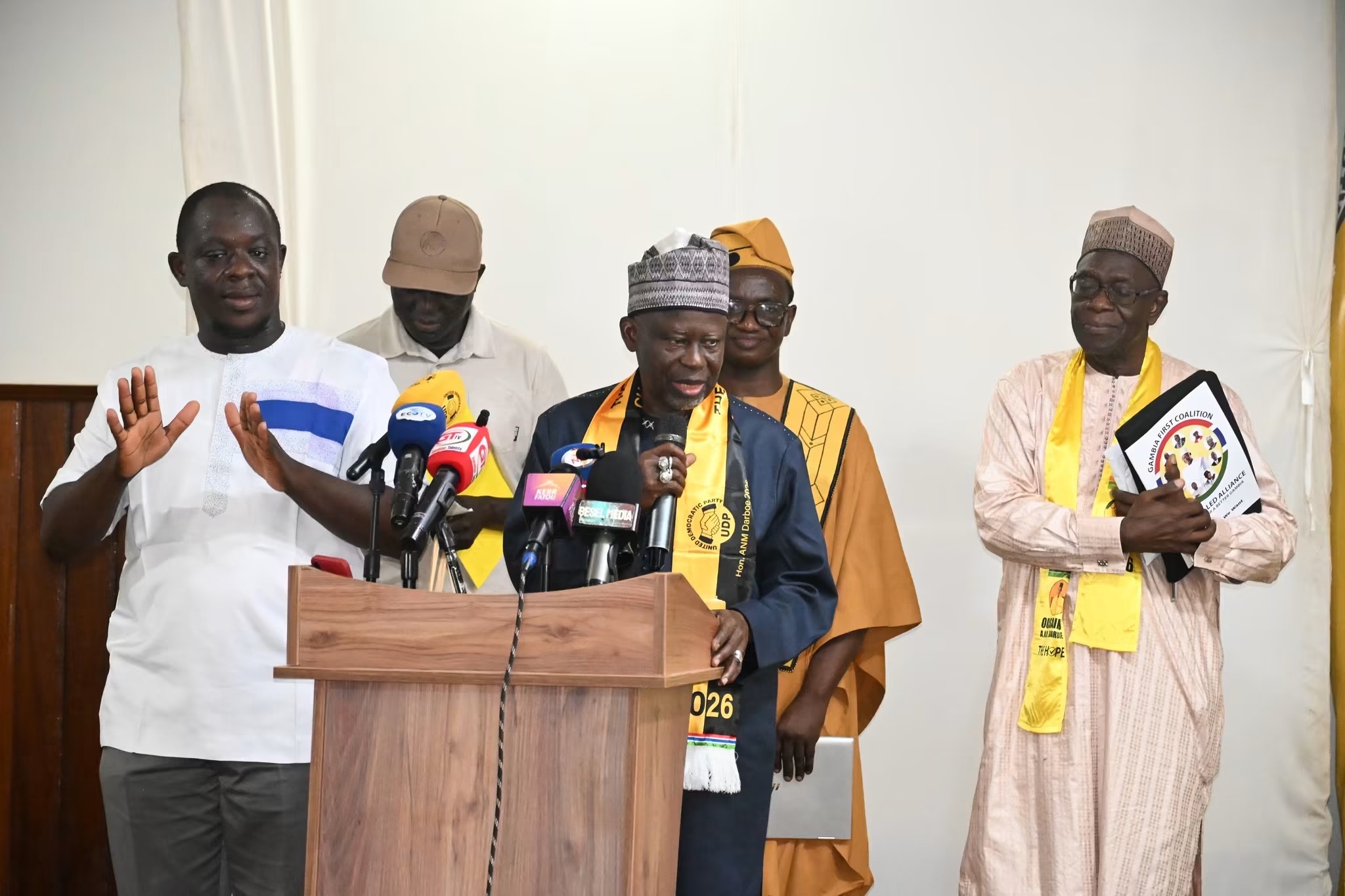
Opposition leader and presidential candidate Lawyer ANM Ousainu Darboe formally launched the Gambia First Coalition’s manifesto, titled “The Gambia We Want,” framing it as a social contract for national renewal ahead of the December 5, 2026, elections.
Addressing supporters and the public, Darboe, standard-bearer of the UDP-led alliance, said Gambians from Serekunda and Brikama to farming communities in Niamina, Wulli, Sandu, and the North Bank and Lower River Regions share a common desire for dignity and better opportunities for their children. He argued that successive years of patience have not eased rising rice prices, unreliable and costly electricity, scarce jobs for young graduates, or pressures on farmers and healthcare access.
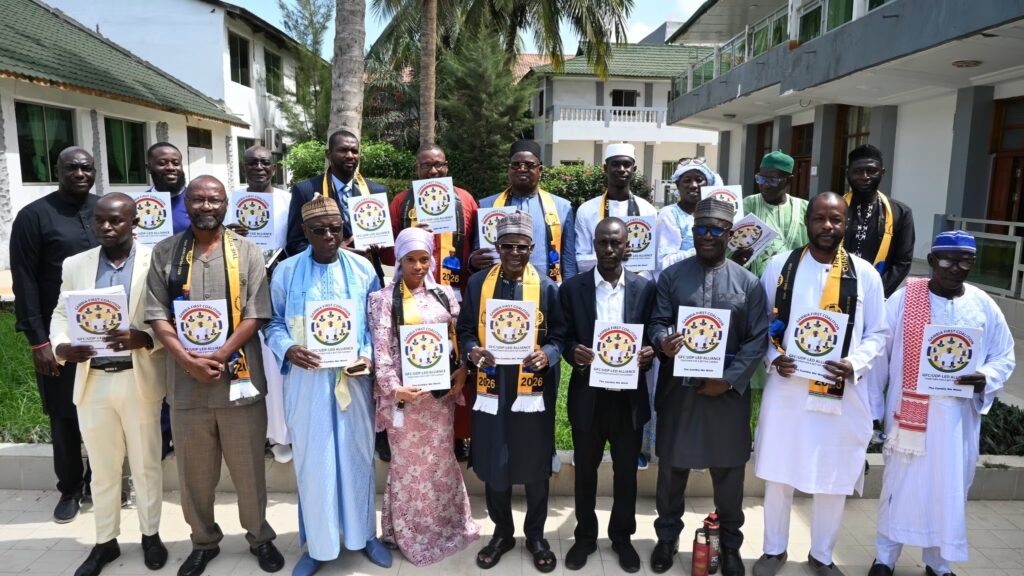
“The Gambian people deserve more than promises. They deserve a government that works, a leader who listens, and a future they can believe in,” Darboe stated. His core message centers on “One Term. One Vision. One Mission. National Renewal.” He pledged to serve only one five-year term if elected.
In the first 100 days, he said he would cut the budget of the Office of the President and take a 20 percent pay cut, insisting that leadership must begin with sacrifice rather than asking ordinary citizens—a rice seller in Serekunda, a farmer in Sami, or a family in Basse—to bear burdens while officials live in comfort.
The manifesto outlines four main missions. On economic renewal, Darboe promised a review of the 2027 national budget to eliminate waste and redirect resources toward priorities. Plans include investments in irrigation, agricultural mechanization, food processing, and affordable financing for women farmers; support for youth entrepreneurs; and strengthening of fisheries and tourism to boost local production and reduce food imports. The guiding principle, he said, is to grow the economy faster than the debt and strengthen the dalasi.
On constitutional renewal, the coalition aims to introduce a new draft constitution, aligned with the 2020 draft, within the first year for consideration through proper processes. Darboe emphasized strengthening the rule of law, protecting freedoms, and ensuring no president or citizen is above the law.
The third mission focuses on comprehensive security reform, calling for professional, well-equipped, accountable, and politically neutral security services whose duty is to protect citizens and the Constitution rather than serve partisan interests. The fourth addresses civil service reform through merit-based recruitment, professional development, and accountability, so that teachers, nurses, and public servants treat citizens fairly regardless of politics or location.
Additional commitments cover improved healthcare, education, electricity, and water; stronger local councils so development reaches every region; and greater engagement with the diaspora. Darboe said trust is earned by keeping one’s word, not platform rhetoric, and invited Gambians to read the manifesto, question the coalition, and hold it accountable through published progress reports.
He framed the election as a choice to restore the people’s ownership of government, rather than a contest between individuals or privileged groups, concluding that a democratic, productive, and secure Gambia is achievable through national renewal.