By Fatou Dahaba
The Government has formally accepted the core recommendations of the Commission of Inquiry into the Brikama Area Council, clearing the way for an economic-crimes investigation, surcharge proceedings, and a review of former Chairman Sheriffo Sonko’s fitness to remain in public office.
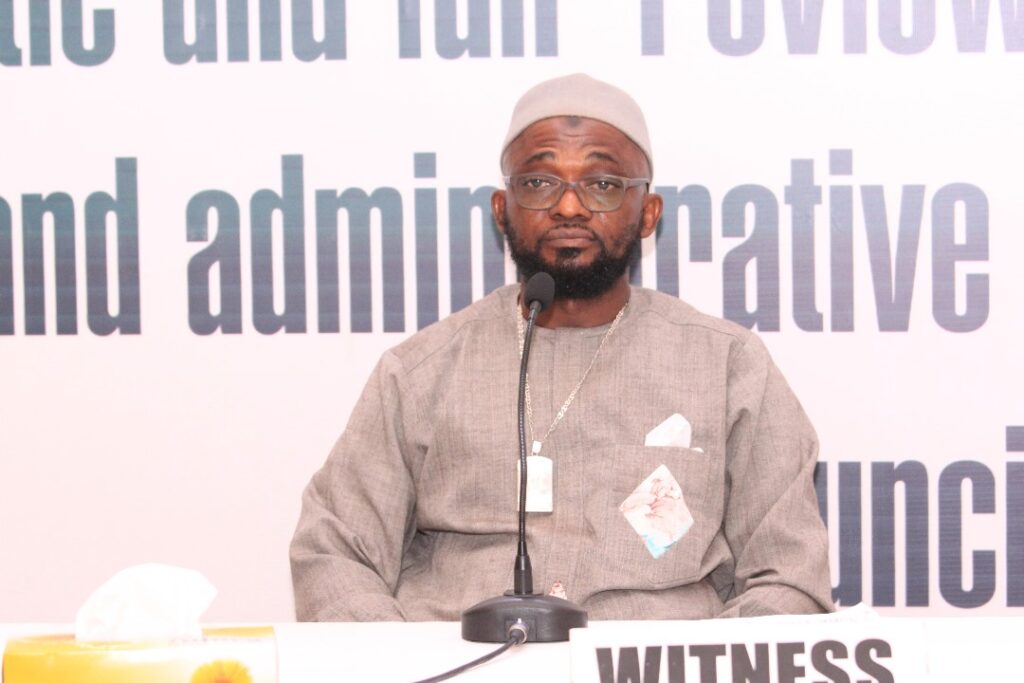
In its White Paper, the Government stated that Sonko’s testimony revealed serious mismanagement and procedural lapses that produced substantial financial losses to the Council. These included an understatement of D9,312,722.72 in revenue, the unlawful procurement of waste trucks, and irregular allocations from the geology fund. Officials said his admitted deviations from statutory procedures—particularly the failure to supervise disbursements and the use of non-compliant procurement methods—raised the possibility of financial misapplication that now requires further investigation.
The Government has directed the Inspector General of Police to examine the losses and determine personal criminal culpability. If the inquiry establishes a prima facie case of economic crime or any other offense against Sonko or any other individual, the matter will be forwarded immediately to the Attorney General’s Chambers for prosecution.
Separately, the Auditor General has been instructed to initiate surcharge and recovery proceedings against Sonko to reclaim public funds he improperly received, with particular emphasis on the unlawful festive allowances. The Ministry of Lands, Regional Government and Religious Affairs is already advancing policy and legislative reforms, including amendments to the Local Government Act, 2002, and the Local Government Finance and Audit Act, 2004.
Although Sonko no longer chairs the Brikama Area Council and currently serves in the Foreign Service, the Commission’s findings of grave breaches of fiduciary duty—ranging from unlawful procurement to oversight failures—have been referred to the Public Service Commission for a review of his continued suitability for public office.
The Commission itself concluded that the mismanagement at the Council was deliberate, sustained, and coordinated by senior officials acting in breach of their statutory responsibilities. It identified Sonko, Chief Executive Officers Mam Sait Jallow and Modou Jonga, and Finance Director Alagie Jeng as bearing primary culpability, while secondary officers and oversight bodies contributed through negligence and inaction. The resulting financial losses and erosion of accountability, the Commission said, constituted a grave violation of public trust.
On specific issues, the Commission accepted Sonko’s contention that the absence of councilors from sittings does not constitute a lawful removal mechanism under Section 20 of the Local Government Act, 2002. However, it found that evidence from Councilor Bala Musa Darboe and others supported the conclusion that Sonko influenced ward-allocation decisions on political grounds, violating his duty of transparency and impartiality. He did not justify excluding certain wards from the second allocation.
The Commission further determined that “Koriteh and Tobaski/Salibo” allowances were paid without the ministerial approval required by Section 27 of the Local Government Act, 2002, and that Sonko bore supervisory responsibility for those payments. An additional D1,301,500 was disbursed without adequate supporting documentation, breaching both the Local Government Finance and Audit Act, 2004, and the Public Finance Act, 2014. The revenue understatement of D9,312,722.72 was described as a material breach of financial reporting obligations.
Sonko admitted procedural deviations that amounted to non-compliance with procurement law. The award of a contract to 5C Energy was ruled unlawful because competitive bidding is the default requirement under the GPPA Act, 2014, and the GPPA had explicitly advised that the procurement be subjected to competition. Land transactions the Council conducted between May 2018 and January 2023 without ministerial approval were likewise found unlawful, with Sonko and the CEOs in office during that period held personally responsible for the irregularities.
The White Paper marks the Government’s formal endorsement of the Commission’s assessment that senior leadership at the Brikama Area Council systematically disregarded financial and procurement controls, producing losses that now form the basis for both civil recovery and potential criminal proceedings.