By: Sainabou Sambou
The Gambia Inclusive and Resilient Agricultural Value Chain Development Project (GIRAV) is transforming rice farming with solar-powered irrigation systems designed to enable year-round production and boost national food security.
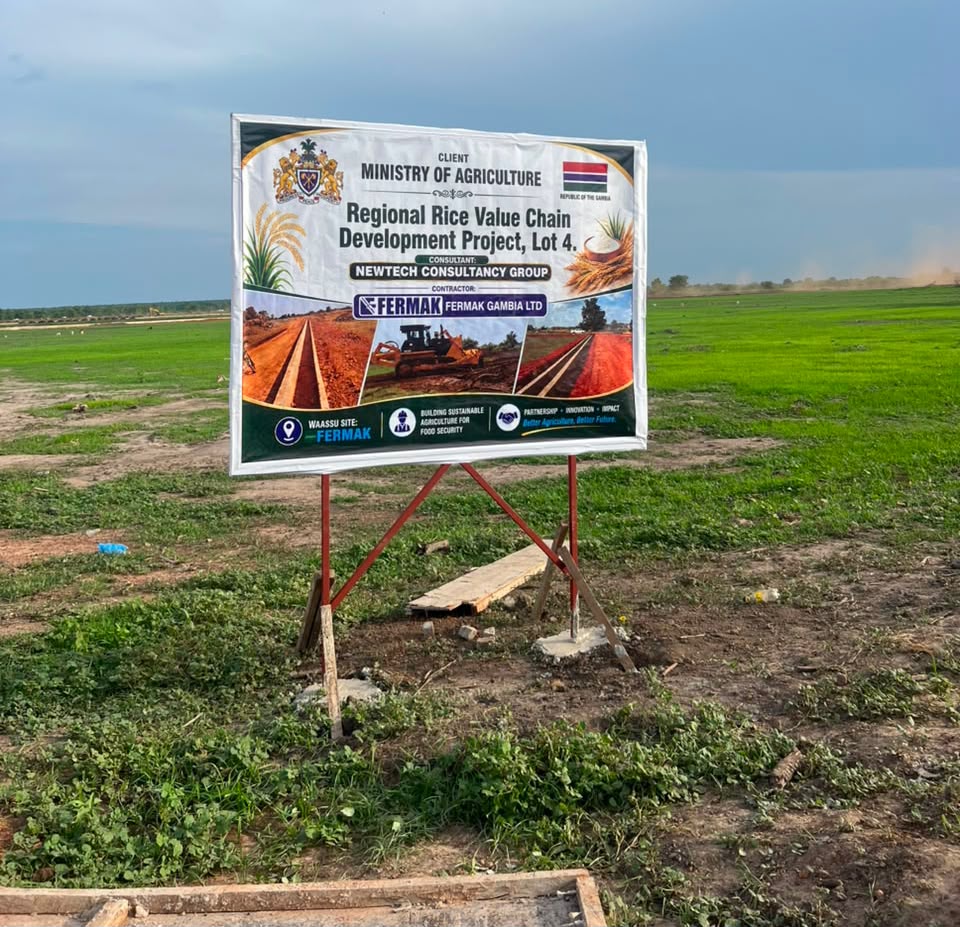
Mamour Alieu Jagne, GIRAV Project Coordinator, said the initiative involves three contractors—Ferrmac, Chinogam and Ocean—with Ferrmac developing three 50-hectare sites in Waassu, Lamin Koto and Karantaba. At the inspected site, about 152 solar panels will power two pumps, each capable of delivering 750 cubic meters of water from the river to irrigate the fields.
The site is roughly 70 percent complete. Main and tertiary canals are finished, field roads are nearly done, and remaining work includes demarcating one-hectare plots. The contract runs until March 2027, though handover could occur earlier given current progress. Communities have received tractors, power tillers, inputs, and fertilizer.
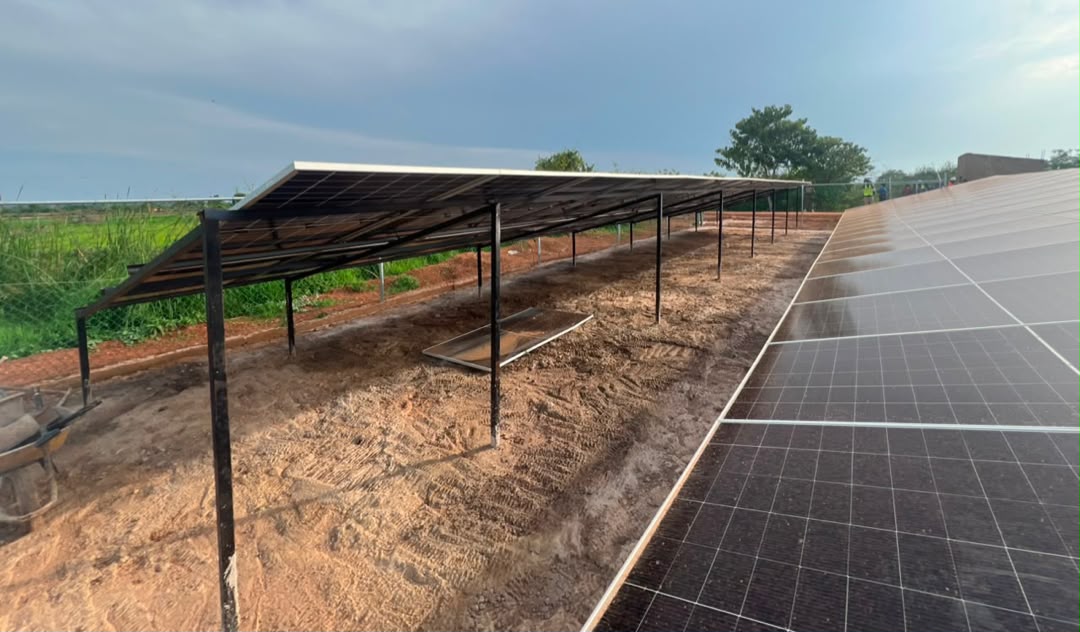
The project targets five metric tonnes of rice per hectare—up from the traditional one to 1.5 tonnes—equating to roughly 100 bags per hectare. Across 50 hectares, this would yield about 250 metric tonnes. Solar power will replace diesel pumps, improving sustainability and cutting maintenance challenges, Jagne said. A drainage canal will also allow excess water to be removed, enabling combine harvesters.
Agriculture Minister Demba Sabally joined the site visit to inspect the pump house and solar installations before meeting the community and its chief. He noted the government is developing 11 similar sites nationwide, seven in the area, and inquired about expected output once operational.
President Adama Barrow, who also visited, praised the progress. “We are very happy with what we have seen. I think this is the way forward,” he said. Calling food security a key component of national security, Barrow stressed greater investment in rice, The Gambia’s staple. The country imports about 85 percent of its rice, leaving it vulnerable to global supply disruptions, as seen during the COVID-19 pandemic.
“We should learn from that experience and move forward,” Barrow said. He assured the project team of continued government support, urged commitment, and said authorities would heed technical advice from agricultural experts. He thanked the team and congratulated the Ministry of Agriculture for advancing production and food security.