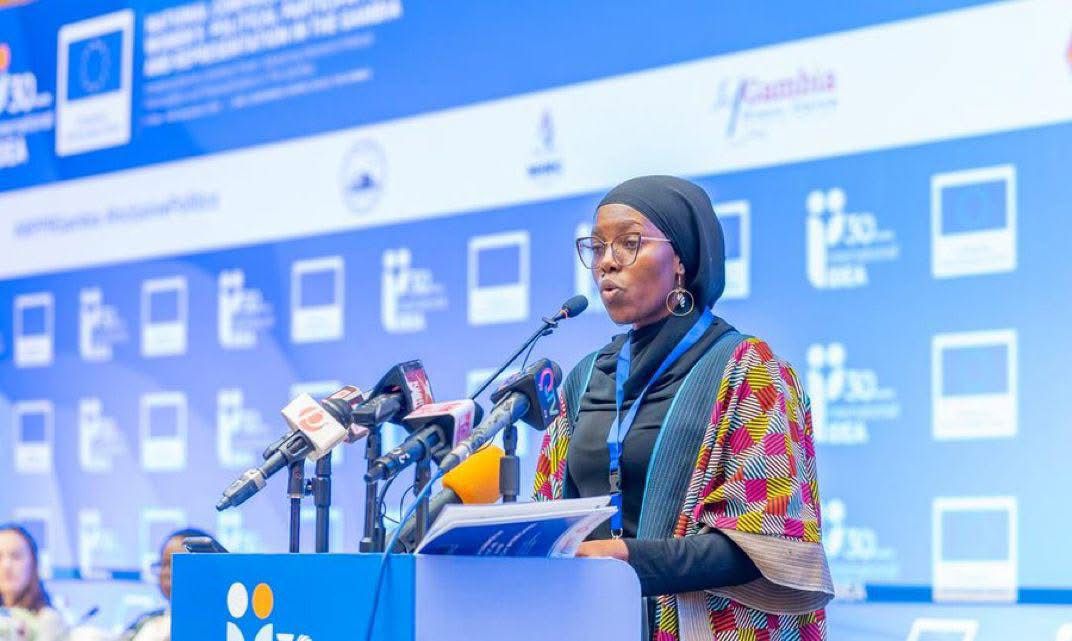
The President of the Gambia Press Union (GPU), Isatou Keita, has issued a strong warning to Gambian journalists and content creators, urging them to prioritize ethics, verification, and public responsibility over chasing clicks, likes, and viral attention.
In a detailed statement, Keita stressed that the hunger for online engagement must never overshadow the fundamental duties that come with publishing information. “Journalism is not simply about being the first to publish, getting an interview, going live or generating thousands of views,” she said. “It comes with ethics, verification, fairness, context and, above all, an obligation to understand the consequences of what we put out into society.”
Keita specifically warned against presenting serious allegations—particularly those involving death, abuse, corruption or criminal conduct—as established fact simply because they were made on camera. She insisted journalists must verify claims, seek the other side, consult relevant authorities and examine evidence. Where facts remain unestablished, she said, that uncertainty must be clearly stated. “That is not protecting anyone. That is journalism.”
The GPU president expressed concern that a culture is emerging in which the journalist who attracts the most views is seen as the most influential, and the one who asks the most sensational questions is regarded as the bravest. “When the pursuit of clicks becomes more important than the pursuit of truth, journalism stops serving the public and starts serving the algorithm,” she warned.
Keita called on media practitioners and audiences alike to examine their own roles in rewarding sensationalism. She urged consistent application of ethical standards regardless of whether the subject is a political ally, opponent, official or ordinary citizen. The caution is especially relevant to coverage involving The Gambia and Senegal, given the deep family, cultural and economic ties between the two nations. Reckless reporting on sensitive incidents, she noted, can escalate tensions and fuel calls for conflict.
Drawing historical parallels, Keita referenced the role of radio broadcasts in the 1994 Rwandan genocide and recent social-media-fuelled tensions along the Guinea-Sierra Leone-Liberia border to underline the high stakes of careless cross-border reporting.
She emphasized that courageous investigative journalism remains essential, but it must be disciplined. Asking difficult questions is not the same as making accusations, and giving someone a platform does not automatically turn their statements into facts. Press freedom, she added, protects the right to report and criticize but does not remove the duty to verify, minimize harm and correct errors.
“Journalism is not a weapon for public anger. It is a public trust,” Keita concluded. “And once that trust is lost, all of us pay the price.”