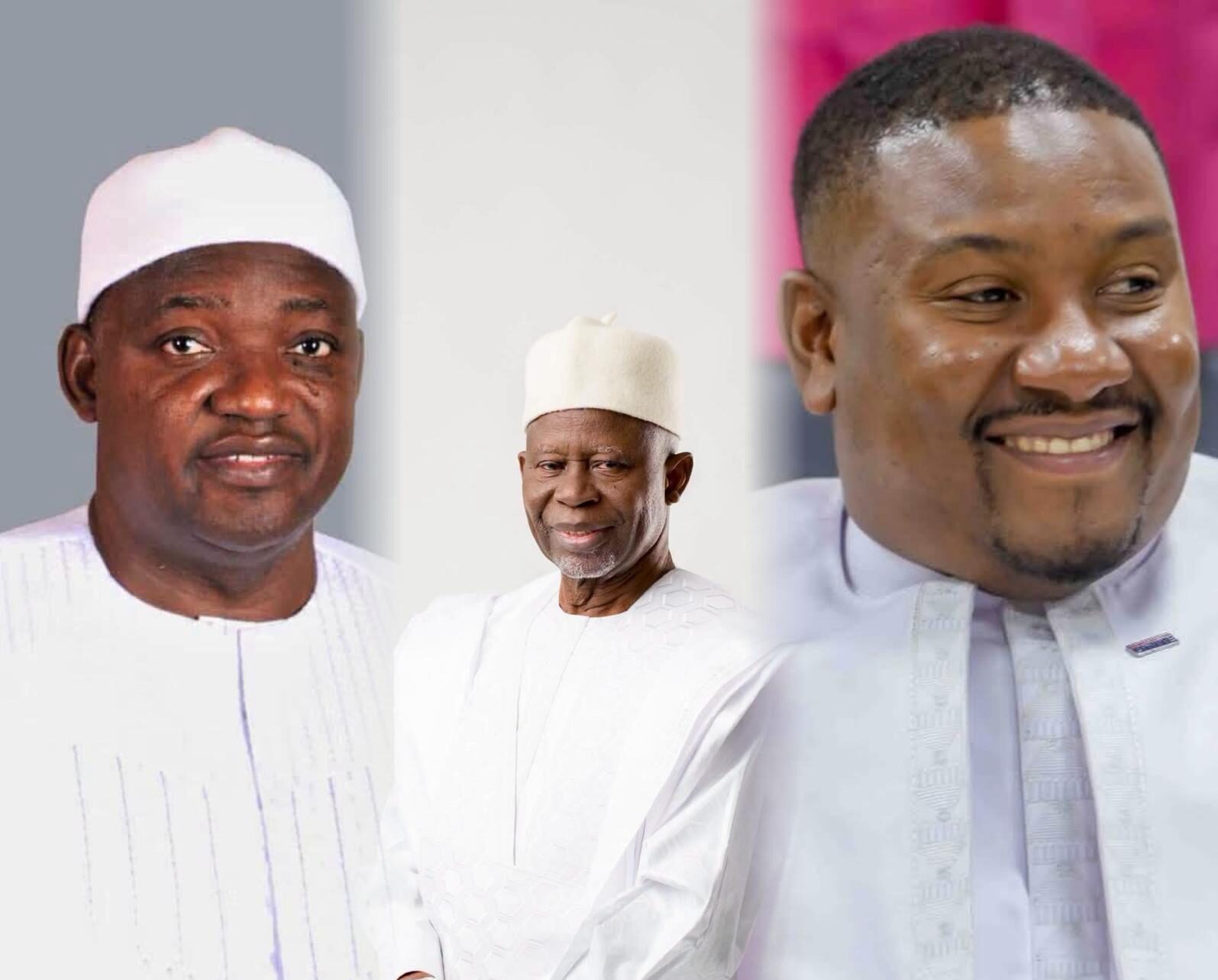
A new opinion poll by Gambia Participates shows President Adama Barrow leading among voters ahead of the December 2026 presidential election, but well short of a majority, with opposition figures Ousainou Darboe and Talib Bensouda close behind in a fluid contest.
The second-round survey, conducted among 1,556 registered voters across all 53 electoral constituencies in the country’s eight Local Government Areas between 27 July and 10 August 2026, finds that if the election were held today, Barrow would receive 32 percent of the vote. Darboe follows with 25 percent and Bensouda with 19 percent, while 17 percent of respondents remain undecided. The results underline a competitive field rather than a settled outcome.
Gambia Participates, which also released a comparable first-round poll in August 2025 with the same sample size, emphasizes a key distinction between voting intention and perceived electability. While 32 percent say they would vote for Barrow now, 51 percent believe he currently stands the best chance of winning—up sharply from 31 percent in the previous round. Darboe is seen as the strongest contender by 23 percent of respondents, and Bensouda by 12 percent. The organization stresses that the 51 percent figure must not be treated as a projected vote share.
Public views on Barrow seeking a third term remain finely balanced. Forty-six percent say he should contest, matching the 46 percent who oppose the idea, with 8 percent unsure. Support for his candidacy has risen 11 percentage points since the first round. Direct willingness to vote for him stands at 31 percent, against 54 percent who say they would not and 15 percent undecided—an improvement of 12 points from the earlier survey, but still leaving a clear majority either opposed or uncommitted.
Darboe’s position has also strengthened. Forty-six percent now believe he should contest the election, up 18 points from the previous round, while 45 percent oppose his candidacy. However, only 26 percent say they would vote for him if he runs—an eight-point rise—leaving a substantial gap between acceptance of his participation and declared electoral support. His backing is relatively stronger among older voters and in certain regions such as Mansakonko and Kerewan.
Bensouda emerges as a significant force, particularly among younger voters. He leads voting intention among the 18–24 age group with 33 percent, ahead of Barrow’s 25 percent and Darboe’s 19 percent. His support declines with age, while Barrow’s rises, reaching 41 percent among those aged 45–54. Bensouda also ranks as the preferred leader of a hypothetical coalition involving himself, Essa Mbaye Faal and Mama Kandeh, with 40 percent support, though confidence that such a coalition could win has fallen sharply to 36 percent from 55 percent in the first round.
The poll records high intended turnout, with 92 percent of respondents saying they plan to vote. The economy and cost of living top the list of issues expected to influence decisions, cited by 76 percent, followed by security and national stability (55 percent) and healthcare (50 percent). Regional patterns vary sharply: Barrow is strongest in Basse, Darboe leads in Mansakonko and Kerewan, and Bensouda is competitive in Kanifing and Brikama.
Gambia Participates notes that the findings capture opinion at the time of data collection and are not a prediction of the final result. Candidate nominations, alliances, campaign developments and the behavior of undecided voters could still reshape the race before election day on 5 December 2026. The survey portrays an open contest in which Barrow holds an expectation advantage within a fragmented and regionally differentiated electorate.