By: Fatou Dahaba
Calls for stronger political inclusion in The Gambia took center stage at a democracy and governance forum on Thursday, as speakers urged greater representation of women, young people and persons with disabilities ahead of the December presidential election.
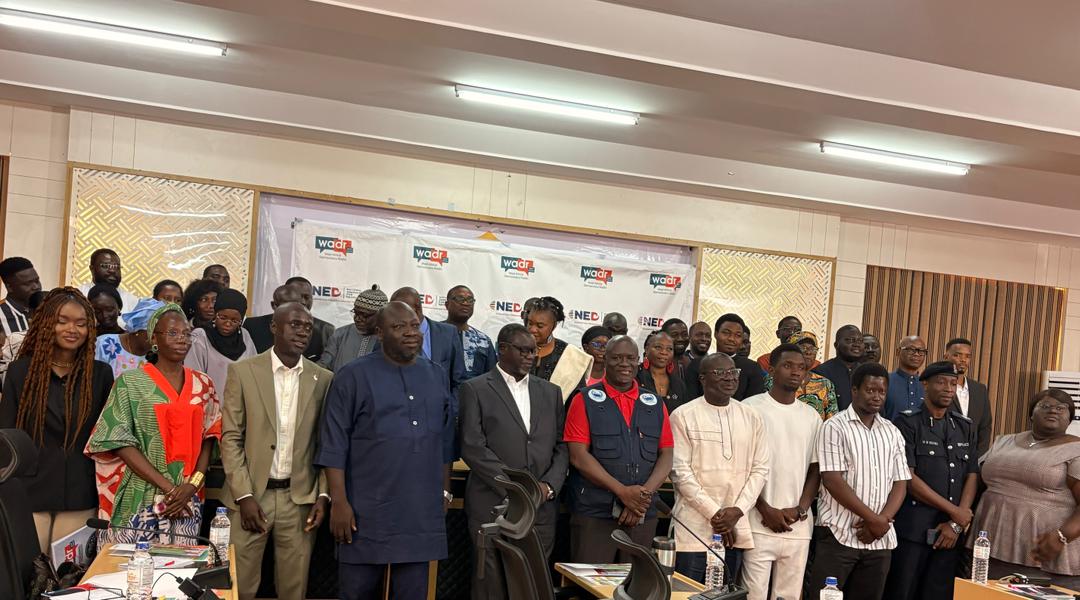
The event, organized by West Africa Democracy Radio under the theme “The Gambia’s Political, Judicial and Security Reforms: Progress, Challenges and Recommendations,” brought together officials from governance institutions, civil society, the media and human rights groups.
Gambia Press Union President Isatou Keita said democratic progress should be judged not only by elections and institutions, but by whether citizens are meaningfully represented and can trust the system.
“No democracy can create legitimacy if significant segments of the population remain excluded from decisions about their own government,” Keita said. “Their participation must shape real outcomes and decisions. Their representation must move beyond symbolism toward meaningful participation.”
Keita said women remain underrepresented in public office, holding only a small number of seats in the National Assembly, cabinet and local councils. She described a proposed constitutional amendment for reserved seats for women and persons with disabilities as a potentially important step toward narrowing the gap.
Hannah Forster, executive director of the African Center for Democracy and Human Rights Studies, said democracy must go beyond legal reforms to include equal citizenship and genuine public participation.
“We need to move from simply speaking about inclusion to establishing practical mechanisms that make participation possible,” Forster said. “Young people must not be viewed merely as voters or beneficiaries of programs.
She added that women’s political participation in The Gambia has historically remained low and that inclusion should be treated as a democratic necessity, not an act of goodwill.
Abdul Malik Bello of the Institute for Human Rights and Development in Africa said inclusive democracy is inseparable from human rights and accountability.
“Women, young people, persons with disabilities, and other historically marginalized groups must not simply be invited to participate in politics,” Bello said. “They must have genuine opportunities to influence decisions and to occupy positions in which those decisions are made.”
Independent Electoral Commission Chairperson Joseph Colley said the commission was putting structures in place to improve election operations and results management, and stressed that the law must be followed.
“The law says it is the IEC that declares,” Colley said, responding to concerns about political parties announcing results. “If the law says do this, do this.”
WADR Managing Director Agnes J. Thomasi said the forum was intended as an open platform for citizens and institutions to discuss the country’s democratic path and electoral preparedness, as part of the station’s Voices for Democracy and Freedom in West Africa project.