By: Alieu Ceesay
Residents of Jinack Negee and Jinack Kajatta in Lower Niumi, North Bank Region, say decades of limited development, unemployment, and poor basic services are leaving young people with few options at home and pushing some toward irregular migration.
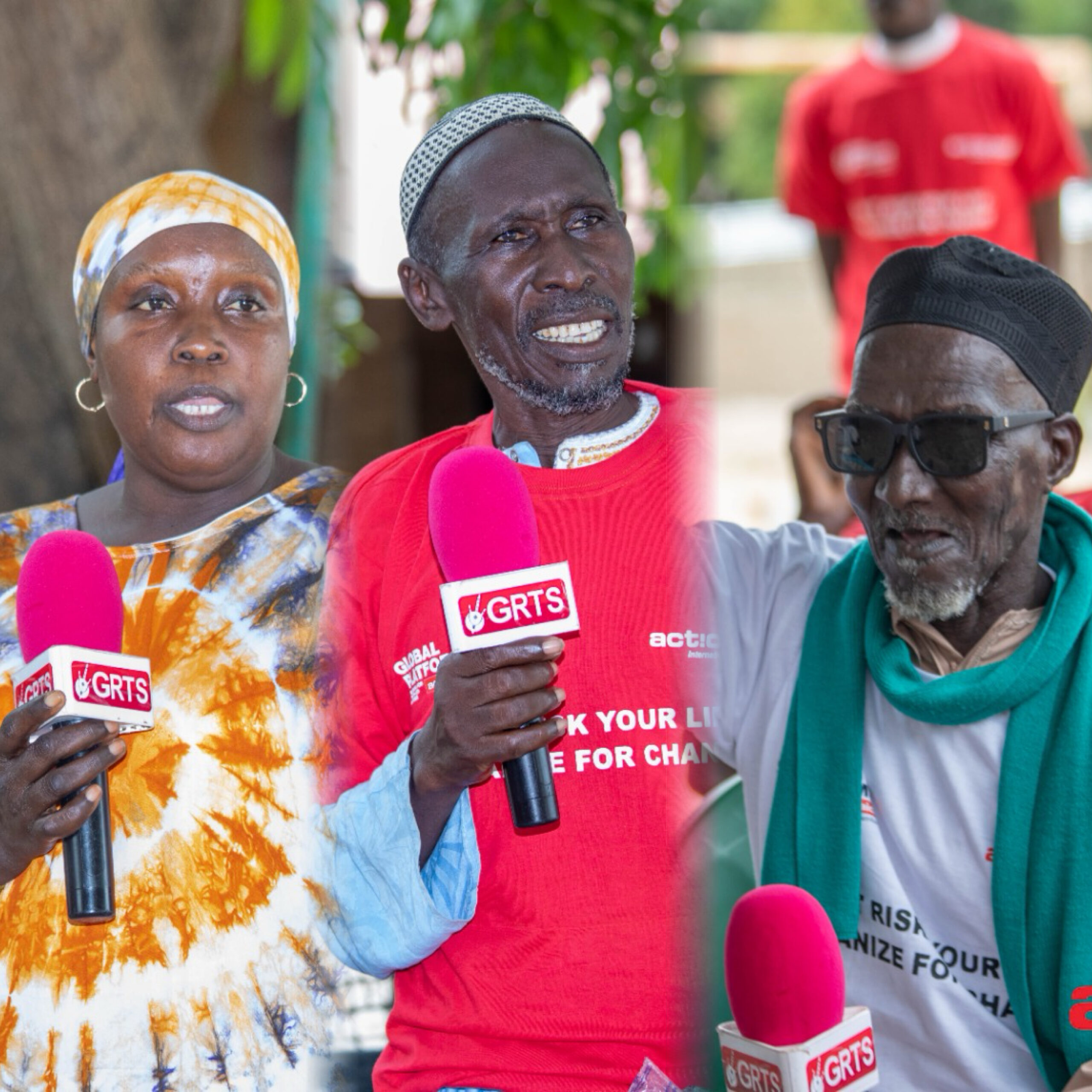
For many families, the issue is no longer abstract. Some still wait for news of relatives who took the dangerous “backway,” while others fear more will leave. The concerns emerged during a day-long community dialogue organized by ActionAid International The Gambia in partnership with its youth movement, Global Platform – The Gambia, with support from the Ignite Project. The meeting brought together leaders, women, young people and other residents to examine drivers of irregular migration and discuss safer alternatives.
Residents repeatedly cited the same underlying problems: inadequate infrastructure, unreliable clean water and healthcare, high unemployment and few economic opportunities. In Jinack Negee, Alkalo Bubacarr Bojang noted that the community, more than 200 years old, has seen little meaningful development. “This community is more than 200 years old, but we have no development to show for it. We pay taxes and vote, yet there is nothing to show for it. Sometimes, it feels as if we are not part of The Gambia,” he said. He added that residents depend on neighboring Senegal for water and that young people have limited prospects, leading some to view the backway as their only option.
Yuspha Bojang questioned the effectiveness of anti-migration efforts, saying community members have helped authorities identify suspected facilitators only to see some later moving freely. He also highlighted longstanding difficulties with transportation and access to the island.
Women leader Bingo Manneh described the personal toll: some young people remain missing, leaving families in distress. “Our children are doing this because they have nothing here. We are really suffering. Our young people are unemployed and have nothing to do, which is forcing many of them to leave,” she said.
Nfally Bojang of the Village Development Committee welcomed the dialogue but stressed that unemployment persists even among graduates and those with vocational skills. He pointed to the lack of skills-training centers and adequate educational facilities, as well as dependence on Senegal for water. Jarra Bojang noted that the absence of an ambulance makes it hard for pregnant women and other patients to reach care, and that salty water limits gardening and other activities.
In neighboring Jinack Kajatta, residents described similar hardship and heavy reliance on NGOs, remittances and support from Senegal. Elder Momodou F. Sonko said successive governments have delivered little.
“We are happy to go on the back way because the government is not providing us with anything. Even the borehole in this community was provided by someone who went the back way. The schools, hospitals and other developments we have were brought by NGOs and other people, not the government,” he said. Better houses, he added, were largely built with migrant remittances.
Amulie Jammeh said the community’s NGO-provided ambulance has been at Rider for Health in Kerewan for two years without return. Nanding Bojang reported that families buy drinking water daily despite poverty.
Mbaling Manneh said development from the Jawara through Jammeh to Barrow administrations has fallen short, while Modou Manneh framed the demand simply: a return on taxes paid for generations. “Water, transportation, healthcare and food are our fundamental human rights, and the government must recognize this and act,” he said.
Saikou Darboe, National Coordinator of Global Platform The Gambia and Manager of ActionAid’s Local Rights Programs, said the discussions confirmed residents’ sense of isolation and unmet basic needs as key push factors. Saltwater intrusion has damaged rice fields, reducing a traditional livelihood, and alternative opportunities remain scarce. He affirmed that Jinack is part of The Gambia and pledged to convey the concerns to relevant authorities and partners.