By Mustapha Manneh
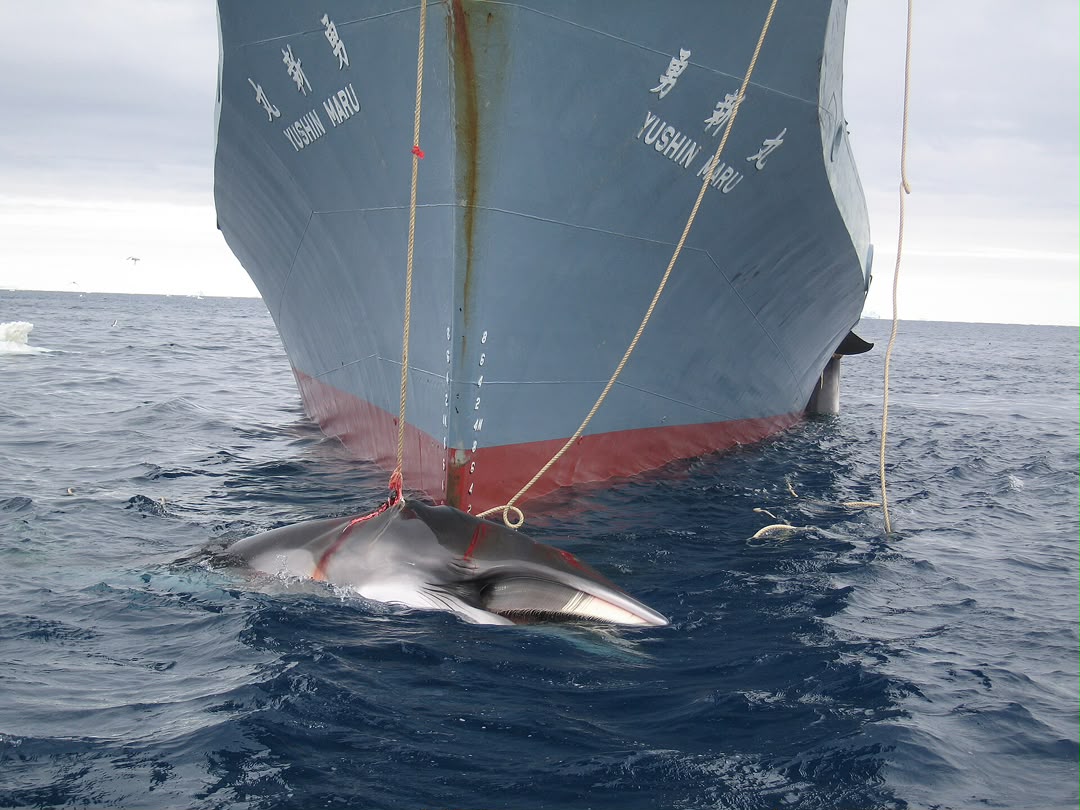
When the International Whaling Commission gathers, an unlikely alliance forms again and again. Several West African countries that neither hunt whales nor eat whale meat, and that increasingly promote marine conservation, consistently side with pro-whaling interests to weaken global protections.
From Senegal to The Gambia, Côte d’Ivoire to Guinea, government delegations have for decades voted to support Japan’s pro-whaling agenda. They have blocked whale sanctuaries and opposed efforts to strengthen conservation rules. The contradiction is striking: why defend commercial whaling when whales form no part of local culture or food security?
An examination of voting records, diplomatic relationships and scientific evidence points to a clear answer. This is not about whales. It is about power, aid and geopolitics.
A Record of Opposition to Whale Protection
At least eleven West African nations—including Benin, Côte d’Ivoire, The Gambia, Ghana, Guinea, Guinea-Bissau, Liberia, Mauritania, Senegal, Mali and Togo—have repeatedly aligned with Japan at the IWC. They have opposed measures designed to protect whales and restore populations devastated by industrial whaling.
Their votes have helped block the creation of a South Atlantic Whale Sanctuary, a proposal repeatedly submitted by Brazil, Argentina, Uruguay, South Africa and sometimes Gabon since 2001. The sanctuary would cover waters critical for breeding and migration of humpback, southern right and other whale species.
For twenty-five years, West African delegations have either voted against the proposal or deliberately walked out of meetings to break quorum, preventing a vote altogether. These maneuvers ensured that the sanctuary proposal has repeatedly failed despite broad global support.
Faya Nestor Kondiano, Head of the Wildlife and Nature Protection Division at Guinea’s National Directorate of Forests and Wildlife within the Ministry of Environment and Sustainable Development, attended the 2024 IWC meeting and described what he saw. “I was astonished by the degree of coordination surrounding West and Central African delegations,” he said.

“Commissioners appeared to be closely guided on when to intervene, how to vote, and when to support procedural tactics in support of the pro-whaling agenda. It was painful to watch our countries surrender their independent voice on an issue that directly concerns species that are strictly protected under the laws of many West African states, while our countries have nothing to gain from defending whaling practices.”
The pattern continued even after Japan officially withdrew from the IWC in 2019. Though no longer a member, Japan remains an observer and continues to coordinate a loyal pro-whaling caucus, with West African states among its most reliable allies.
Japan’s Long Shadow at the IWC
Japan’s influence at the IWC did not emerge by accident. For decades, Tokyo invested heavily in building diplomatic support among developing nations, particularly in Africa, the Caribbean and the Pacific.
Through fisheries cooperation agreements, funding for fisheries-complex construction, and other bilateral aid, Japan cultivated alliances that translated directly into votes at the IWC. Much of the coordination of West African positions takes place through ATLAFCO (COMHAFAT), a regional fisheries body that has served as a conduit for Japan’s positions on whaling.
Conservation groups and internal briefings describe this system bluntly as vote-buying diplomacy. Countries with limited financial resources, unpaid IWC dues and struggling fisheries sectors found it difficult to resist the incentives.
The result is a voting bloc that reliably supports commercial whaling interests, despite having no domestic whaling industry and no cultural or economic reliance on whale meat.
Maximin Djondo, Executive Director of the Benin Environment and Education Society, stated at IWC69 in Lima, Peru: “Whaling is in no way part of the traditions of the peoples of West and Central Africa, whether for food or to meet other cultural or identity-related needs. If we want to ensure food security for our populations, we must first address the systematic plundering of our fisheries resources by foreign trawlers.”
A Conservation Paradox
The contradiction becomes even sharper when compared to West Africa’s positions elsewhere.
At the Convention on International Trade in Endangered Species of Wild Fauna and Flora (CITES), many of these same countries have supported strong protections for sharks and rays. At the Convention on the Conservation of Migratory Species of Wild Animals (CMS), they have backed increased conservation measures for whales and dolphins. Under the Convention on Biological Diversity, they have endorsed the global goal to protect 30 percent of the ocean by 2030. National governments regularly speak of developing a “Blue Economy” based on sustainable fisheries and marine tourism. Yet at the IWC, those commitments collapse.
Colonel Abba Sonko, a CITES expert and member of the CITES Authority in Senegal, put it plainly: “Our countries cannot credibly call for stronger ocean protection under every other international convention while obstructing whale conservation within the International Whaling Commission. These positions are inconsistent with our national laws, our international commitments, and the interests of our coastal communities.
Commissioners from West African countries must defend West African conservation priorities, not the commercial interests of foreign whaling nations.”
What the Science Says About Whales and Fish
The political stance also runs counter to scientific evidence—evidence that matters directly to West African coastal communities.
A landmark 2014 study, “Whales as Marine Ecosystem Engineers,” demonstrates that whales play a crucial role in maintaining productive oceans. Far from competing with fisheries, whales enhance them.
Dr. Isaac Okyere, Coordinator of the Ghana Marine Mammals Network at the University of Cape Coast, explained: “The claim that whales are depleting the ocean’s fish stocks is not supported by science. The major cause of declining fish stocks is overfishing and IUU fishing, as in FAO’s SOFIA reports, and not whales. Whales recycle nutrients, stimulate biological productivity, and help sustain the food webs on which fisheries depend. They are essential components of healthy marine ecosystems.
Far from threatening fish populations, recovering whales can contribute to more productive and resilient oceans. For our fishing communities already facing overfishing, illegal fishing and climate change, protecting whales is part of protecting the future of our fisheries.”
By feeding at depth and defecating near the surface, whales recycle nutrients such as nitrogen and iron, essential elements for plankton growth. This process, often called the “whale pump,” boosts primary productivity at the base of the marine food web.
Healthier plankton populations support more fish. In some regions, models show that whales can increase fishery yields. By contrast, removing whales through commercial hunting disrupts nutrient cycles and reduces ecosystem stability.
The study also highlights whales’ role in carbon sequestration. When whales die naturally and sink, their bodies transport large amounts of carbon to the deep sea, helping regulate the climate.
For West Africa, where fisheries are already under severe pressure from illegal fishing, fishmeal factories and climate change, whale recovery could provide ecological benefits rather than threats.
Not About Tradition or Food
Unlike whaling nations such as Japan, Norway or Iceland, West African countries do not hunt whales. Whale meat is not sold in markets, nor does it feature in traditional diets.
In many coastal areas, attitudes toward whales are shifting in the opposite direction. Whale-watching tourism is growing in countries like Senegal and The Gambia, offering income opportunities that depend on live whales, not dead ones. This makes the region’s stance at the IWC all the more difficult to justify, especially considering that the IWC could help them develop their whale-watching industries.
“The votes have nothing to do with culture or food security,” said a marine policy analyst based in Dakar. “They are purely political.”
Cracks in the Bloc
The pro-whaling consensus is no longer entirely unchallenged. Between 2014 and 2024, Gabon adopted pro-conservation positions at the IWC. It supported establishing the South Atlantic Whale Sanctuary during a period when the commissioner was appointed through the Ministry of Environment rather than the Ministry of Fisheries. However, the apparent return of the appointment process to the fisheries administration since 2024 has created renewed uncertainty over the consistency and durability of Gabon’s conservation leadership.
In 2023, officials from Benin, Congo, Guinea, Guinea-Bissau, Gabon, Ghana, Senegal, Liberia, Togo and The Gambia, unhappy with their governments’ positions at the IWC, began discussing ways to harmonize their conservation commitments across international agreements.
This effort led to the formation of the West and Central African Coalition for Whales, an initiative aimed at shifting West and Central African positions toward whale protection. The coalition of current and former government officials, scientists, wildlife experts and NGOs reflects growing discomfort within the region over the political cost of defending commercial whaling.
Ahead of the 70th meeting of the IWC in Hobart, Australia, in late September, the coalition has issued a strong public statement urging governments not to support initiatives that weaken international whale protections or revive commercial whaling. Instead, it urges support for creating the South Atlantic Whale Sanctuary and adopting coherent, transparent, and independent positions in favor of whale conservation.
More than 200 African scientists, experts, government representatives, civil society actors, institutions and organizations have already signed the statement, reflecting a growing regional demand for coherent, transparent and independent African positions at the IWC. The growing number of African signatories matters because it challenges the claim that pro-whaling positions reflect regional interests or public priorities. Civil society groups and journalists in the region are also becoming more vocal, questioning why their governments undermine conservation abroad while promoting it domestically.
A Question of Credibility
At stake is not only the future of whales, but West Africa’s credibility as a conservation leader.
Whale populations are slowly recovering from near-extinction caused by centuries of industrial whaling. Scientists warn that renewed commercial hunting, whether by Japan or others, could reverse those gains.
West African votes matter. By blocking sanctuaries and siding with pro-whaling interests, the region helps determine whether global whale protections hold or collapse. Over the past twenty-five years, West African IWC members have opposed the South Atlantic Whale Sanctuary, participated in coordinated walkouts to prevent sanctuary votes, supported efforts to reopen commercial whaling and weaken existing sanctuaries, and backed Japan’s proposals authorizing the killing of hundreds of whales.
As pressure mounts from scientists, civil society and within governments themselves, the question grows louder: Can West African nations continue to defend commercial whaling at the IWC while claiming to champion sustainable oceans at home and within other international wildlife conventions?
For whales, the answer may determine survival. For West Africa, it may define whether conservation rhetoric finally aligns with reality.
The next meeting of the International Whaling Commission takes place in Hobart, Australia, from 27 September to 2 October 2026. West and Central African delegations are expected to attend, and conservation advocates fear that some may once again align with pro-whaling positions. Already, Togo, along with another strong Japanese ally, Antigua and Barbuda, has submitted a draft resolution that, if adopted, would begin the process needed to resume commercial whaling globally. At this time, the proposal for the South Atlantic Whale Sanctuary, resubmitted by Argentina, Brazil, and Uruguay, does not list range state Gabon as a co-sponsor.