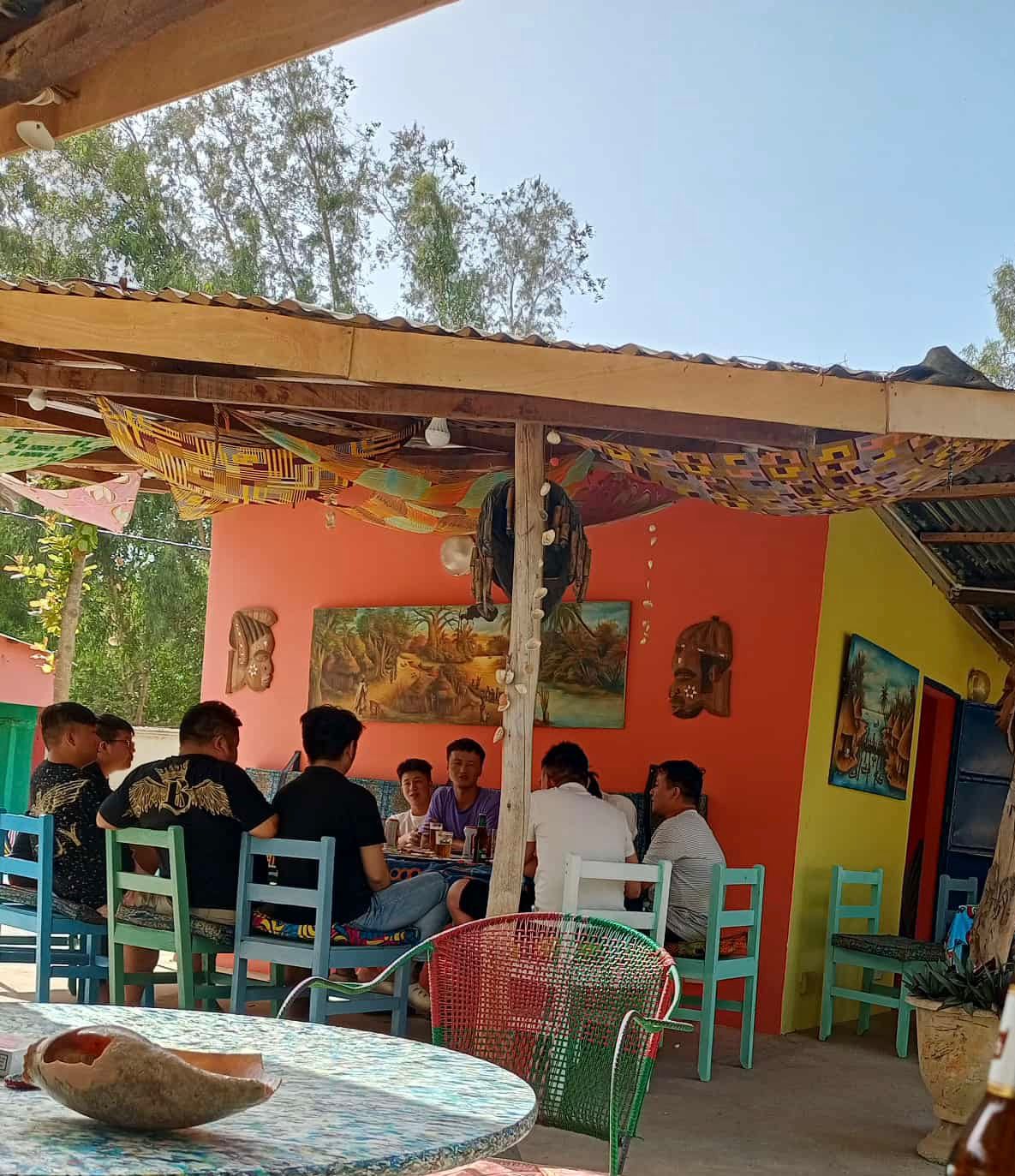
In a dramatic raid that has sent shockwaves through this quiet coastal town, the Gambia Police Force arrested 60 foreign nationals, presumably from China and Vietnam, in Tujereng, uncovering a sophisticated cybercrime operation. The early morning operation, executed with precision by a joint security team, resulted in the seizure of 36 laptops, 174 mobile phones, 32 desktop computers, and an array of networking equipment, exposing a sprawling network allegedly targeting victims worldwide.
The Alkamba Times’ investigation has unearthed startling details about the suspects’ secretive lives, questionable property dealings, and a chilling incident that triggered their downfall.
The suspects arrived in The Gambia six months ago. They had set up their base in two upscale apartments in the serene coastal areas of Tujereng and Batokunku, near the idyllic seaside. These properties, rented out to the group without apparent scrutiny, are owned by prominent figures in Gambian society, raising serious questions about due diligence and oversight. One apartment belongs to Abubakar Jeng, a high-ranking government official and National Security Advisor to the President. Peter Senghore, a well-known businessman interested in nightclubs and real estate, owns the second. While there is no independent verification that Jeng and Senghore were aware of the suspects’ alleged criminal activities, Alkamba Times confirmed that they facilitated the rental without conducting background checks on the tenants. Senghore, similarly, leased his property to the group, capitalizing on the lucrative coastal real estate market.
Residents had long suspected something was amiss. According to a source closely monitoring the group, the suspects kept a low profile, rarely venturing outside their compounds or interacting with the community, except through a hired watchman. “They were like ghosts,” the source told Alkamba Times. “No one saw them, no one knew them, except the guard. It raised eyebrows.”
The group’s reclusive behavior fueled speculation, but their frequent visits to Kacha Dula, a popular beachside restaurant owned by a German woman married to a Gambian man, provided a breakthrough. Our source, dining at the restaurant, observed the suspects and managed to photograph several members, later identifying suspicious behavior that pointed to cybercrime activities.
“This exposes vulnerabilities in our national security framework.” A cybersecurity expert speaking anonymously told The Alkamba Times.
“This bust reveals how global cybercrime syndicates exploit smaller nations like The Gambia as safe havens. High-ranking officials’ lack of due diligence risks turning our country into a hub for transnational crime, undermining trust and economic stability.”
The operation unraveled dramatically when the group’s hired watchman, tasked with securing their Tujereng compound, grew suspicious of their secretive activities. According to our sources, the watchman noticed “strange movements” within the compound, including late-night activity and the constant hum of electronic devices. When he threatened to expose them, the suspects allegedly poisoned him, leading to his hospitalization. From his hospital bed, the watchman alerted authorities, providing critical information about the group’s operations. This tip-off prompted the Gambia Police Force to launch a swift raid on both apartments, apprehending all 60 suspects and seizing a trove of electronic equipment.
Preliminary investigations reveal a sophisticated cybercrime network, allegedly orchestrating cryptocurrency investment fraud and social media recruitment schemes. These operations, designed to lure victims with promises of astronomical profits, were linked to offshore companies, allowing the group to operate under the radar. The scale of the seizure—174 mobile phones, 36 laptops, and 32 desktop computers—underscores the operation’s complexity and the global reach of their alleged crimes. Authorities are now working with international law enforcement, including INTERPOL, to verify the suspects’ identities and trace the full extent of their activities.
The involvement of high-profile property owners has sparked outrage and questions about accountability.
“ How could a National Security Advisor, entrusted with safeguarding the nation, rent out a property to alleged criminals without vetting them? It’s a betrayal of trust,” our source remarked. “If someone in that position can’t conduct a basic background check, what does it say about our security systems?”
Similarly, Senghore’s role as a landlord to the group has drawn scrutiny, with critics questioning whether financial gain trumped responsibility in leasing to unverified tenants.
The Gambia Police Force has hailed the operation as a significant victory in the fight against cybercrime, one of the largest busts in the country’s history. “This sends a clear message,” the police said following the group arrest on Wednesday. “We are committed to rooting out cybercrime and protecting our citizens and the global community from these predatory schemes.” The public has been urged to remain vigilant, particularly regarding online investment opportunities promising unrealistic returns.
Meanwhile, four days have passed since the police announced the arrest, and they have yet to provide the public with further updates on the state of their investigation.
The scandal exposes the growing threat of cybercrime in The Gambia, a nation increasingly targeted by international syndicates exploiting lax regulations and economic vulnerabilities. The arrests come amid a broader regional crackdown, with countries like Nigeria deporting foreign nationals convicted of similar crimes in 2025. The Tujereng bust highlights the global nature of cybercrime and the urgent need for cross-border cooperation to dismantle these networks.
As investigations continue, the focus remains on unraveling the full scope of the group’s operations and ensuring justice for victims worldwide. For Tujereng’s residents, the quiet coastal town will never feel quite the same, now marked by a scandal that has exposed the dark underbelly of digital crime lurking in their midst.
Currently, TAT has been reliably informed that the apartments are now under police protection and surveillance, with restricted public access to the facility.