By: Alieu Ceesay
Years after The Gambia embarked on a landmark journey to confront its dark history of human rights abuses, many victims continue to wait for justice, reparations, and closure as delays plague the implementation of the Truth, Reconciliation and Reparations Commission (TRRC) recommendations.
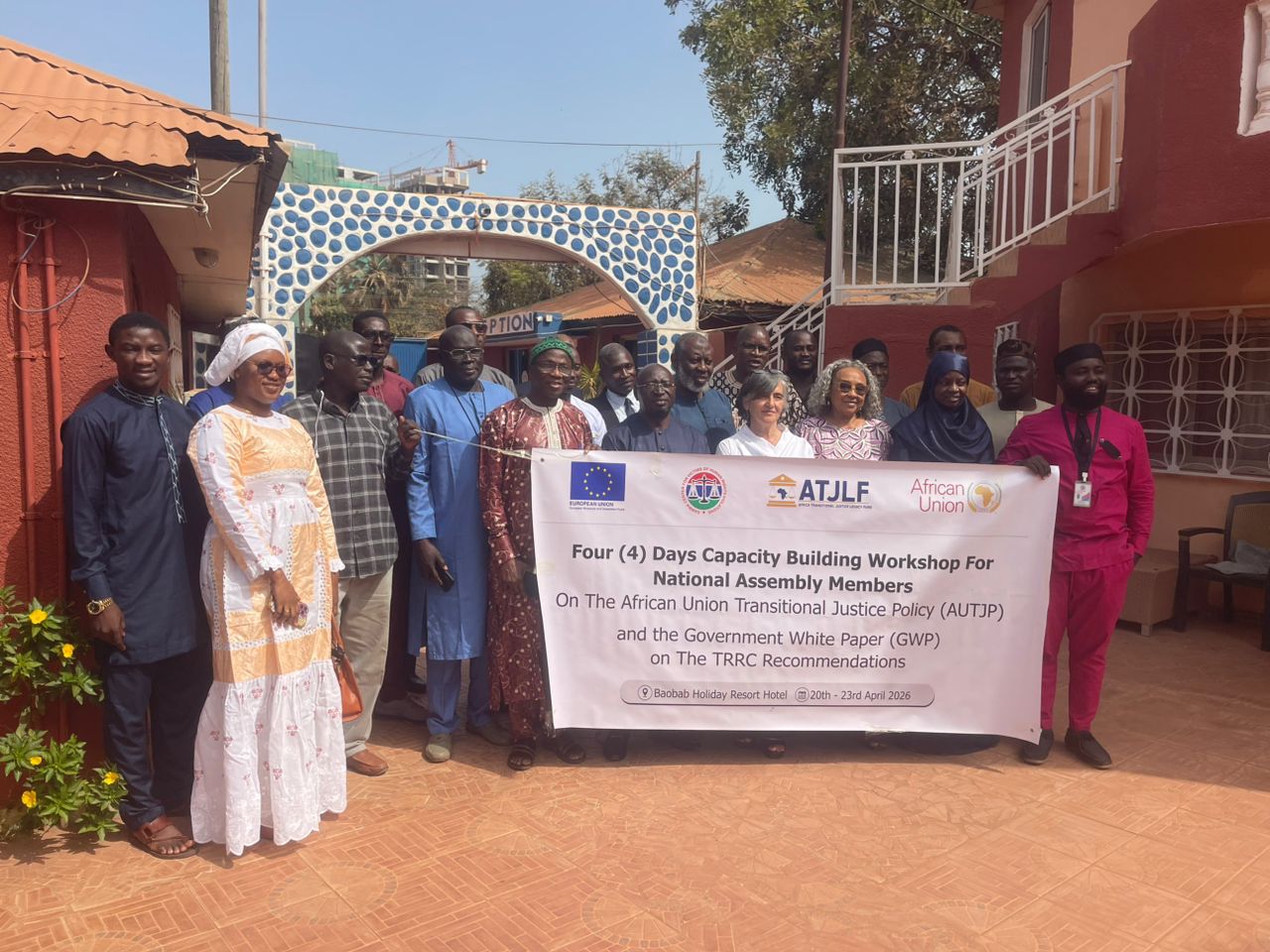
This pressing concern took center stage during a four-day capacity-building training for members of the National Assembly, organized by the Gambia Center for Victims of Human Rights Violations. The workshop focused on popularising the African Union Transitional Justice Policy (AUTJP) and pushing for swift government action on the White Paper outlining TRRC recommendations.
The training brought together lawmakers, civil society organizations, and international partners to enhance legislative oversight and accelerate the transitional justice process, which remains incomplete despite significant progress in truth-telling.
Muhammad Sandeng, Acting Board Chair of the Gambia Center for Victims of Human Rights Violations, highlighted the organization’s vital role since its establishment in 2017. “From 2017 to date, the Victim Center continues to register and document human rights violations and participate in the monitoring of the TRRC recommendations by the Government,” he said.
The Center has registered over 1,500 victims and provides critical medical, educational, and psychosocial support to survivors and their families. The ongoing project, funded through the African Transitional Justice Legacy Fund, seeks to raise awareness about both the AU policy and the state’s commitments to victims.
Yadicon Eribo Njie, Chairperson of TANGO, delivered a passionate keynote address, emphasizing the human cost of delays. “Across the country, victims continue to live with the physical, psychological, and socioeconomic consequences of abuse,” she said. “For them, transitional justice is not an abstract policy discussion. It is a daily reality, marked by unmet expectations and prolonged suffering.”
Njie urged the government to increase budgetary allocations for reparations, stressing that “Reparations are not acts of charity. They are obligations of the state and the cornerstone of restorative justice.”
The Deputy Clerk of the National Assembly acknowledged the legislature’s pivotal position in the process.
“The National Assembly is strategically positioned to drive this transition as it holds the exclusive mandate to enact the statutory reforms required to transform TRRC recommendations into enforceable laws,” he stated.
He added that robust oversight would be essential to ensure transparency, accountability, and adherence to implementation timelines.
European Union Ambassador to The Gambia, Immaculada Roca i Cortés, described the TRRC process as a historic milestone but warned that the true test lies in implementation.
“Truth-telling, important as it is, is only one part of the journey. The real challenge lies in translating recommendations into action and commitments into meaningful change for people’s lives,” she said.
The Ambassador reaffirmed the EU’s continued support for The Gambia’s transitional justice efforts, noting that sustainable peace depends on accountability, inclusion, and respect for human dignity.
As the training sessions continue, participants are examining ways to integrate the AUTJP and TRRC recommendations into national legislation and public discourse.
For the many victims still bearing the scars of past abuses, the message from the gathering was unequivocal: justice delayed risks becoming justice denied. With thousands still waiting for reparations, medical care, and accountability, pressure is mounting on the National Assembly to act decisively and fast-track the necessary reforms.