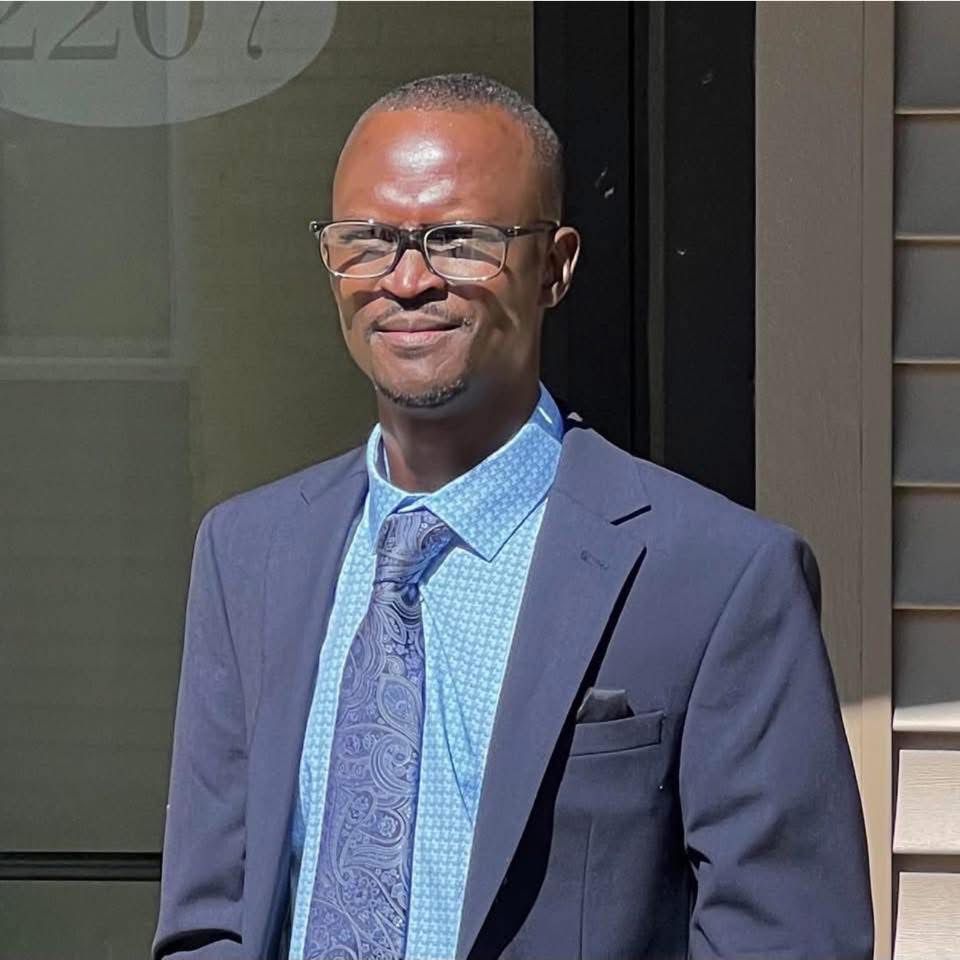
As the country gears up for the December 5, 2026, presidential election, prominent US-based Gambian political scientist Dr. Lamin Keita has issued a urgent warning: the alleged surge in fraudulent birth certificates used to obtain voter cards is not a mere administrative glitch but a profound constitutional crisis that could undermine the very foundations of Gambian democracy.
In a detailed analysis titled “Gambia: Beyond Constitutional Silence: Fraudulent Identity and Electoral Integrity,” Dr. Keita, a postdoctoral research associate at the University of Notre Dame’s Kellogg Institute for International Studies and a comparative political violence expert, argues that the discreet production of fake identities during voter registration poses an existential threat to electoral outcomes and public trust.
Recent allegations of irregularities in areas such as Tanje and Talinding have fueled public debate, with opposition parties claiming ruling party operatives have been involved in issuing documents to ineligible individuals, including non-citizens and minors.
Dr. Keita contends that the absence of explicit constitutional language banning the use of forged birth certificates does not render the practice permissible. Instead, he says, The Gambia’s 1997 Constitution provides a clear, if implicit, framework prohibiting such fraud through three key provisions. Section 39 ties the right to vote to verifiable citizenship, age, and lawful registration, establishing suffrage as a regulated right rather than an automatic entitlement.
“The use of fraudulent birth certificates fundamentally undermines this principle by enabling ineligible individuals to access voter cards,” Keita writes. This distorts the electorate and blurs the line between legitimate and illegitimate participation.
Compounding the issue, Section 42 assigns the Independent Electoral Commission (IEC) the duty of conducting voter registration and ensuring that elections are free, fair, and transparent. Keita notes that gaps in identity verification and the lack of integration between voter rolls and national civil registration systems have created fertile ground for manipulation.
The alleged explosion of fake documents in Tanje and Talinding, he argues, directly contradicts the IEC’s constitutional mandate and erodes confidence in the voter register – the bedrock of electoral legitimacy.
At the heart of his warning is Section 4, which declares the Constitution the supreme law of the land. Any act that subverts lawful electoral processes, including the use of forged documents or multiple registrations, violates this supremacy, Keita asserts. Failure by the IEC and the Ministry of Justice to act decisively risks normalizing illegality and deepening what he calls a “moral hazard” – where weak enforcement incentivizes fraud as a rational strategy.
The scholar also criticizes the silence from opposition leaders and the perceived inaction by state institutions. “Opposition parties have a normative responsibility to defend electoral integrity,” he states, urging not just the UDP but all collective opposition forces to challenge irregularities. When political actors perceive rules as unenforced, he warns, fraudulent behavior becomes more likely, further damaging institutional credibility.
Drawing parallels with electoral crises in Côte d’Ivoire, Nigeria, Kenya, and Zimbabwe, Dr. Keita cautions that disputed voter rolls – rather than vote counting alone – often spark post-election instability. “If Gambian citizens believe the electoral process has been negotiated at the registration stage, the legitimacy of the outcome would simply become inherently suspect,” he writes.
To avert disaster, Keita calls for immediate constitutional-level reforms: stronger identity verification, full integration of voter registration with civil registries, greater transparency, and strict enforcement against fraudsters. Civil society and ordinary citizens, whose lives are most affected, must hold the IEC accountable, he adds.
“The Gambia belongs to all of us,” Keita concludes. “The 2026 elections will serve as a critical test of whether the country can uphold these constitutional commitments or risk allowing systemic vulnerabilities to define its democratic trajectory.”