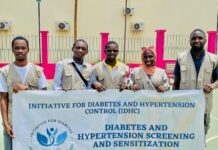
By: Fatou Mboob of Initiative for Diabetes and Hypertension Control (IDHC)
Introduction
Diabetes mellitus and hypertension are rapidly increasing public health challenges in The Gambia and across sub-Saharan Africa. These are non-communicable diseases (NCDs) which are strongly linked with lifestyle factors such as poor diet, physical inactivity, and obesity. In recent years, fasting, whether intermittent or religious (such as Ramadan or Lent), has shown great help in preventing and managing these conditions through a simple, low-cost lifestyle intervention.
This article explores how fasting can contribute to the prevention and management of diabetes and hypertension in a Gambian context.
Definition of terms:
Diabetes mellitus is a chronic metabolic disease characterized by elevated blood glucose (sugar) levels resulting from defects in insulin secretion, insulin action, or both. Over time, uncontrolled diabetes can lead to serious damage to the heart, blood vessels, eyes, kidneys, and nerves.
Hypertension (high blood pressure) is a chronic medical condition in which the force of blood against the walls of the arteries is persistently elevated, typically defined as a blood pressure of ≥140/90 mmHg. It increases the risk of heart disease, stroke, and kidney failure.
Fasting : is the voluntary abstinence from food (and sometimes drink) for a specific period of time, often practiced for religious, cultural, or health reasons.
Common forms include:
Intermittent fasting (e.g., 16-hour fasting, alternate-day fasting)•
Religious fasting (e.g., Ramadan fasting from dawn to sunset)
During fasting, the body shifts from using glucose to using stored fat for energy, triggering beneficial metabolic changes.
How Fasting Helps Prevent and Manage Diabetes
- Improves Blood Sugar Control
Fasting helps regulate blood glucose levels by reducing frequent spikes caused by continuous eating and drinking of beverages (e.g., attaya or sugary drinks).
Studies show that fasting can:
- Lower fasting blood glucose
- Reduce insulin resistance
- Improve overall glycemic control
This is particularly important in preventing type 2 diabetes, which is increasingly common in urban Gambian populations.
- Enhances Insulin Sensitivity
Insulin resistance is a key factor in diabetes. Fasting allows insulin levels to drop, giving the body time to “reset” its sensitivity to insulin. Research indicates that fasting improves insulin function and metabolic efficiency.
- Promotes Weight Loss
Overweight and obesity are major risk factors for diabetes. Fasting:
- Reduces calorie intake
- Encourages fat burning as a source of energy with low glucose.
- Lowers body mass index (BMI)
Weight reduction alone significantly decreases the risk of developing diabetes (type 2).
- Reduces Risk of Complications
Fasting has been associated with improved lipid profiles and reduced inflammation, both of which help prevent complications such as cardiovascular disease in diabetic patients .
How Fasting Helps Prevent and Manage Hypertension
- Lowers Blood Pressure
Fasting can reduce both systolic and diastolic blood pressure. Evidence shows a reduction in sodium (Na) by several mmHg in individuals practicing fasting. As sodium increases blood pressure by increasing water retention and raising blood volume, this causes the heart to work harder to pump blood, leading to high blood pressure.
- Supports Weight Reduction
Excess weight increases blood pressure. But fasting promotes weight loss and indirectly contributes to better blood pressure control.
- Improves Heart Health
Fasting improves cholesterol levels and reduces inflammation, both of which are key factors in hypertension and cardiovascular disease.
- Regulates Metabolic Function
Fasting restores natural eating cycles and reduces excessive calorie intake, helping prevent metabolic syndrome, a major contributor to hypertension.
Relevance to The Gambian Context
In The Gambia:
- Traditional diets are increasingly being replaced by high-calorie processed foods.
- Physical inactivity is rising, especially in urban areas.
- Cultural and religious fasting practices (especially during Ramadan) are already widely observed.
This presents an opportunity to promote fasting as a culturally acceptable and cost-effective public health strategy.
Practical Recommendations
To maximize the benefits of fasting:
- Maintain balanced meals during non-fasting periods (fruits, vegetables, whole grains).
- Avoid excessive sugary and fried foods when breaking fast.
- Stay hydrated (after breaking your fast).
- Combine fasting with regular physical activity.
- Seek medical advice before fasting for:
- Diabetic patients on medication
- Elderly individuals
- Pregnant women
Important Considerations
While fasting has benefits, it is not suitable for everyone:
- Some diabetic patients may experience hypoglycemia (low blood sugar) if fasting is not properly managed.
- Medical supervision is essential for patients with chronic illnesses.
Conclusion
Fasting is a promising, culturally relevant, and cost-effective strategy for the prevention and management of diabetes and hypertension in The Gambia. By improving blood sugar control, reducing weight, lowering blood pressure, and enhancing overall metabolic health, fasting can play a significant role in combating the rising burden of non-communicable diseases.
However, its implementation should be guided, safe, and supported by health education and medical advice.•
References:
Naous, E., Achkar, A., & Mitri, J. (2023). Intermittent fasting and its effects on weight, glycemia, lipids, and blood pressure: A narrative review. Nutrients, 15(16), 3661. https://pmc.ncbi.nlm.nih.gov/articles/PMC10459308/
Baharuddin, D., Said, M. A., & Majid, H. A. (2025). The effect of intermittent fasting on elevated blood pressure: A systematic review of human studies. Iranian Journal of Public Health. https://pubmed.ncbi.nlm.nih.gov/40225245/
Kibret, K. T., Peeters, A., Tegegne, T. K., Mesfin, Y. M., & Nichols, M. (2025). Intermittent fasting for the prevention of cardiovascular disease risks: A systematic review and network meta-analysis. Current Nutrition Reports. https://link.springer.com/article/10.1007/s13668-025-00684-7
Mayor, E. (2023). Neurotrophic effects of intermittent fasting, calorie restriction and exercise: A review. arXiv. https://arxiv.org/abs/2305.11425