By: Abdoulie John
Amid growing concerns over press freedom, the Gambia Press Union (GPU) has called on the African Commission on Human and Peoples’ Rights (ACHPR) to pressure the Gambian government to halt violence against journalists and implement long-overdue media reforms.
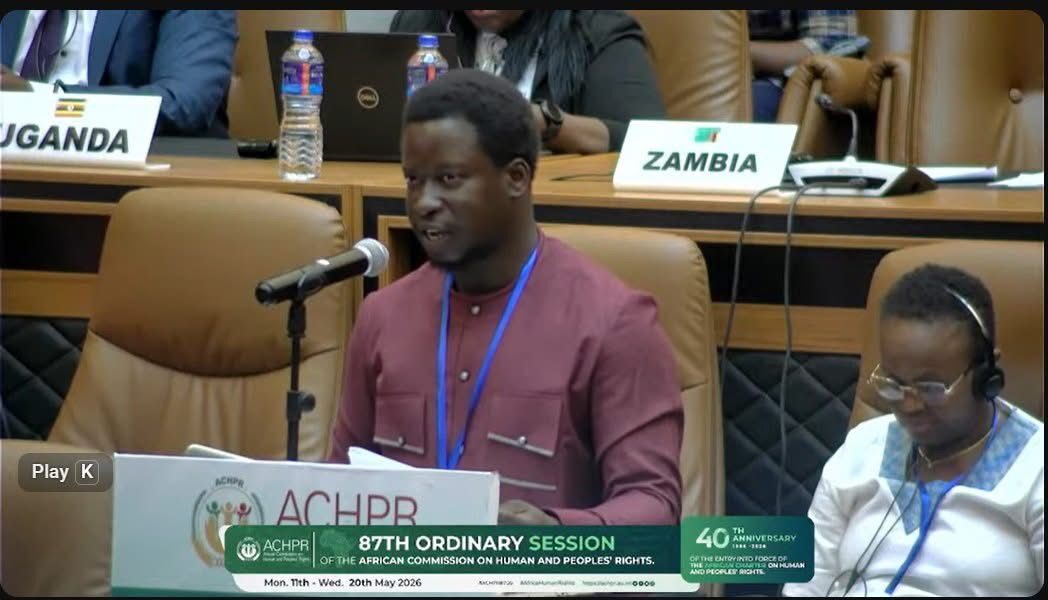
Modou S. Joof, Secretary General of the GPU, appealed on Wednesday during the ongoing 87th Ordinary Session of the ACHPR. Addressing the Commission’s Chairperson, Joof demanded urgent action to curb the increasing hostility faced by Gambian media practitioners.
“Urge the Gambia Government to put an end to impunity for violent attacks on journalists by investigating and prosecuting physical assaults,” Joof stated. He highlighted a troubling pattern of shrinking democratic space, where journalists are frequently targeted with lawsuits aimed at silencing dissenting voices and critical reporting.
The case of Kebba Ansu Manneh, an investigative journalist with the Alkamba Times, was cited as a stark example of this repressive trend, reflecting broader challenges confronting independent media in the country.
Joof further pressed the ACHPR to compel the government to fully implement the recommendations of the Truth, Reconciliation and Reparations Commission (TRRC) on media law reforms. These include guarantees for media independence, pluralism, and the safety of journalists.
“Media freedom is the cornerstone of any thriving democracy,” Joof emphasized, urging Chairperson Idrissa Sow to intervene decisively.
In a wider appeal, the GPU Secretary General called on the Commission to engage Gambia’s lawmakers on proposed legislation that threatens press freedom. He specifically urged consideration of GPU position papers recommending the removal of restrictive provisions in the Cybercrime Bill 2023 and the Communication Bill 2025.
The interventions, Joof argued, are essential to reversing the erosion of press freedom and fostering an environment where journalists can operate without fear of harassment, intimidation, or legal persecution.
The GPU’s intervention at the continental human rights body underscores mounting frustration within Gambia’s media fraternity. Observers say the appeal reflects deep-seated concerns that post-authoritarian gains in press freedom risk being reversed through new legal and physical threats.
As the ACHPR session continues, stakeholders will be watching closely to see whether the Commission will issue strong recommendations to the Gambian authorities. For many journalists, the outcome could determine the future of independent media in the country.