By Fatou Dahaba
The Gambia Revenue Authority (GRA) on Saturday evening celebrated the country’s most committed taxpayers, recognizing individuals and businesses whose consistent compliance is powering national development and reducing reliance on foreign aid.
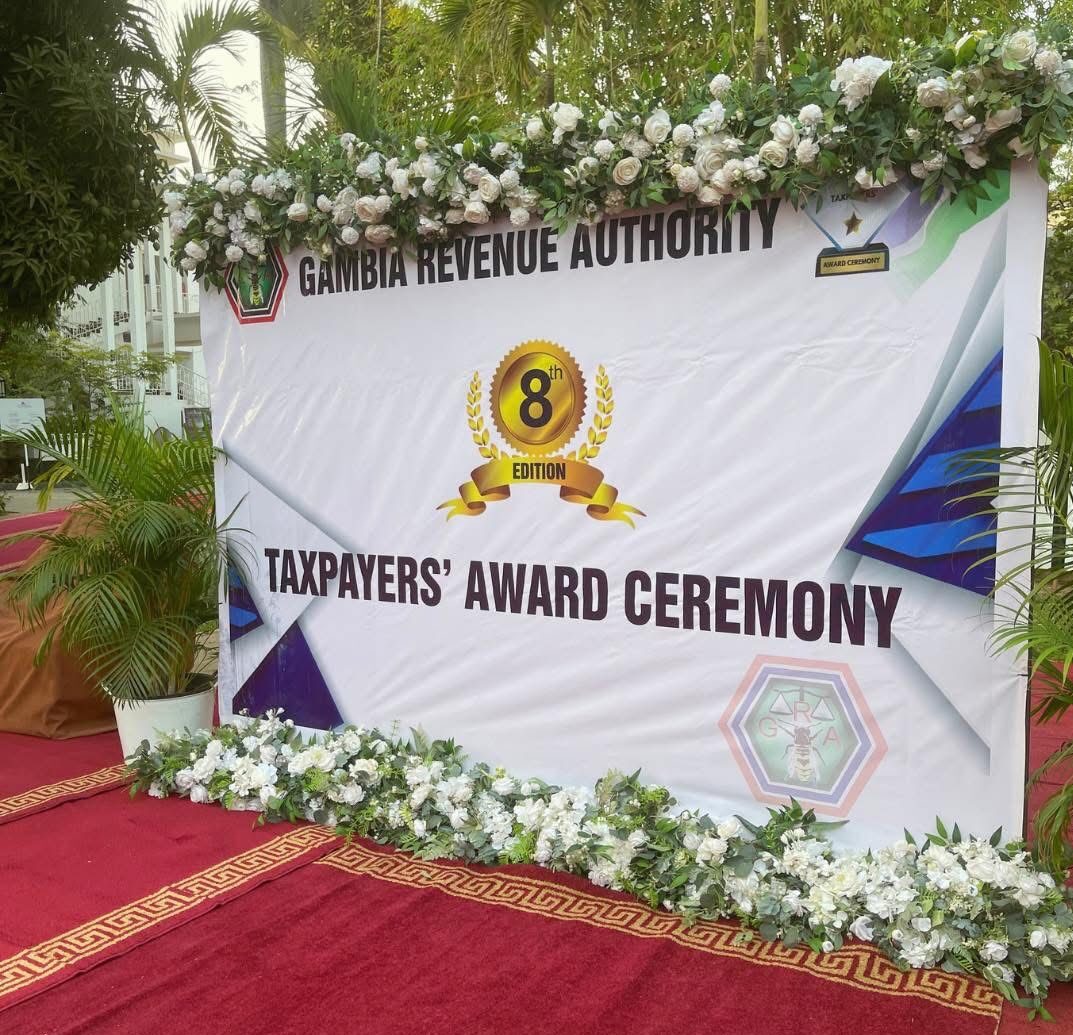
The 8th Taxpayers’ Award Ceremony, held at the Coco Ocean Resort and Spa Hotel, brought together President Adama Barrow, senior government officials, business leaders, and honorees in a glittering event that highlighted the critical link between tax compliance and public service delivery.
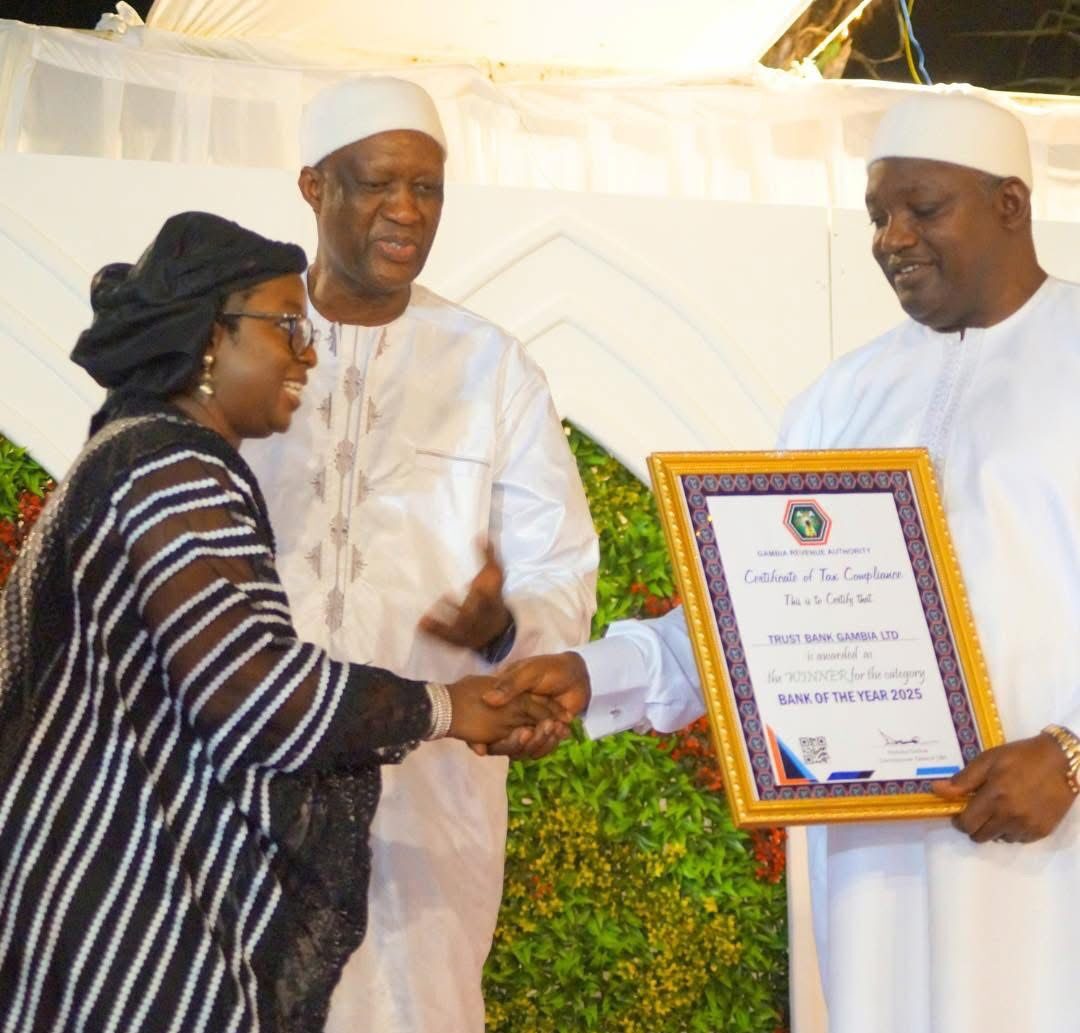
Africell Gambia Ltd retained its crown as the biggest taxpayer of the year for the fourth consecutive year. Trust Bank Gambia was named the most compliant bank and Bank of the Year 2025. Jah Oil Multi Trading clinched Importer of the Year, while Afrimed International received the award for Most Health Care Tax Compliant entity. Several other outstanding taxpayers were also recognized for their exemplary contributions.
In his keynote address, President Adama Barrow underscored that The Gambia’s long-term prosperity hinges on robust domestic resource mobilization. “We cannot continue to rely indefinitely on aid, loans, and grants,” he said, stressing that tax revenue is central to funding national priorities and building self-reliance.
Barrow praised the GRA for remarkable revenue growth, revealing that the authority collected over D25.3 billion in 2025 — a sharp increase from approximately D2.79 billion when he assumed office. He noted that in the first quarter of 2026 alone, GRA recorded more than D7.7 billion, surpassing its target and maintaining a strong upward trajectory.
The President attributed these gains not to higher tax rates but to comprehensive reforms in tax administration, improved compliance, stronger enforcement mechanisms, and the adoption of digital systems. These measures, he said, have enhanced efficiency and fostered greater public trust in the tax system.
Acknowledging the economic challenges faced by citizens and businesses — particularly rising living costs driven by global food and energy shocks — Barrow highlighted government interventions such as fuel price support. He pledged to sustain such measures where necessary while reaffirming the partnership between government and taxpayers.
“Tax contributions are investments in our nation’s future,” he declared, pointing to tangible outcomes including improved roads, schools, hospitals, universities, and other essential infrastructure across the country.
GRA Commissioner General Yankuba Darboe echoed the President’s sentiments, describing the revenue surge as the result of years of modernization efforts. He noted that annual collections have grown dramatically from about D2.8 billion in 2006 to over D25 billion in 2025, with Q1 2026 performance exceeding targets.
“Growth has been achieved without increasing tax rates, but through deliberate reforms, stronger enforcement, and digitalization in both tax and customs operations,” Darboe said. He credited government support, legal reforms, and stakeholder cooperation for the progress, emphasizing that tax revenue is vital for financing critical public services.
Darboe called for greater voluntary compliance, particularly among property owners and other segments yet to fully meet their obligations. He described the awards not only as recognition but as an incentive for others to emulate the honorees, framing tax payment as both a civic duty and a pathway to national self-reliance.
Dawda Ndure, Chairman of the GRA Board of Directors, described the authority’s recent performance as unprecedented. He said monthly targets were exceeded in the early months of 2026, generating additional funds that supported road works, security operations, fuel subsidies, and an improved business environment.
Ndure commended the Ministry of Finance, GRA management, and staff for their dedication, noting ongoing focus on digital reforms, expanded tax base, and collaboration to create a fairer, more efficient tax system.
The ceremony reinforced a powerful message: tax compliance is the bedrock of sustainable development.
As The Gambia continues its journey toward greater economic independence, the contributions of compliant taxpayers like Africell, Trust Bank, Jah Oil, and Afrimed stand as shining examples of civic responsibility driving national progress.
Officials expressed optimism that the momentum from reforms and digitalization will further broaden the tax base, improve service delivery, and create a more resilient economy for all Gambians.