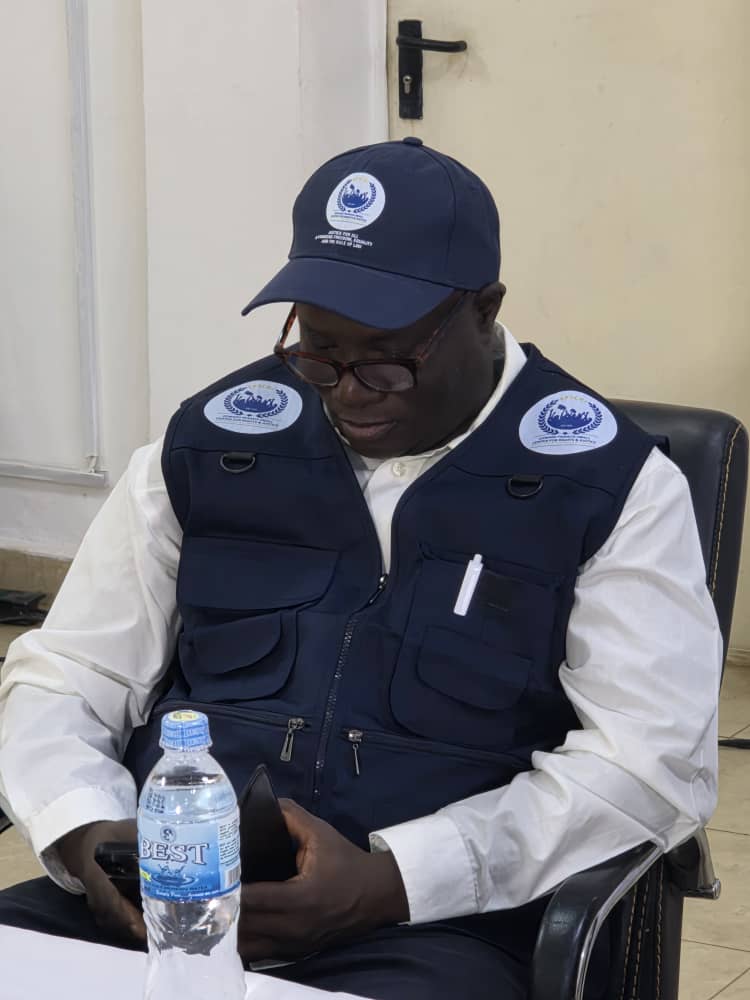
Prominent Gambian human rights activist and governance commentator Madi Jobateh has sharply criticized the National Water and Electricity Company (NAWEC) in response to its latest press release, describing the ongoing energy crisis as a profound failure of strategic planning and national governance.
In a reaction to NAWEC’s May 30, 2026 update on electricity supply challenges, Jobateh warned that Gambia’s power system has become dangerously dependent on foreign imports, with domestic generation reduced to a mere backup role. He argued this structure undermines national sovereignty and exposes the country to external risks.
“NAWEC’s latest press release should alarm every Gambian,” Jobateh wrote. “It confirms a dangerous reality: The Gambia’s electricity system now depends overwhelmingly on foreign imports from the regional power network (OMVG/WAPP), while local generation serves mainly as backup capacity.”
He emphasized that electricity is a strategic national security asset critical for hospitals, water supply, telecommunications, banking, education, businesses, airports, security, and government operations. A nation unable to generate sufficient domestic power, he said, remains vulnerable to regional instability, fuel shortages, technical failures, and decisions made beyond its borders.
According to NAWEC, imports have dropped by up to 60 megawatts due to technical issues and fuel shortages in the regional grid, resulting in a supply shortfall exceeding 50 percent of demand. Some areas are experiencing outages lasting up to 10 hours. This aligns with April 2026 disclosures showing available capacity at about 78 MW against a peak demand of 106 MW — a 26 MW deficit. Roughly 52 percent of supply was imported, with only 22 MW from local sources.
Jobateh highlighted the irony amid years of major investments, including the Gambia Electricity Access Project (GEAP), Gambia Electricity Restoration and Modernization Project (GERMP), and other donor-funded initiatives totaling hundreds of millions of dollars. Despite promises of improved reliability, domestic generation remains critically limited. NAWEC claims an installed capacity of around 100 MW, yet only about 22 MW is operational during the crisis.
He questioned the gap between installed and available capacity, citing maintenance delays, operational constraints, and high fuel costs. “Maintenance of critical national infrastructure is core management responsibility,” Jobateh stated. Simultaneous unavailability of multiple units during peak import dependence signals failures in planning, prioritization, and operational management.
While the government frames the crisis as temporary, Jobateh insisted it reveals structural weaknesses built over years. He called for accountability on the outcomes of massive funding: “Why can the country still not secure reliable domestic generation after years of loans, grants, and reforms?”
Jobateh urged a shift toward robust domestic generation, stronger maintenance, transparency, and accountability to ensure energy self-sufficiency. He said recurring blackouts remain a symptom of deeper governance challenges and a threat to national security.