By: Momodou S Gagigo and Alieu Ceesay
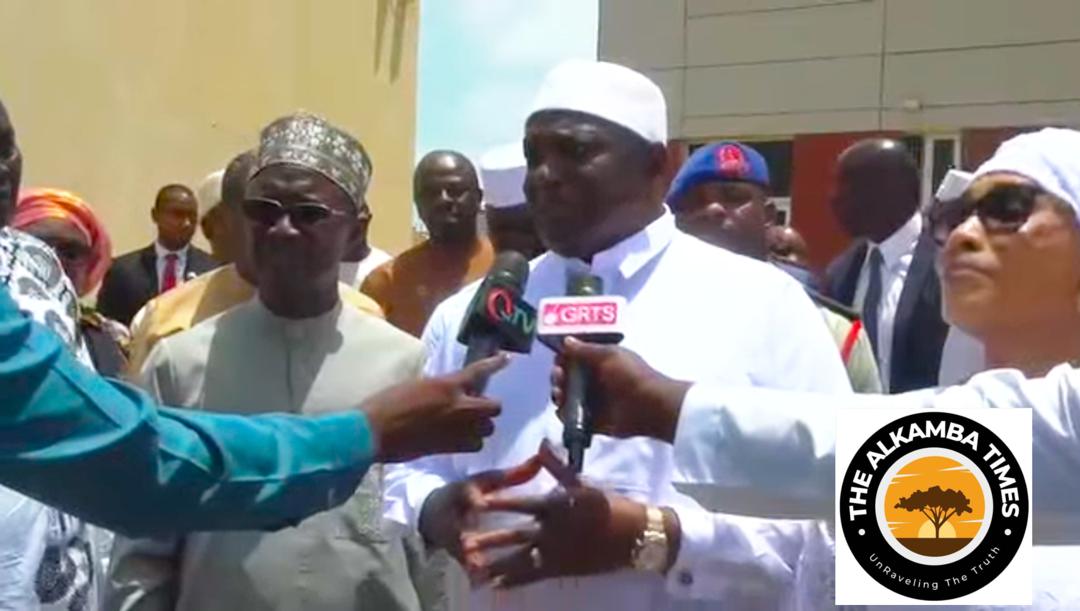
In his first public comments on the escalating national energy crisis, President Adama Barrow has appealed for calm and patience, describing electricity as a matter of “national security” while acknowledging the severe hardships caused by recent widespread power outages.
For weeks, Gambians have endured frequent and prolonged blackouts that have crippled small businesses, disrupted students preparing for national examinations, forced families to endure sweltering nights without fans or refrigeration, and strained health facilities reliant on consistent electricity. The power cuts have sparked growing public frustration and questions about the government’s response.
Speaking on the issue, President Barrow assured citizens that his administration is treating the situation with utmost urgency.
“We are concerned with electricity. We consider it a national security force,” he said. “That is why we are doing everything possible to restore stable electricity in this country.”
The President noted that The Gambia enjoyed a relatively stable power supply for nearly two years, a period during which complaints were minimal.
“Good news is no news,” he remarked, explaining that reliable electricity had become taken for granted until the recent disruptions thrust the issue into the national spotlight.
Barrow attributed the current challenges primarily to technical issues that cannot be resolved overnight. He revealed that the government is collaborating closely with regional partners, including Senegal and Guinea, to stabilize supply.
Addressing a common public misconception, the President clarified that electricity exchange with Senegal is mutual.
“Senegal is also taking power from us,” he said. “At the end of the month, we calculate who will pay who.”
He added that such cross-border power sharing is standard practice worldwide, even among developed nations.
Expanding domestic generation capacity, Barrow stressed, is a complex and costly undertaking.
“You don’t go to the market and buy power. It is not a quick fix,” he said, pointing out that even a modest 15-megawatt project requires years from tendering to completion. He disclosed that The Gambia could generate an additional 17 megawatts locally, but the cost would range between $20 million and $30 million — a significant sum given the country’s limited financial resources.
Despite these constraints, the President insisted the government is pursuing both short-term regional solutions and longer-term local investments.
“We promise Gambians that we will restore this power,” he declared.
The comments come as many citizens continue to grapple with the daily realities of the crisis. Shop owners report lost income, students struggle to study after dark, and health workers worry about critical equipment failures.
While the President’s intervention offers reassurance and transparency, ordinary Gambians are now waiting to see tangible improvements. The ongoing energy crisis has underscored electricity’s central role in livelihoods, education, healthcare, and national development. As the government works with partners to resolve the technical challenges, the promise of restored stable power remains the hope sustaining the nation through these difficult weeks.