By Fatou Dahaba
Sharp criticism erupted in the National Assembly on Thursday as lawmakers from across the political divide condemned the worsening electricity crisis, with one prominent opposition figure describing the National Water and Electricity Company (NAWEC)’s performance as a “total management failure.”
Kiang West lawmaker Lamin Ceesay led the charge during a heated debate on a Matter of the Day that highlighted the daily hardships faced by citizens amid prolonged power outages. Ceesay argued that the deteriorating power supply could not have happened overnight and pointed to warning signs within the system that were ignored.
“Power generation and distribution does not deteriorate overnight. There are always warning signs that tell you the status of your system,” he said. “This is a total management failure. This is the reality.”
Ceesay noted that while the President does not directly manage NAWEC, he appoints the board and managing director, and must therefore hold them accountable. He painted a vivid picture of the crisis’s impact: schools struggling without power, hospitals disrupted, and market women losing income as refrigeration units fail during blackouts. The lawmaker also criticized NAWEC’s reliance on published outage schedules, calling such practices unacceptable in a modern nation.
The debate drew contributions from several lawmakers who warned of broader economic and social consequences. Wuli East NAM Suwaibou Touray described electricity as “the heart of the economy” and cautioned that continued disruptions risked pushing the country toward a failed state.
“We are dealing with a very serious matter because this is the heart of the economy itself,” Touray said. “A country without electricity is becoming a failed state.”
He urged immediate parliamentary intervention, suggesting the relevant committee summon officials from the Ministry of Petroleum and Energy and NAWEC to explain the situation. Touray warned that if the crisis persisted for another two weeks, the damage to the national economy could become catastrophic.
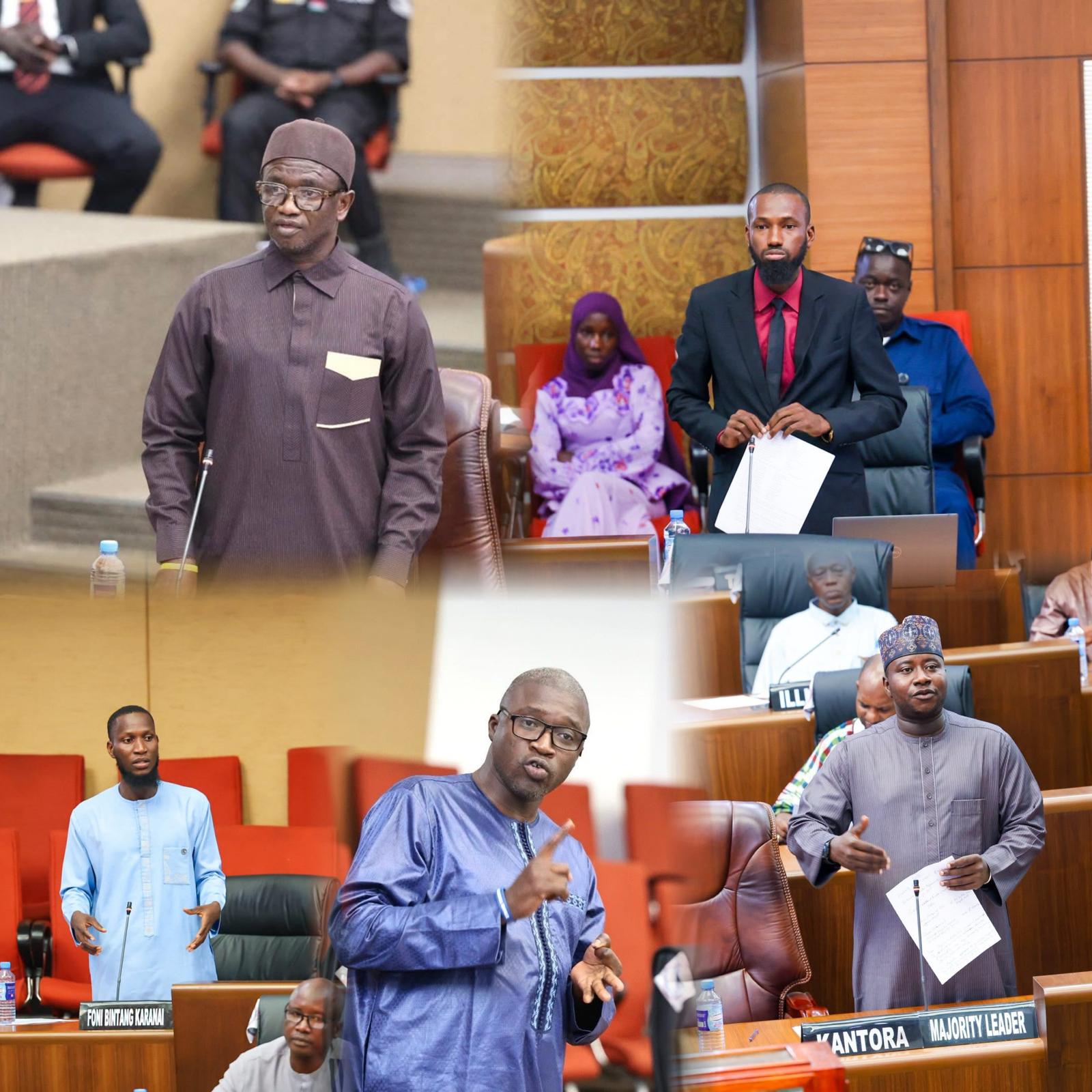
Bakary Badgie, member for Foni Bintang, called for honest reflection rather than politicizing public frustration. He reminded the Assembly of earlier warnings about over-dependence on electricity imports from Senegal and the need for contingency plans. Badgie noted that recent blackouts had ruined stored meat during Tabaski celebrations and disrupted daily life for ordinary Gambians.
Latrikunda Sabiji lawmaker Yaya Menteng Sanyang, who raised the Matter of the Day, painted the crisis as a threat to national survival. He said millions across the Greater Banjul Area, West Coast Region and beyond were enduring “unbearable darkness,” with small businesses such as tailors, mechanics, hairdressers and shopkeepers unable to operate.
Sanyang blamed insufficient investment in domestic generation capacity and overreliance on imported power, which left the country vulnerable to regional shocks and fuel price fluctuations. He demanded an immediate, transparent roadmap from authorities to stabilize the grid before mid-June and a long-term strategy to boost local power production.
Even ruling party voices acknowledged the gravity of the situation. Majority Leader and Brikama North member Alagie S. Darboe said the concerns raised should not be dismissed as political point-scoring. He noted that the President’s recent visit to NAWEC demonstrated the seriousness with which the executive viewed the issue and urged all lawmakers to empathize with citizens deprived of electricity.
Defending the government’s record, Majority Leader Billay G. Tunkara rejected claims of neglect. He said more than $200 million had been invested in the electricity sector since 2017, including generator replacements, solar projects, grid improvements and expansion programs. Generation capacity, he pointed out, had grown from 25 megawatts to 80 megawatts under the current administration.
“It’s very misleading for one to stand in this hallowed chamber saying that the government did not invest in the electricity sector,” Tunkara said.
He also pushed back against suggestions that the power crisis amounted to state failure, arguing that a failed state implies a far broader collapse – including the breakdown of law and order, economic meltdown, and widespread human rights violations – rather than power outages alone.
The intense debate reflects growing public frustration as irregular power supply has become a recurring feature of national life. Households continue to discard spoiled food from unreliable refrigerators, businesses lose revenue, and essential services operate under strain. As lawmakers called for urgent action, the electricity crisis has emerged as one of the most pressing challenges facing the country, testing both the government’s response and the resilience of ordinary Gambians.