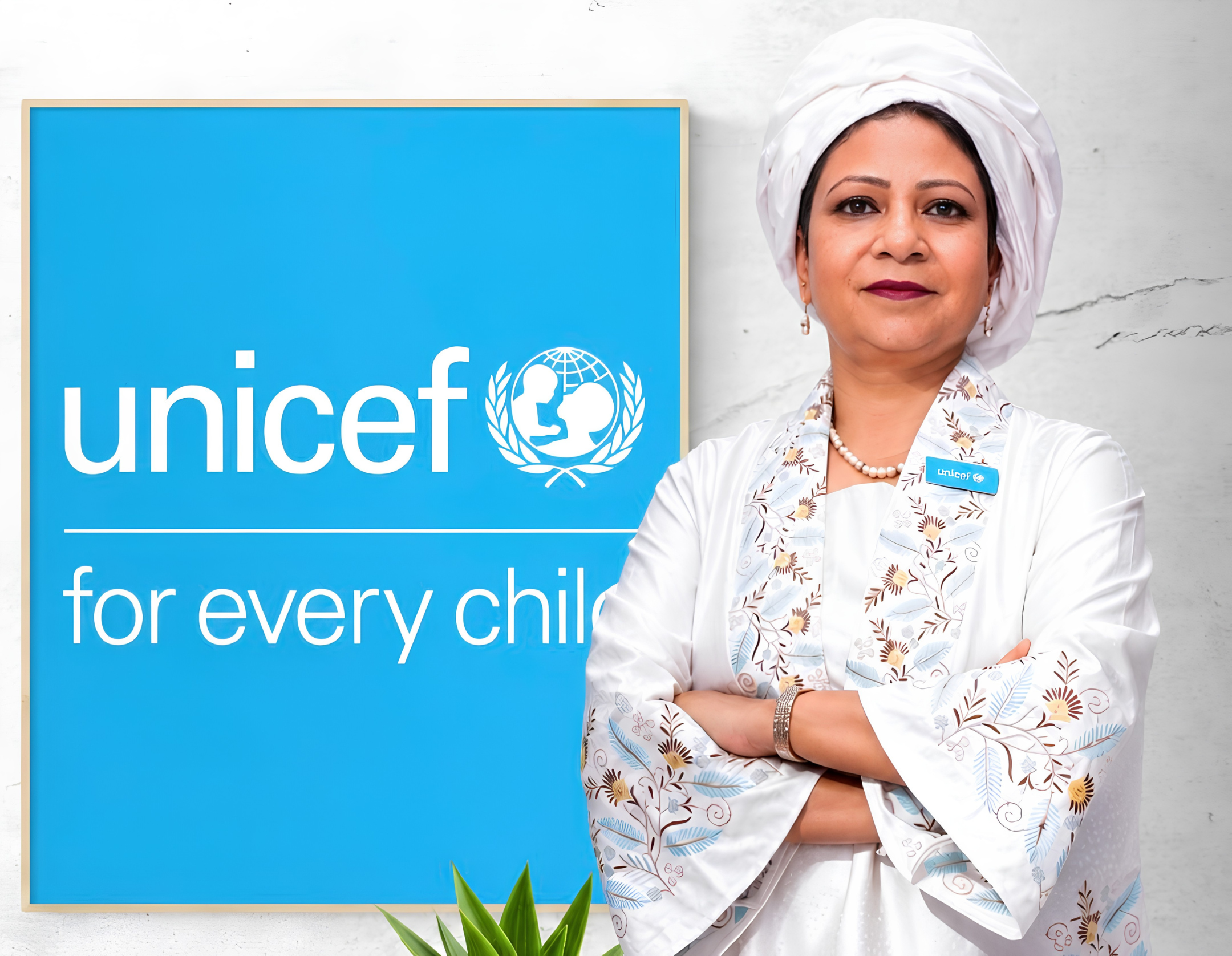
Statement Delivered by Ms. Nafisa Binte Shafique, Country Representative, UNICEF Gambia
“Today, on the Day of the African Child, we mark this year’s theme: ‘Ensuring Universal Access to Water, Sanitation and Hygiene for Every Child in Africa.’ These are not privileges. They are fundamental child rights.
“In The Gambia, the Government has demonstrated genuine commitment to this right. Through the National Development Plan and sustained investment in infrastructure, capacity development and awareness raising, the country is about to become one of the first open defecation free African countries, with only 1% of the population still practicing open defecation, meaning children are growing up in healthier and more dignified environments. In communities like Kaiaf and Karanta in the Central River Region, solar-powered water systems have transformed the life of the populations and strengthened their resilience. UNICEF is proud to stand with the Government and the people of The Gambia in this progress.
“But the work is not finished. According to SDG6 data, only 48% of the population in The Gambia (68% urban areas and 10% in rural areas) uses safely managed drinking water, only 28% (31% in urban areas and 10% in rural areas) uses safely managed sanitation, and just 13% have a handwashing facility with soap and water at home. These gaps have direct consequences for children’s health, education, and wellbeing and need to be urgently addressed.
“Access to WASH shapes outcomes across many sectors. Today, 18% of children in The Gambia are affected by stunting, driven in part by poor hygiene and sanitation practices alongside inadequate nutrition and health services. Addressing these challenges requires sustained investment and coordinated action across sectors demonstrating once again the indivisibility of child rights, starting where children spend most of their time: in school.
“WASH in schools is essential for a safe, healthy, and inclusive learning environment. For adolescent girls, it is particularly critical. A recent U-Report poll in The Gambia found that many adolescent girls in The Gambia struggle to access affordable sanitary products, hygienic and separate latrines, and reliable menstrual health information in schools. The 2025 Gambia Adolescent Girls Call to Action reflected this, with girls demanding safe, private, and functional toilets in all schools. Indeed, the Committee on the Rights of the Child has called on governments to increase access to menstrual hygiene products and address the sociocultural norms that prevent girls from managing menstruation without stigma. No girl should have to choose between her dignity and her education.
“Climate change makes access to safe drinking water and basic sanitation more complex and urgent. Across Africa, just as in The Gambia, recurrent floods are contaminating and even destroying water sources and infrastructure and droughts are drying them up, while the quality of fresh water is threatened by salination, placing children among the most vulnerable. Investing in resilient WASH systems is not only a health imperative; it is a child rights imperative.
“On this Day of the African Child, UNICEF recommits itself to working with the Government, development partners, civil society, communities, children and their families to ensure that every child in The Gambia has access to safe water, basic sanitation, and good hygiene, especially those in the most vulnerable and underserved areas.
“Together, we will fulfil every child’s right to water, sanitation, and hygiene within dignified, climate-resilient communities”
The End
About UNICEF
UNICEF works in over 190 countries and territories to protect the rights of every child. UNICEF has spent over 75 years building the best results for children everywhere. The world’s largest provider of vaccines for developing countries, UNICEF supports child health and nutrition, good water and sanitation, quality basic education for all boys and girls, and the protection of children from violence, exploitation, and AIDS. UNICEF is funded entirely by the voluntary contributions of individuals, businesses, foundations, and governments. For more information about UNICEF and its work, visit, www.unicef.org/gambia
For media inquiries, please contact:
Momodou Muctarr Jallow, Communications Officer, UNICEF Gambia | mmjallow@unicef.org