By: Kebba Ansu Manneh
The Gambia’s labor force stood at 781,868 persons in the first quarter of 2026, with 733,364 people employed and 48,504 unemployed, Statistician General Nyakassi Sanyang of the Gambia Bureau of Statistics (GBoS) announced on Friday.
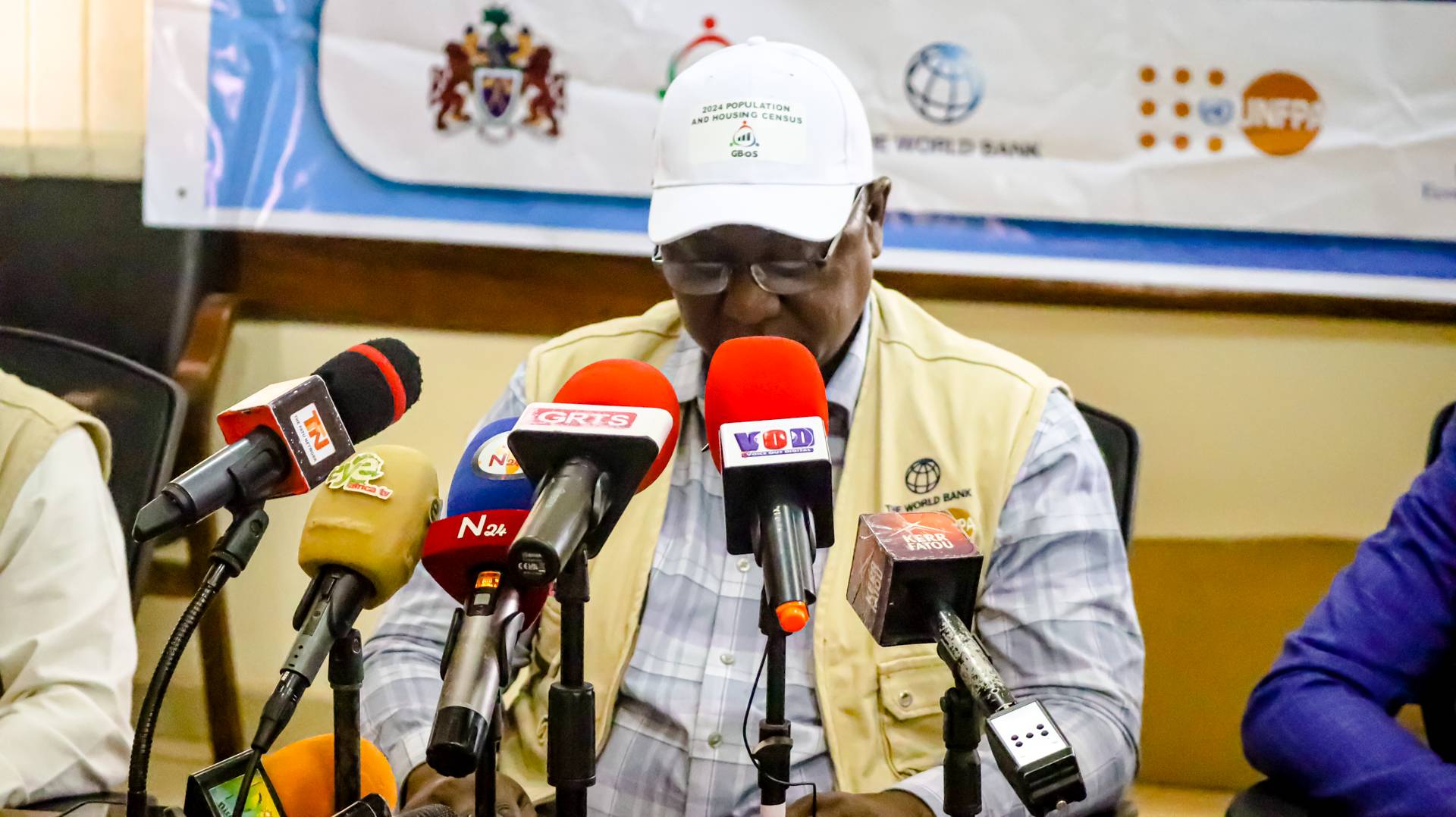
Sanyang disclosed this while launching the Report of The Gambia Labor Market: Progress and Trends, covering the Gambia Labor Force Survey (GLFS) for the first quarters of 2023 and 2026.
The working-age population aged 15 years and older was estimated at 1,434,115 persons in 2026. Between the two survey rounds, the labor force participation rate rose sharply from 43.6 percent to 54.5 percent, an increase of 10.9 percentage points. The employment-to-population ratio climbed from 40.3 percent to 51.1 percent, while the unemployment rate fell from 7.6 percent to 6.2 percent.
Labor underutilization, measured by LU3 (which combines unemployment and the potential labor force), stood at 23.6 percent. The broader LU4 measure, incorporating unemployment, time-related underemployment and the potential labor force, was 32.1 percent. Time-related underemployment affected 11.1 percent of the employed, or about 81,725 persons. Discouraged jobseekers accounted for 5.4 percent of the working-age population. Long-term unemployment, lasting 12 months or more, made up 24.7 percent of all unemployed persons.
Services remained the dominant sector, employing 57.9 percent of workers. Industry strengthened its share, rising from 21.2 percent in 2023 to 24.3 percent in 2026. Independent workers formed 58.5 percent of total employment, while employees accounted for 27.4 percent. The private sector dominated, providing 90.8 percent of jobs.
Agriculture’s share of employment was recorded at 17.8 percent. Sanyang clarified that the figure reflects a new methodology aligned with the 19th International Conference of Labor Statisticians (ICLS) standards, which no longer classifies own-use food production as employment. “The lower share of agricultural employment reflects improvements in statistical methodology rather than an actual decline in agricultural activity,” he said.
Informal employment remained widespread, covering 85.8 percent of employed persons—meaning fewer than one in seven workers held a formal job. Informality was highest in construction (98.1 percent), agriculture (97.7 percent), accommodation and food services (93.6 percent), and wholesale and retail trade (91.5 percent). Women faced higher informality rates than men (88.7 percent versus 83.6 percent), as did rural workers compared with urban workers (91.2 percent versus 83.1 percent).
The 2026 survey is the first to implement the 21st ICLS Resolution fully. Establishment size and fixed location are no longer used as criteria for formality, making the new estimates a baseline that is not directly comparable with previous rounds.
The report also highlighted that about 12.9 percent of children aged 5–17 years—approximately 108,087 children—were engaged in child labor. Other topics covered included persons with disabilities, internal and international migration, and own-use production.
Sanyang noted encouraging signs of progress: more people are participating in the labor force and finding work, while both unemployment and labor underutilization have declined over the past three years.