By: Aja Beyai
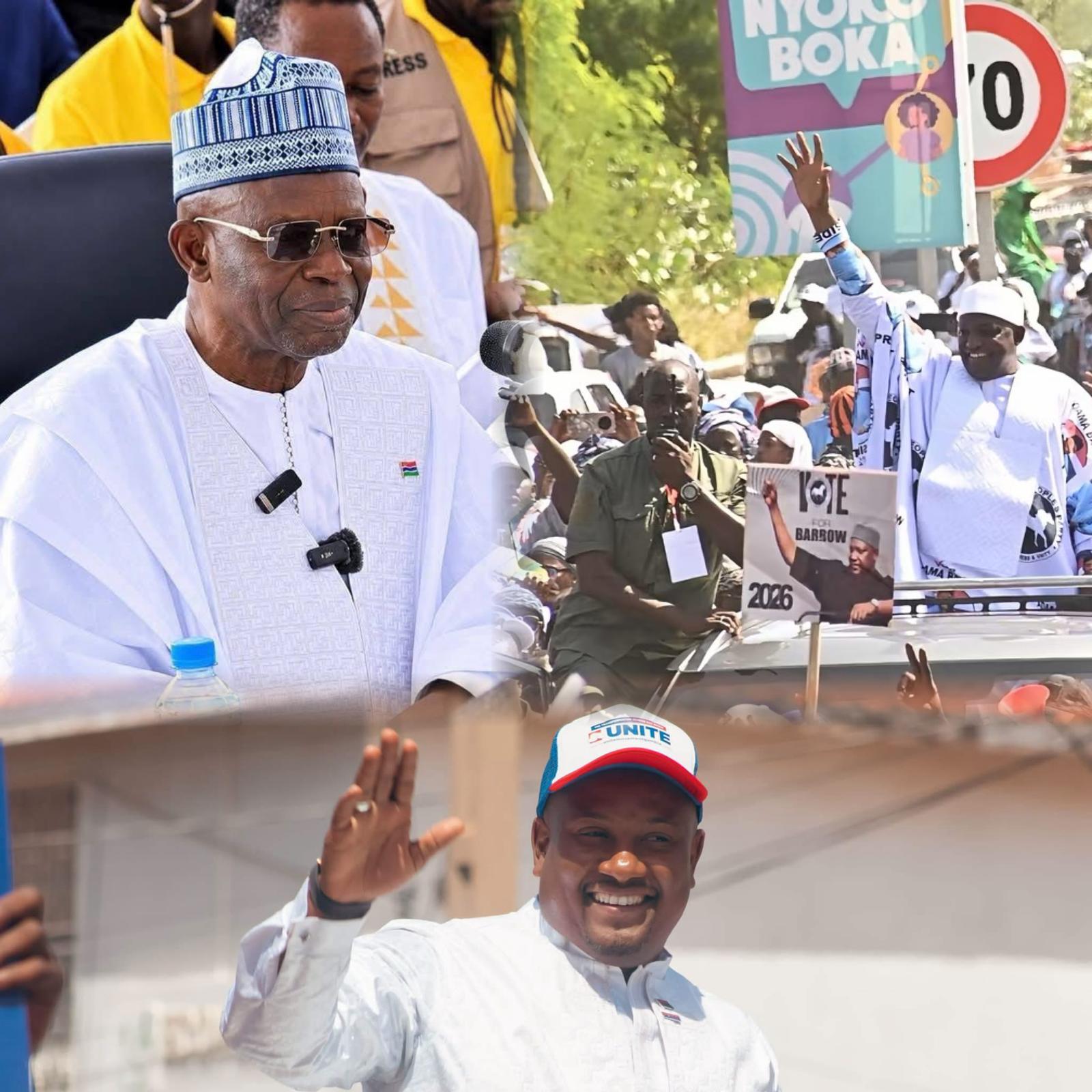
President Adama Barrow leads the presidential race with 37.9% of stated voting intentions, according to a new nationwide CepRass opinion poll, despite widespread dissatisfaction with economic conditions and persistent concerns over living costs, electricity, and electoral integrity.
The survey places Ousainou Darboe and the Gambia First Coalition second with 24.2%, followed by Talib Ahmed Bensouda and Coalition 2026 with 11.3%. The findings show Barrow’s NPP-led alliance holding a clear lead among respondents with valid voter cards ahead of the December 5 election.
However, CepRass cautioned that the results reflect respondents’ views during fieldwork and should not be interpreted as a forecast of the final election outcome.
Researchers interviewed 1,180 households through face-to-face surveys between October 17 and November 1, covering 118 enumeration areas across all eight local government areas and 53 constituencies. The survey calculated presidential voting intentions using weighted responses from valid voter-card holders.
Beyond the leading contenders, APRC No-to-Alliance recorded 5.8%, Team Gambia Grand Coalition secured 1.8%, and NDP received 1.3%. Other aspirants also attracted smaller shares of support.
Meanwhile, 11.6% remained undecided, and 4.2% declined to disclose their preference. Approximately 1% indicated no candidate choice. CepRass stressed that these categories have different meanings and should not collectively be described as voters who can be persuaded to switch allegiance.
Among respondents who named a preferred candidate, 87% said they were completely certain of their choice, while 7% said their preference could change.
Barrow also led expectations about the eventual winner, with 48% anticipating his victory, exceeding his share of personal voting intention. CepRass noted that expectations about who will win measure something different from respondents’ own candidate preferences.
Economic hardship nevertheless dominates the public mood. Four in five respondents described the national economy as fairly or very bad, underscoring the scale of dissatisfaction confronting the government during the campaign.
The cost of living ranked as the leading election concern, cited by 43% of respondents. Food prices accounted for another 14%, meaning affordability issues together represented 57% of responses to the question about voters’ biggest concerns.
Electricity reliability also emerged as a significant electoral consideration. Two-thirds of respondents (66%) said electricity would influence their voting choice, while 52% reported experiencing outages daily or several times weekly.
The findings also indicate dissatisfaction with government delivery: 52% described implementation of public promises as ineffective or very ineffective. CepRass emphasized that these assessments capture public perceptions and experiences rather than constitute an independent audit of government performance.
Concerns about electoral integrity were equally prominent. Some 67% perceived vote-buying as common or very common, while 37% believed intimidation occurred often or sometimes. These figures reflect respondents’ perceptions, not verified findings of electoral misconduct.
Meanwhile, 86% expressed concern about election-related violence or intimidation, and 94% worried that ethnic or tribal rhetoric could damage national unity.
The information environment presents another challenge. Eighty-seven percent expressed concern about election misinformation, while 71% reported awareness of political content generated using artificial intelligence.
CepRass recommended stronger voter education, transparent electoral procedures and practical policy commitments addressing affordability and essential services. It also urged political actors to avoid divisive rhetoric and called for impartial security institutions and stronger media verification.
Coalition developments appeared less decisive for many respondents: 29% said alliances were likely to influence their vote, compared with 68% who said they were unlikely to.
The report also highlighted differences across regions and demographic groups within the national voting picture.
The poll ultimately presents an electorate balancing established political preferences against demands for economic relief, reliable services and a credible, peaceful election. Barrow retains the strongest stated support, but the survey leaves the final verdict firmly with voters.