By: Sainabou Sambou
A police officer has recounted the tense circumstances surrounding the arrest of Omar Kujabi, popularly known as “Junior Baytullah,” as the High Court in Banjul continues to hear a high-profile sedition case linked to WhatsApp audio messages allegedly calling for the removal of President Adama Barrow.
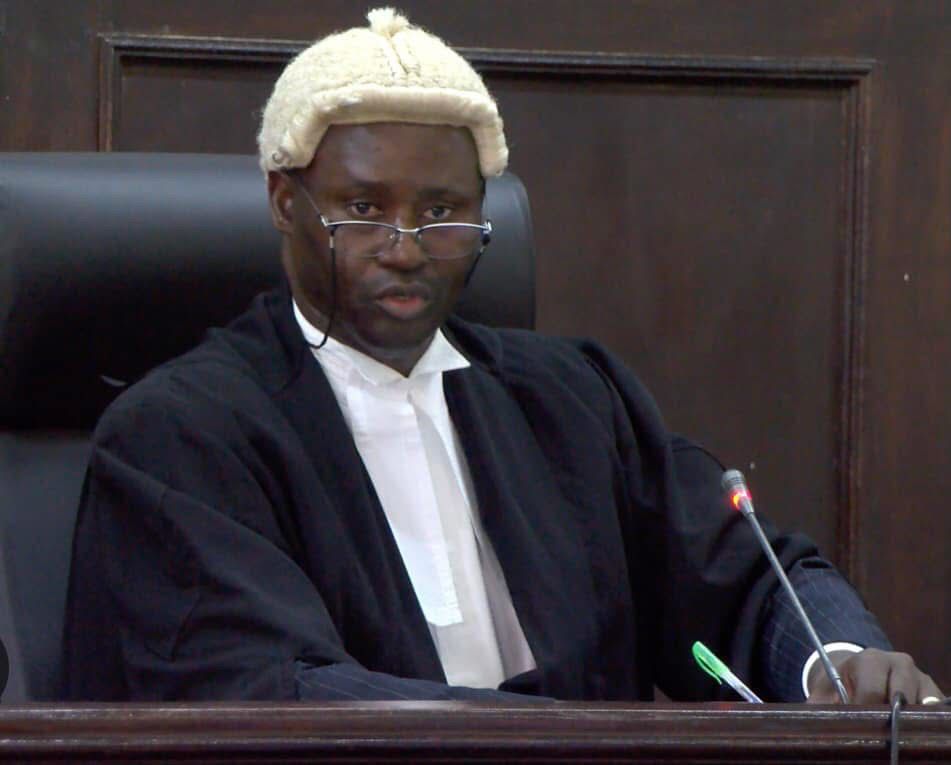
Presiding over the matter on Monday was Justice Ebrima Jaiteh. Prosecutor F. Drammeh represented the state, while defense counsel J. Jeng appeared for the accused.
Kujabi faces five criminal charges, including sedition, threatening violence, publication of false news, and offenses under the Information and Communication Act. Prosecutors allege that between September and October 2022, Kujabi circulated audio recordings in Kafuta and other parts of the West Coast Region, in which he urged citizens to “march to the State House to unlawfully remove the Government of President Adama Barrow.” The messages are also said to have incited disaffection against the President, threatened violence against officers of the Police Intervention Unit, and spread messages intended to cause fear and alarm among the public.
The prosecution’s second witness (PW2), Police Officer Ansumana Kujabi, a 13-year veteran of the force, took the stand and told the court he clearly recognized the accused person sitting in the dock.
Testifying under examination-in-chief, the officer said that in 2022, while stationed at the Anti-Crime Unit, he was instructed by his superior to join a team of more than ten officers led by a commissioner to effect the arrest of Kujabi in Sotokoi village.
“Before we left, I was shown a photograph of the suspect for identification,” he told the court.
Upon reaching a compound in Sotokoi, the witness said he observed a man attempting to run away. “When I looked at the person, he resembled the same person that was shown to me in the photo,” Officer Kujabi stated. A colleague subsequently apprehended the suspect, who was then transported to the Anti-Crime Unit for processing.
The officer noted that a naming ceremony was underway at the compound during the operation. He was unsure who owned the compound, but said he had been informed that the accused was involved in the incident.
When questioned about why Kujabi fled upon seeing the police, the witness replied that he did not know the reason, adding only that the man appeared to take flight as officers entered the premises. His own role, he said, ended after the arrest when he recorded a statement at the unit.
During cross-examination, defense counsel J. Jeng pressed the witness on his recollection of the contents of the disputed audio messages. Counsel suggested the recordings primarily concerned the deaths of approximately 70 children from acute kidney injury.
Officer Kujabi admitted he could not remember the full details of the audio, stating: “This was about three years ago, and I cannot recall all that was said in that audio.”
He maintained, however, that the part he clearly remembered was the alleged call for President Barrow to leave office.
When defense counsel asked whether he was recalling all the facts or only what he wished to recall, the officer responded firmly: “That is what I can recall.”
Hearings continue on May 19th, 2026.