By Sainabou Sambou
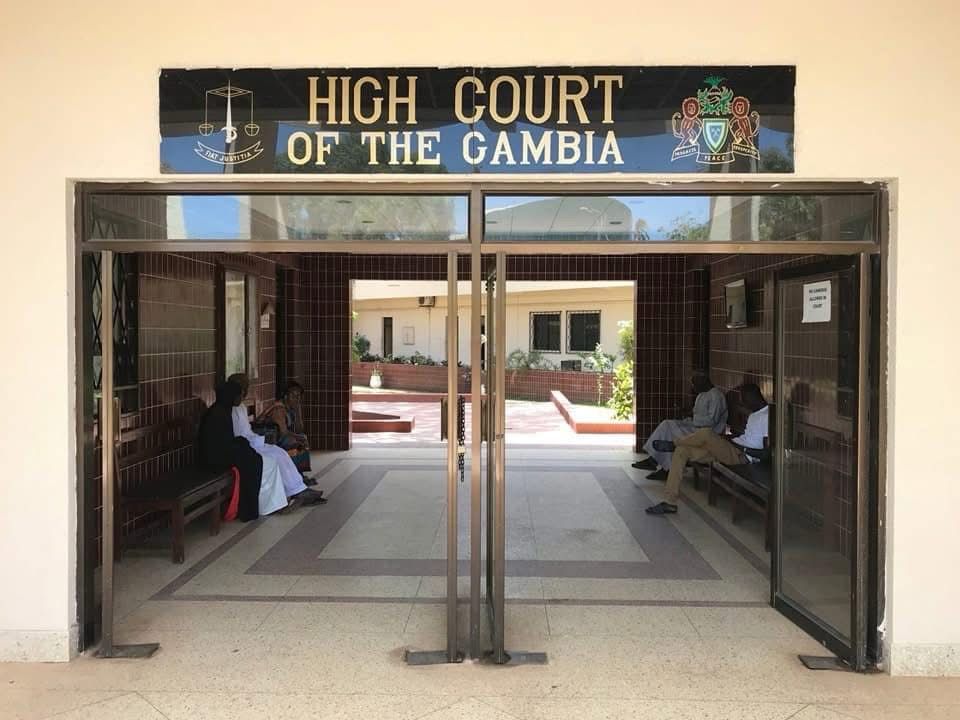
In a significant ruling reinforcing judicial hierarchy and jurisdictional limits, Justice Ebrima Jaiteh of The Gambia’s High Court in Banjul has quashed the decisions of the Kanifing Islamic Court in the estate distribution matter involving the late Dawda Jobe.
The judgment, delivered recently, granted an order of certiorari sought by applicant Mariama Suwareh. It declared the lower court’s June 15, 2023, ruling and its March 25, 2024, final judgment null and void, citing a lack of jurisdiction, excess of powers, and direct defiance of a prior High Court stay order.
Dawda Jobe, originally from The Gambia, renounced his Gambian citizenship in 1996 and acquired Norwegian nationality. He lived in Norway with his family until his death on December 9, 2020. All key beneficiaries—including the applicant, Mariama Suwareh, and respondents Joanna Jobe, Ya Awa Jobe, and Pa Modou Jobe—are Norwegian nationals residing abroad, none of whom is domiciled in The Gambia.
Justice Jaiteh emphasized that these facts stripped the Kanifing Islamic Court of constitutional authority under sections 7(f) and 137(4) of the 1997 Constitution, which limit Sharia courts’ jurisdiction in inheritance matters to cases involving Gambian Muslim parties with relevant community ties.
The court highlighted that the Oslo District Court in Norway had already assumed jurisdiction over the entire estate, appointing an executor to administer assets worldwide, including any in The Gambia. Records showed that the Kanifing Islamic Court received formal notification of this foreign proceeding via a letter dated March 2, 2022, yet proceeded anyway—a move the High Court deemed a “clear legal error” that disregarded the principle of prior seisin.
Further compounding the irregularities, the Islamic Court issued its March 25, 2024, judgment despite an existing High Court order staying its proceedings. Justice Jaiteh described this as a “violation of the judicial hierarchy and the rule of law.” He also pointed to procedural flaws, including the exclusion of certain beneficiaries from the lower court’s hearings.
In court, applicant Mariama Suwareh appeared personally, represented by counsel N.M.C. Cham. The respondents—Joanna Jobe, Ya Awa Jobe, and Pa Modou Jobe—were absent but represented by Fatou Bah, with B. Drammeh appearing for their side.
The application rested on an affidavit by Harriet Camara, supported by 15 exhibits. Respondents filed a 36-paragraph affidavit and 12 exhibits, prompting the applicant to file a reply affidavit.
Counsel for Suwareh argued the Kanifing Islamic Court fundamentally lacked jurisdiction over the estate of a foreign national. Respondents’ counsel contended the lower court stayed within bounds and floated that Norwegian probate laws should apply to Gambian-situated assets.
Rejecting these defenses, Justice Jaiteh ruled decisively: the Kanifing Islamic Court “acted without jurisdiction, exceeded its powers, and delivered a judgment in defiance of a High Court stay order.” He quashed both the interim ruling and final judgment, declaring the lower court had “no authority to hear, determine, or distribute” Dawda Jobe’s estate.
The High Court issued a restraining order barring the Kanifing Islamic Court from any further involvement. Costs of D100,000 were awarded against the respondents in favor of the applicant.
In closing observations, Justice Jaiteh underscored a broader principle: the estates of foreign nationals domiciled abroad fall under the jurisdiction of the courts of their country of residence. Gambian courts, he stated, cannot encroach on matters already seized by foreign jurisdictions, preserving international comity and domestic legal order.
The ruling resolves a contentious cross-border inheritance dispute and reaffirms boundaries between Gambia’s tripartite legal system—common law, customary, and Sharia—and the primacy of constitutional jurisdiction. It signals that foreign elements in estates, particularly involving non-resident nationals, lie beyond the reach of local Sharia courts when parallel proceedings exist elsewhere.
Legal observers view the decision as upholding the rule of law amid complex family and international property claims. The estate’s administration now reverts fully to Norwegian oversight, with any Gambian assets handled accordingly.