By: Fatou Dahaba
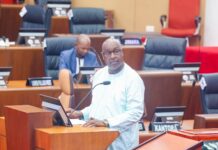
Lawmakers split sharply in the National Assembly on Tuesday after the Justice Minister asked Parliament to suspend a key parole provision, arguing that The Gambia still lacks the rehabilitation centers and other structures needed to implement it.
The clash came during the second reading of the Criminal Procedure Amendment Bill 2026, tabled by Attorney General and Minister for Justice Dawda A. Jallow. The bill seeks to amend Section 258 of the Criminal Procedure Act No. 6 of 2025 so that the parole clause would not take effect until the necessary institutions and facilities are in place.
The proposal immediately divided the House. Some members called it a practical response to reality. Others warned that Parliament should not roll back criminal justice reform simply because government has failed to fund it.
Hon Alagie Mbowe, Member for Upper Saloum, seconded the motion and supported the broad aim of the amendment. But he objected to leaving the start date entirely in the minister’s hands. Parliament, he said, should not approve an open-ended freeze without a firm timeline, because that discretion could postpone the law indefinitely. He also questioned whether some of the proposed changes, particularly those on application criteria, belonged in regulations rather than in the Act itself.
Hon Suwaibou Touray, Member for Wuli East, branded the bill “very controversial.” Justice, he argued, is a core duty of the state and should not be scaled back because of cost. Government should find the money to implement the law, he said, instead of returning to Parliament to suspend it. Weakening statutes because they are expensive would set a dangerous precedent and undermine public trust in the legislative process.
Hon Almameh Gibba, Member for Foni Kansala, took a similar position. Lawmakers and Cabinet would be failing in their duty, he said, if they accepted lack of funds as sufficient reason to suspend the law. He urged the minister either to withdraw the bill and come back with budget support, or to pledge phased funding in the next national budget.
Hon Sulayman Saho, Member for Central Badibu, offered a contrasting view. The question before the House was simple, he said: if a law cannot be applied in practice, Parliament must amend it to make it workable. He defended the wording that would allow the minister to bring the section into force later by gazette notice.
In his reply, Minister Jallow insisted the government was not trying to remove parole from the statute book. It only wanted to pause the provision until the required facilities exist. Prisoners are already filing parole applications in court, he told MPs, but judges cannot grant them because the conditions set out in the section have not been met. The amendment was needed, he said, to stop a stream of applications over a clause that cannot yet be implemented.
After a division, the bill passed second reading and was referred to the Assembly’s Business Committee for further scrutiny.
The debate laid bare a familiar tension in Gambian lawmaking: how far Parliament should go in passing ambitious reforms when the state has not yet built the institutions those reforms require. Supporters of the delay framed it as responsible governance. Critics saw it as an admission that government had legislated first and planned later — and they warned that repeated suspensions of this kind would leave the Criminal Procedure Act looking stronger on paper than in practice.