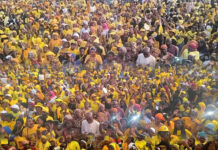
A leading Gambian rights organization has called on four newly formed political coalitions to immediately publish their full alliance agreements, warning that secrecy over the deals denies voters the information they need ahead of December’s presidential election.
The Edward Francis Small Centre for Rights and Justice (EFSCRJ) said Thursday that while the coalitions have publicly signed memoranda of understanding, the substance of those documents remains hidden. The group, speaking through its Election Watch Initiative, described the lack of disclosure as “unacceptable” because the agreements will shape the choices presented to Gambians at the ballot box.
EFSCRJ listed four coalitions formed in recent weeks: the NPP–GDC Coalition, signed on 29 July at State House in Banjul; the UMC–NUP Coalition, signed on 4 August at Paradise Suites Hotel; the Gambia First Coalition, signed on 14 August at the same hotel; and Coalition 2026, signed on 20 August, also at Paradise Suites Hotel.
The organization argued that political parties are public-interest institutions created under the Constitution and the Elections Act. Decisions on presidential candidates, alliances, power-sharing, and policy commitments therefore belong in the public domain, not behind closed doors.
“The formation of a political coalition is not merely an internal party matter,” EFSCRJ said. “It is a decision that can fundamentally alter the political landscape and determine who citizens will be asked to support.” Citizens, it added, have a right to know what parties are agreeing to on their behalf.
The centre urged all four coalitions and their member parties to publish the signed memoranda in full, including annexes, schedules, and any supplementary agreements. Parties should not, it said, ask Gambians to vote for arrangements whose terms they have not been allowed to see.
EFSCRJ also called on the Independent Electoral Commission and the Inter-Party Committee to press for greater transparency throughout the electoral process. Party autonomy, it argued, should not be used to justify secrecy over decisions that directly affect the electorate.
The statement further appealed to voters, the media, and civil society to demand that coalition agreements be made public. Seeking the people’s mandate, the group said, carries a corresponding duty to inform the people.
“Political alliances must serve the public interest, not merely the interests of political elites,” EFSCRJ said. “The 2026 elections must be an exercise in informed democratic choice. Gambians cannot make informed choices about political coalitions, candidates, and competing visions for the country if the agreements underpinning those coalitions remain hidden from them.”
The statement comes as The Gambia prepares for a presidential election that is expected to test the country’s post-transition democratic institutions. Coalition politics has become a central feature of the race, with parties grouping to maximize their chances of victory.
Whether the coalitions will release the documents remains to be seen. For now, the rights group has drawn a clear line: voters cannot be asked to endorse what they have not been permitted to read.