By Abdoulie John
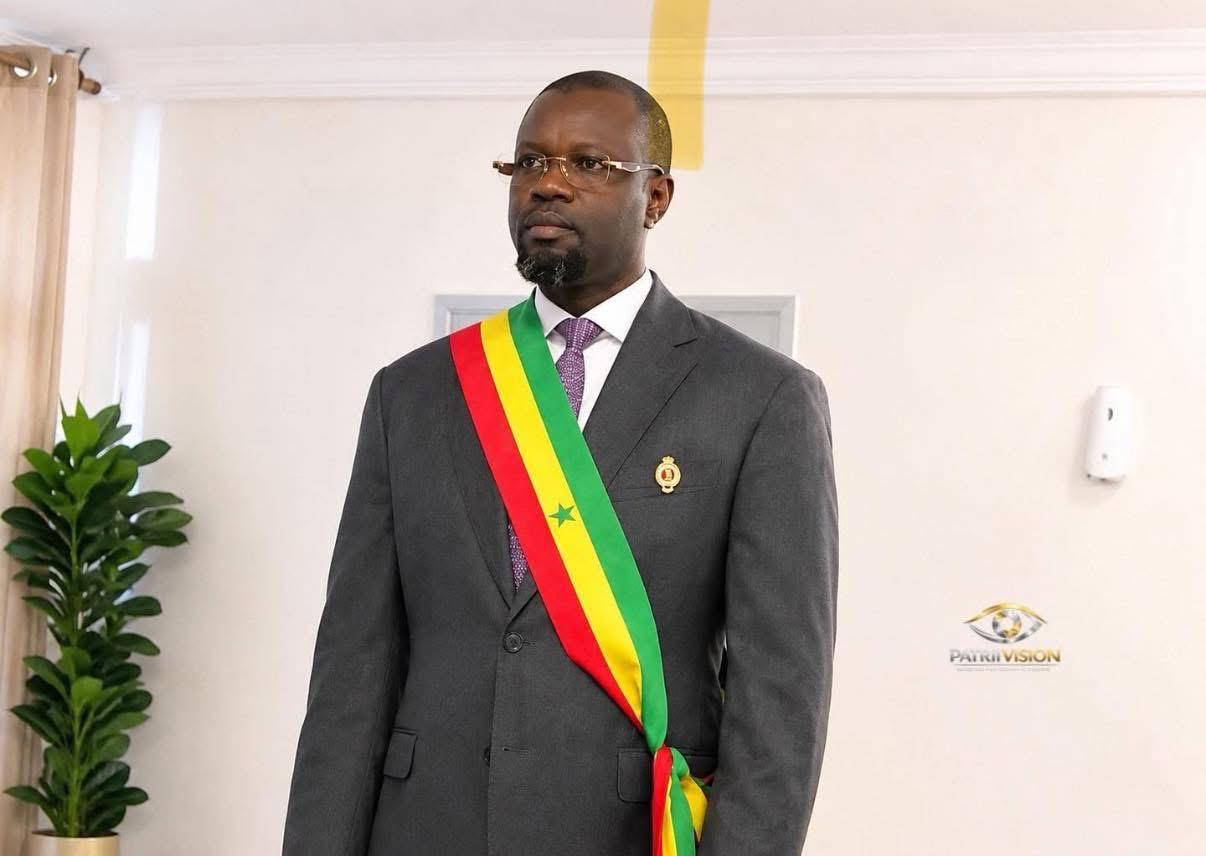
Ousmane Sonko, Senegal’s former Prime Minister, was on Tuesday elected Speaker of the National Assembly, consolidating his position as the country’s second-highest authority just days after President Bassirou Diomaye Faye severed ties with him.
Parliamentarians loyal to the PASTEF coalition turned out in force, delivering a decisive victory for Sonko on the first ballot. Of the 133 members who voted, 132 endorsed his candidacy while one abstained. The session erupted into a standing ovation as the result was announced, underscoring the strong backing Sonko still commands within the ruling coalition despite the recent rift at the summit of power.
The election comes after a turbulent weekend marked by President Faye’s decision to part ways with his former prime minister and political mentor. The move has plunged Senegal into a deepening political crisis that has dominated headlines for months. Observers now hope the new parliamentary leadership will help de-escalate tensions and allow the National Assembly to exercise robust oversight of the executive.
In his maiden speech as Speaker, Sonko wasted no time addressing the elephant in the room, delivering a sharp rebuke to the presidency. He made it clear that PASTEF had not been associated with the formation of the new government, asserting the party’s primacy in Senegalese politics.
“You can’t have PASTEF without PASTEF,” Sonko declared, reminding lawmakers that the coalition holds the majority and should therefore lead the governing agenda. He stressed that PASTEF rose to power because Senegalese citizens endorsed its political program.
“People do not judge politicians solely on their victories. Above all, they judge them on their ability to remain true to their principles when power becomes uncomfortable,” he said. Sonko posed a pointed question: “In the name of what do we govern?”
He acknowledged months of visible divisions at the highest levels of government, describing them as widely interpreted as “personal rivalries, conflicts of ambition, or power struggles.” However, he rejected this “simplistic interpretation,” insisting the real issue runs deeper.
“What is at stake goes beyond individuals. What is at stake is the relationship between morality and politics,” Sonko emphasized. Drawing on Aristotle, he reminded the chamber that politics is the supreme art because its ultimate goal is the common good — “not the good of a clan; not the preservation of power for its own sake. But the good of the city.” He added that no society can endure if virtue disappears from those who govern it. His remarks drew sustained applause from PASTEF lawmakers.
Sonko’s elevation to Speaker positions him as second-in-command under the country’s order of precedence. Whether his new role will help bridge the growing divide with President Faye or further entrench it remains to be seen. For now, Senegal watches closely as its two most prominent leaders navigate an increasingly public estrangement.