By: Ebrima Mbaye
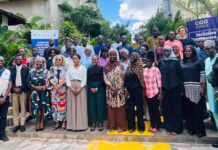
United Nations Special Rapporteur on extrajudicial, summary or arbitrary executions Morris Tidball-Binz has praised Gambian journalists for documenting human rights abuses while urging faster justice and reparations for victims of the former regime.
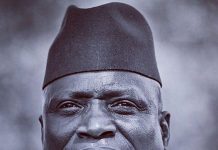
Speaking at a press conference at the African Princess Hotel in Kololi on Friday, October 16, 2026, after his official visit, Tidball-Binz highlighted the work of reporters who covered violations under Yahya Jammeh. He specifically cited slain journalist Deyda Hydara, co-founder of The Point newspaper, assassinated in December 2004, and former journalist Chief Ebrima Manneh, who disappeared after arrest by state security agents in July 2006. These cases remain symbols of attacks on press freedom during the 1994–2017 period.
In his end-of-mission statement, Tidball-Binz said The Gambia has made remarkable progress confronting its legacy of unlawful killings, yet significant work remains. “The Gambia has made important strides,” he stated. “The urgent task now is to ensure that commitments turn into justice, answers for families and lasting protection of the right to life.” He called on the international community to continue supporting the country’s transitional justice process.
The expert paid tribute to the Truth, Reconciliation and Reparations Commission (TRRC) and the victims and families whose efforts exposed gross violations. He described justice, reparations, and guarantees of non-recurrence as the best way to preserve the TRRC’s legacy. He welcomed the government’s acceptance of 263 of the TRRC’s 265 recommendations, covering security sector reforms, prosecutions, and transitional justice mechanisms.
Tidball-Binz noted the April 2026 appointment of a Special Prosecutor and ongoing work with ECOWAS to establish the Special Tribunal for The Gambia. He warned, however, that investigations into past abuses need urgent investment in forensic expertise, laboratories, and equipment to recover and identify human remains and support prosecutions.
On the death penalty, he welcomed the Criminal Offenses Act 2025 but expressed concern that capital punishment remains in the Constitution and other laws. He urged complete abolition and resolution of outstanding death sentences in line with The Gambia’s international obligations. He also called for independent investigations into deaths from excessive force, including the 2018 killing of three protesters at Faraba Banta, and accountability for those responsible.
Addressing migrant deaths and disappearances, Tidball-Binz urged stronger search and identification efforts, support for affected families, and progress on the Immigration Bill 2026. He commended the government for its cooperation during his October 5–16 visit, particularly unrestricted access to detention facilities and relevant sites, and reaffirmed his readiness to provide technical assistance, including forensic expertise, to help deliver justice, establish truth for families, and prevent future violations.