The United Democratic Party (UDP) has sharply questioned the value of The Gambia’s recent ranking as the 10th-best-governed country in Africa and 74th globally in the World Governance Index, arguing that international rankings mean little if ordinary Gambians continue to endure hardship in their daily lives.
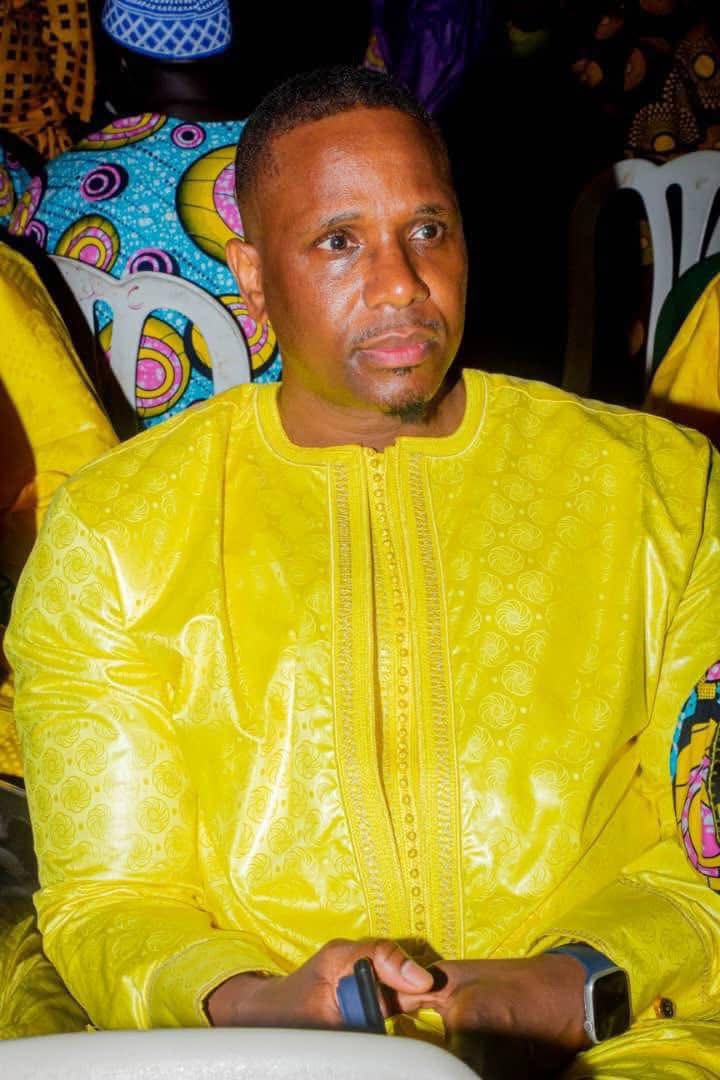
In a statement issued late Tuesday, UDP Administrative Secretary for Media and Communications Saikou Camara said that true governance improvement must be felt through better schools, reliable electricity, quality healthcare, job creation, affordable living costs, and stronger agricultural output.
“Governance should not be measured solely by international reports or statistics,” Camara stated. “It must be judged by the lived experiences of ordinary citizens — whether they have dignity, opportunity, security, and hope.”
The UDP highlighted worrying statistics on education from the 2025 West African Senior School Certificate Examination (WASSCE). Out of 20,247 candidates from 156 senior secondary schools, only 961 — roughly 4.75% — obtained credit passes in five or more subjects including English and Mathematics. English credit pass rate stood at 19.8%, while Mathematics was a dismal 7.3%.
Tertiary institutions in the country can absorb only 3,000 to 4,000 new students annually, leaving over 14,000 high school graduates without higher-education opportunities. This excludes madrasa graduates, dropouts, and those with limited primary education, pushing many youths toward irregular migration.
Youth unemployment remains acute, with the NEET rate (Not in Employment, Education, or Training) at 41.3% as of 2026, hitting young women particularly hard. “More than four out of every ten young Gambians are idle,” the statement noted, warning that prolonged disengagement fuels vulnerability to crime and substance abuse.
On energy, The Gambia faces a 60- 80% deficit relative to national demand, relying heavily on imports from Senegal. Despite over US$400 million invested in the sector since 2017, frequent power outages persist, undermining businesses and households.
Agricultural self-sufficiency is equally dire. The country consumes about 300,000 metric tonnes of milled rice yearly but imports 80-88%, with local production below 40,000 tonnes. Domestic poultry output meets just 10% of demand.
The trade imbalance is stark: exports of US$60 million against imports of US$600 million. Manufacturing contributes only 1.5-6% of GDP, while real GDP growth hovers around 5.1% in 2026 — below the 7% needed for significant poverty reduction.
Public debt has ballooned to between D130-139 billion (about 69-70% of GDP) in 2026, up from D46 billion at the end of former President Yahya Jammeh’s rule. The UDP asked whether citizens are seeing adequate returns from this borrowing.
Even in healthcare, a record D3.1 billion allocation in the 2026 budget has not eased shortages of drugs, equipment, and staff. Hospitals recently hiked service fees by up to 100%, further burdening families.
Camara concluded that persistent challenges — rising debt, inflation, unreliable power, weak job creation, and struggling social services — make it difficult to celebrate governance rankings while citizens struggle for basic needs.
“The true test of governance is not a position on an index, but whether families can eat, youths can work, businesses can thrive, and patients can receive care,” the statement said.
The UDP called on the government to bridge the gap between international perceptions and around realities.