By: Kebba Ansu Manneh
The Cement Importers Association of The Gambia has strongly criticized the government for what it describes as unfair and inconsistent policies on cross-border trade with Senegal, claiming authorities are playing a “double standard game” that threatens local businesses.
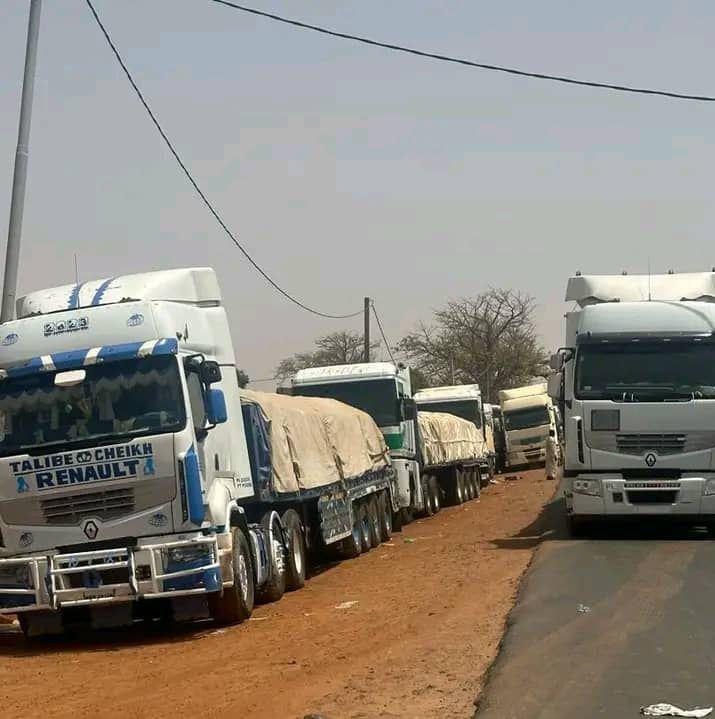
In a statement shared with The Alkamba Times, the association accused the government of technically banning its members from importing cement from Senegal. At the same time, the state-owned utility company NAWEC continues to import electricity from the same neighboring country. The importers described the situation as unjustifiable and a deliberate attempt to force local businesses to close through punitive taxation.
Speaking on behalf of the association, executive member Alagie Touray said the continuous imposition of heavy taxes on cement imported from Senegal has pushed many local businesses to the brink of collapse.
“Many local cement importers have found themselves in a state of quagmire as their businesses come to abrupt closure after the introduction of the heavy tax placed by Government,” Touray said.
He argued that the policy is inconsistent and discriminatory. “I don’t think it is fair for Government to continue allowing other business entities, including NAWEC, to order goods and services from Senegal and technically stop cement importers from importing cement from the same country,” he added.
Touray maintained that importing cement injects money into the Gambian economy and creates jobs for young people, whereas electricity imports, while necessary, have broader negative consequences. “Importing electricity from Senegal is more detrimental to the economy than allowing import of cement,” he claimed.
The association appealed to the government to treat all legitimate businesses equally. “For us (Cement Importers) it’s like the government is playing a double-standard game on us by allowing electricity import from Senegal while disallowing cement from the same country. We are appealing to the authorities to treat us as equal citizens engaging in legitimate business to feed, shelter, clothe and educate a family,” Touray emphasized.
He acknowledged the importance of electricity imports from Senegal to keep the national grid running, especially given The Gambia’s limited domestic power generation capacity. However, Touray warned of the long-term economic risks. “Care must also be taken as the continuous importation of electricity continues to weaken the dalasi while CFA continues to get stronger day by day.”
The Gambia does not have a full-scale cement manufacturing plant; it operates only rebagging factories. These facilities rely on machinery powered partly by electricity imported from Senegal, creating, in the importers’ view, a glaring contradiction in government policy.
“NAWEC imports electricity from Senegal; however, while we depend on Senegal for part of our electricity supply, we are not allowed to import cement from Senegal,” Touray observed.
The controversy highlights ongoing tensions between trade protectionism and practical economic realities in The Gambia. Critics of the government’s approach argue that policies should be designed to empower rather than stifle local businesses. Supporters of stricter import controls, however, often cite the need to protect domestic industries and manage foreign exchange outflows.
As the dalasi continues to face pressure and businesses struggle with rising costs, the Cement Importers Association’s plea adds to a growing chorus of private-sector voices calling for more consistent, business-friendly policies from the authorities.