By Alieu Ceesay
The Independent Electoral Commission (IEC) has announced that proceedings at the Revising Courts are nearing completion, with most cases arising from the recent voter registration exercise already resolved. The Commission expects to conclude the remaining matters in the coming days, clearing the way for finalizing the national voter register ahead of the December 5, 2026 presidential election.
Once magistrates sign the registers, the Commission will compile the final voter list in line with court rulings, including removing names where ordered.
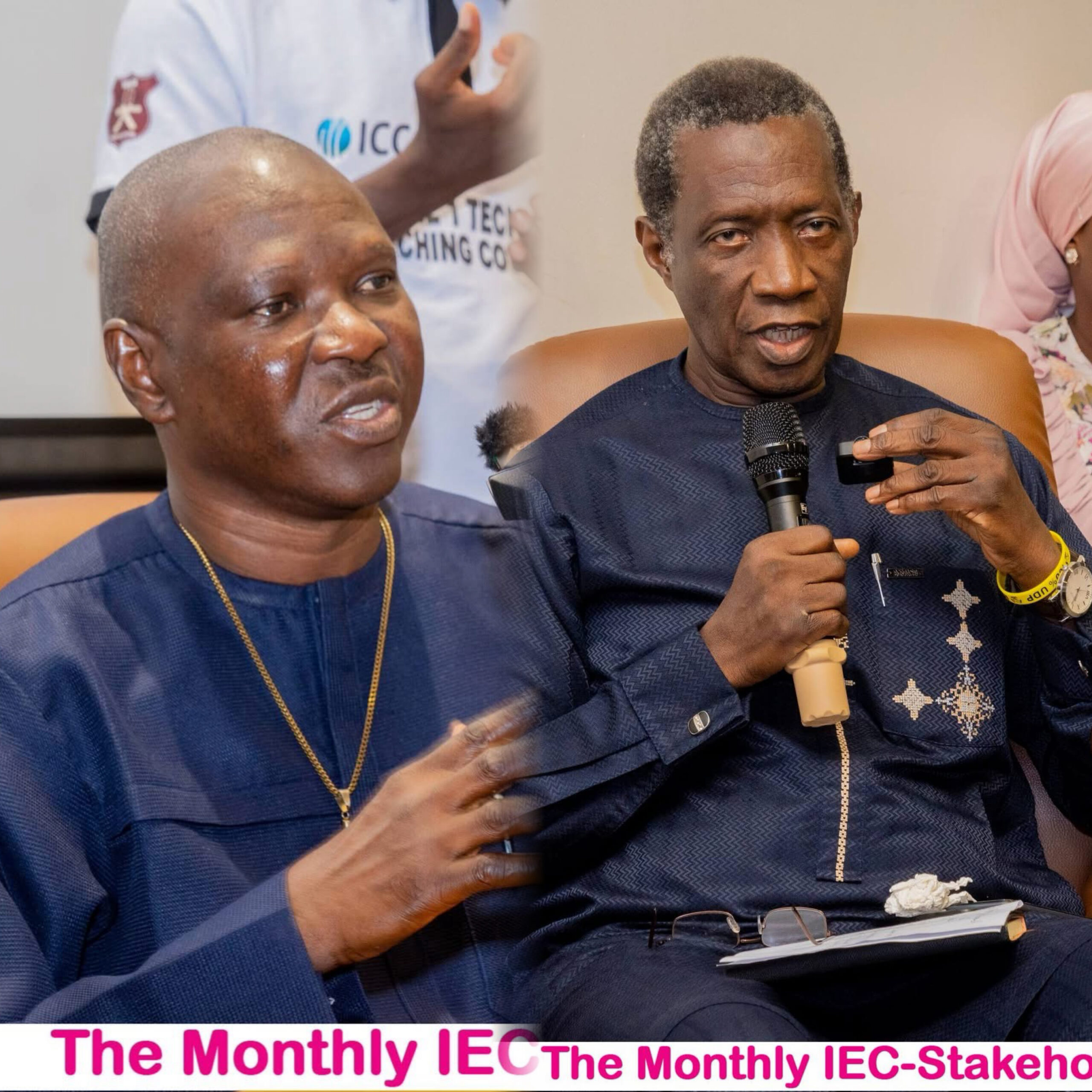
“The final register will then be provided to all political parties as required by law,” the IEC Chairman Joseph Colley said at the monthly press conference on Thursday.
IEC promised that the Soft copies of both the master register and the master supplementary register will also be made available to political parties under Section 36(2)(b) of the Elections Act.
The announcement comes as opposition parties intensify calls for the immediate and full public release of the voter list. At the stakeholder forum and press conference, United Democratic Party (UDP) representative Lamin Manneh urged the Commission to make the register available so that all interested parties can scrutinize its contents. “We all need to check what is in there, and we all have to build the credibility of these elections to have free, fair, and transparent elections, which includes the reputation of the IEC as an independent body that is going to referee these elections in the most appropriate way and that requires building confidence in each other,” Manneh said.
The IEC has maintained that it conducted the voter registration process transparently and inclusively. Political parties, civil society organizations, and other stakeholders were given opportunities to observe the exercise and pursue legal remedies where necessary. The Commission reiterated that it will fully comply with all court orders arising from the Revising Courts.
In parallel with finalizing the register, the IEC is preparing for the election’s logistical demands. Teams will be deployed nationwide to assess the suitability of identified polling stations and make adjustments as needed. The number of polling stations is set to increase to accommodate voters registered during the 2026 Supplementary Voter Registration exercise.
To manage election results, the Commission is introducing a Geographic Information System (GIS) platform, supported by the EU-UNDP GREAT project. Officials say the system is expected to improve the accuracy and transparency of results transmission and collation.
Nominations for the December 2026 presidential election are scheduled to take place from 3 to November 14. Several aspirants have already collected nomination forms, and the Commission will communicate the detailed timetable for submitting nomination papers in due course. IEC Chairman Joseph Colley expressed hope that the process would be orderly and transparent, urging all aspirants to adhere strictly to the governing regulations.
The Commission also voiced concern over the spread of fake news and misinformation, particularly on social media platforms. It warned that misleading information, hate speech and verbal provocation could undermine public confidence in the electoral process. “All information concerning the electoral process is expected to be accurate and verifiable,” the IEC chair said, calling on those responsible for spreading falsehoods to desist. It further stressed that “as far as The Gambia is concerned, there is no place for conflict and violence,” appealing to citizens and stakeholders to uphold the country’s long-standing tradition of peace and harmony.
The IEC concluded by reaffirming its commitment to ongoing stakeholder engagement and collaboration with government institutions, development partners and other actors to deliver a credible, transparent and inclusive electoral process.