By Alieu Ceesay
The Gambia has taken a major step toward modernizing its agricultural sector with the official launch of the National Sanitary and Phytosanitary (SPS) Committee, aimed at bolstering food safety standards, improving coordination among government agencies, and enhancing the country’s competitiveness in regional and international markets.
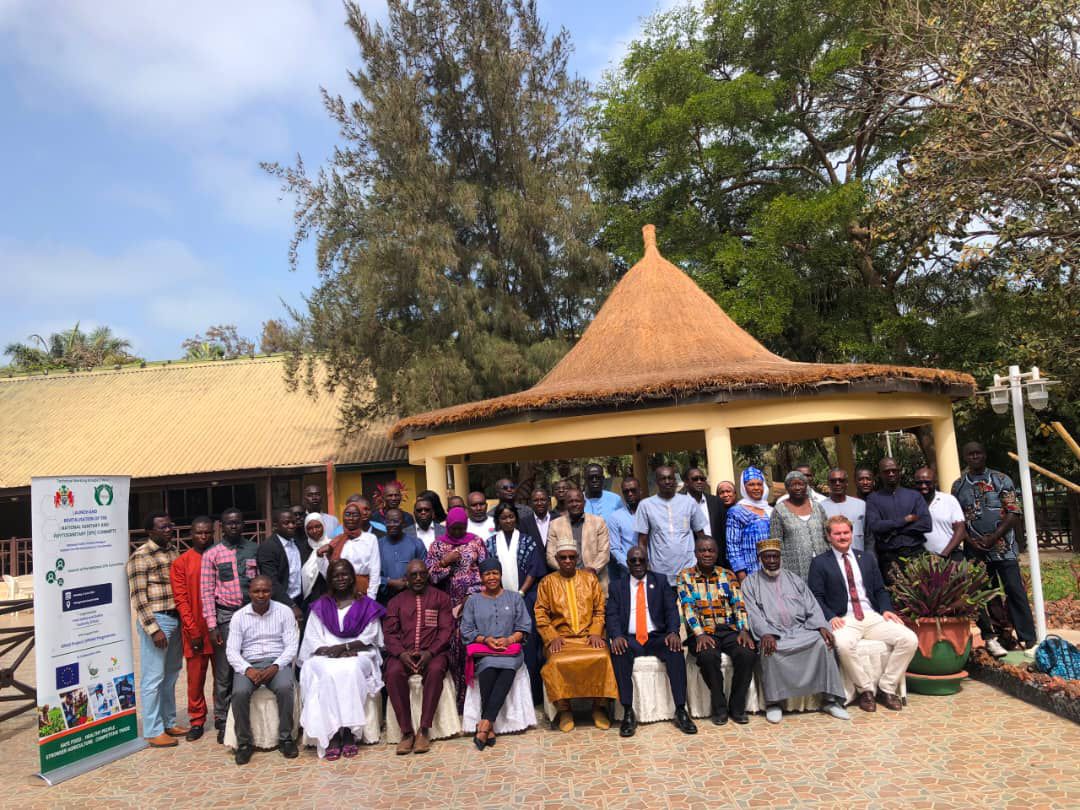
The committee was inaugurated at a high-level event attended by senior government officials, development partners, technical experts, and private sector representatives. Authorities described the initiative as a landmark move to address longstanding fragmentation in the management of food, plant, and animal health measures.
Dr. Amadou Sowe, Board Chair of the Food Safety and Quality Authority (FSQA), hailed the launch as a turning point. “For too long, SPS responsibilities have been dispersed across different agencies, occasionally leading to gaps in coordination, duplication of effort and missed opportunities at the market access frontier,” he said.
Dr. Sowe added that the committee would serve as “the institutional backbone connecting our trade ambitions to the technical standards that global markets demand.” The FSQA will act as the technical secretariat, adopting an evidence-based approach to protect consumers while opening new doors for farmers, processors, and exporters.
The launch came just one day after the global observance of World Food Safety Day 2026. Ms. Moshibudi Rampedi, FAO Country Representative to The Gambia, called the timing strategic. “The observance of World Food Safety Day served as a reminder that food safety is a public health imperative, an economic necessity and a fundamental pillar of food security,” she noted.
Rampedi emphasized that a functional national SPS Committee would foster dialogue, ensure evidence-based decision-making, and strengthen coordination across food safety and food security. She reaffirmed FAO’s continued support for The Gambia in building robust systems for food safety, animal health, and plant health.
Elizabeth Mendy, representing the EU-funded SPRING Program, highlighted food safety’s central role in nutrition security and sustainable agriculture. She pointed to challenges such as aflatoxin contamination in groundnuts and stressed that improving food safety is key to reducing post-harvest losses, expanding market access, and protecting vulnerable populations. Mendy described the new committee as a vital public-private platform to reduce fragmentation and turn challenges into solutions.
Launching the committee, Minister of Trade, Industry, Regional Integration and Employment, Mr. Mod Ceesay, underscored The Gambia’s commitment to its obligations under the World Trade Organization’s SPS Agreement. “The launching of this instrument signals that The Gambia is committed to meeting the highest standards of food safety, plant and animal health and market access for the safety and well-being of our citizens,” he said.
Minister Ceesay explained that market access today depends heavily on credible, science-based systems. The committee will coordinate SPS policies across institutions, support private sector compliance, manage WTO notifications, and help The Gambia engage more effectively in international standard-setting. He singled out the cashew sector as one that stands to gain significantly from stronger SPS measures, particularly in meeting strict requirements on traceability, residue control, and plant protection.
Stakeholders expressed optimism that the new body, which includes the FSQA, Department of Plant Protection, Department of Livestock Services, Gambia Standards Bureau, and other key players, will improve governance, safeguard public health, and create fresh export opportunities for Gambian agricultural products.