By Alieu Ceesay
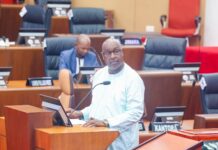
National Assembly Member for Serrekunda, Hon. Musa Cham, has introduced a landmark bill to transform the governance, sanitation, and economic potential of urban markets across The Gambia.
The Urban Markets Bill, 2026, seeks to establish a comprehensive legal framework for the establishment, regulation, management, and development of markets in urban areas. If passed, the legislation will empower the Minister responsible for Local Government to formally declare and register all urban markets, bringing much-needed order to spaces that serve as vital hubs for commerce and livelihoods.
Central to the bill is the creation of Market Management Committees for every urban market. These committees will include representatives from local councils, market vendors’ associations, the Department of Public Health, the Gambia Fire and Rescue Services, and women and youth traders. The committees will oversee daily administration, stall allocation, fee collection, sanitation enforcement, and the preparation of operational reports.
In a move to promote fairness and inclusion, Section 13 of the bill mandates transparent procedures for allocating stalls and trading spaces, with priority given to women, youth, and persons with disabilities engaged in legitimate trade. Food vendors will be required to obtain annual health clearance certificates from the Department of Public Health. At the same time, all markets must maintain proper waste management systems, sanitation facilities, fire extinguishers, emergency exits, and conduct regular fire drills.
Revenue transparency receives significant attention under the proposed law.
Councils will be required to adopt traceable systems such as electronic receipts and bank deposits for market fees. Market inspectors will be appointed with the power to inspect premises, verify licenses, and seize unlawfully traded goods. Violations—including trading without licenses, illegal subletting, or obstructing inspectors—could attract fines of up to D50,000, imprisonment for up to six months, or both.
The bill also emphasizes infrastructure development, environmental sustainability, and participatory planning. Local councils must prepare upgrading and rehabilitation plans that actively involve women, youth, and persons with disabilities.
According to the explanatory memorandum, the legislation aims to “promote orderly, safe, and efficient market operations” while improving hygiene, public health standards, and participatory governance. Existing markets will be granted a twelve-month transition period to comply with the new requirements.
Hon. Musa Cham described the bill as a critical step toward modernizing market administration. “We want markets that are cleaner, safer, and more efficient centers of commerce capable of supporting local economic growth and improving the livelihoods of traders across the country,” he said.
The Urban Markets Bill, 2026, is expected to be debated in the National Assembly in the coming weeks. Its passage could mark a significant shift in how The Gambia manages one of the most visible and economically important sectors of urban life.