By Sainabou Sambou
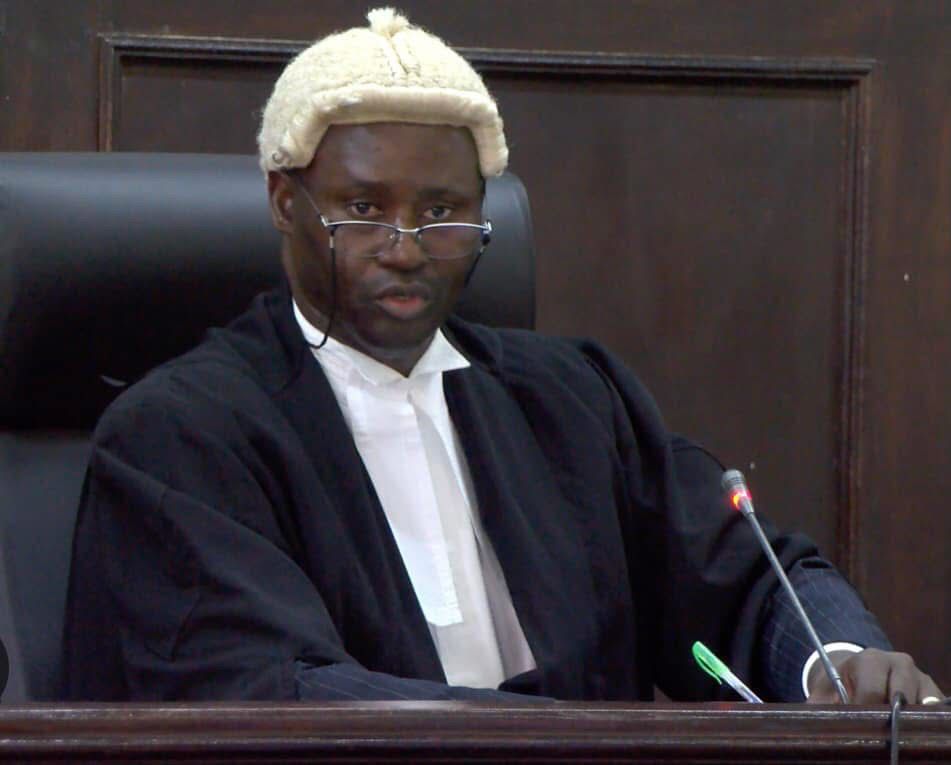
Justice Ebrima Jaiteh of the High Court in Banjul on Monday refused an application by the defense to summon five individuals as witnesses in the high-profile rape trial of Ass Malick Njie, ruling that the request lacked any demonstrated material basis and failed to meet the legal requirements under the Criminal Procedure Act, 2025.
The decision came during proceedings in a case that has drawn significant public attention. Njie stands accused of intentionally engaging in sexual intercourse with a 12-year-old boy under coercive circumstances on or about February 5, 2022, at the Qcell premises in Kanifing Municipality. The indictment alleges violations of Sections 3(1)(a) and 4(1)(a)(III)(bb) of the Sexual Offences Act, 2013.
Njie, represented by Counsel F. C. Anyanwu appeared in court alongside State Counsel M. Sarr. The defense filed the application under Section 160 of the Criminal Procedure Act, 2025, seeking court-issued summonses for Musa Secka, Amadou Kebbeh, Muhammed Lamin Jarju, Ebrima Drammeh, and Ebrahim Luke Silver to testify on the accused’s behalf. Notably, the prosecution did not object to the application.
In a measured and detailed ruling, Justice Jaiteh stressed that the court’s power to compel witness attendance is not automatic. “It can only be exercised where it has been made to appear that the proposed witnesses are capable of giving material evidence or possess relevant documents,” he stated.
The judge noted that the defense had done little more than list the five names. No affidavit or explanation was provided detailing the nature of the evidence each witness was expected to give, nor how their testimony would relate to the core issues in the trial. There was also no indication that any of the individuals held documents or other material relevant to the proceedings.
Justice Jaiteh further observed that none of the proposed witnesses had given statements to the police during the investigation, and their names had not surfaced during the accused’s own testimony. This absence, he said, cast significant doubt on their relevance.
While acknowledging the constitutional right of an accused person to present a defense, the judge emphasized that this right must be balanced with the need to protect ordinary citizens from unnecessary court compulsion.
“A witness summons is a coercive legal process,” Justice Jaiteh declared. “It should only be invoked where there is a clear and demonstrated basis that the person can provide material evidence. Granting such requests without proper foundation would amount to a fishing expedition and place an undue burden on members of the public.”
The court exercised its independent duty to scrutinize the application despite the prosecution’s lack of opposition. Ultimately, Justice Jaiteh concluded that the defense had not satisfied the threshold under Section 160 of the Criminal Procedure Act.
The application was refused in its entirety. However, the judge left the door open for the defense, noting that it remains free to renew the request if it provides sufficient particulars demonstrating the relevance and materiality of the proposed witnesses’ evidence.
The trial continues, with both sides expected to return to court for further proceedings. Legal observers view the ruling as a firm reminder of the procedural safeguards designed to ensure trials remain focused on relevant evidence while respecting the rights of all parties and the wider public.