By Abdoulie John
The Office of the Special Prosecutor convened its first town hall meeting on Friday, bringing together members of the country’s legal community as The Gambia’s transitional justice process continues to take shape. The half-day session, held at the Coco Ocean Hotel in Cape Point, Bakau, was designed to share updates, address outstanding issues, and invite input from lawyers, public-service legal officers, and law students from the University of The Gambia.
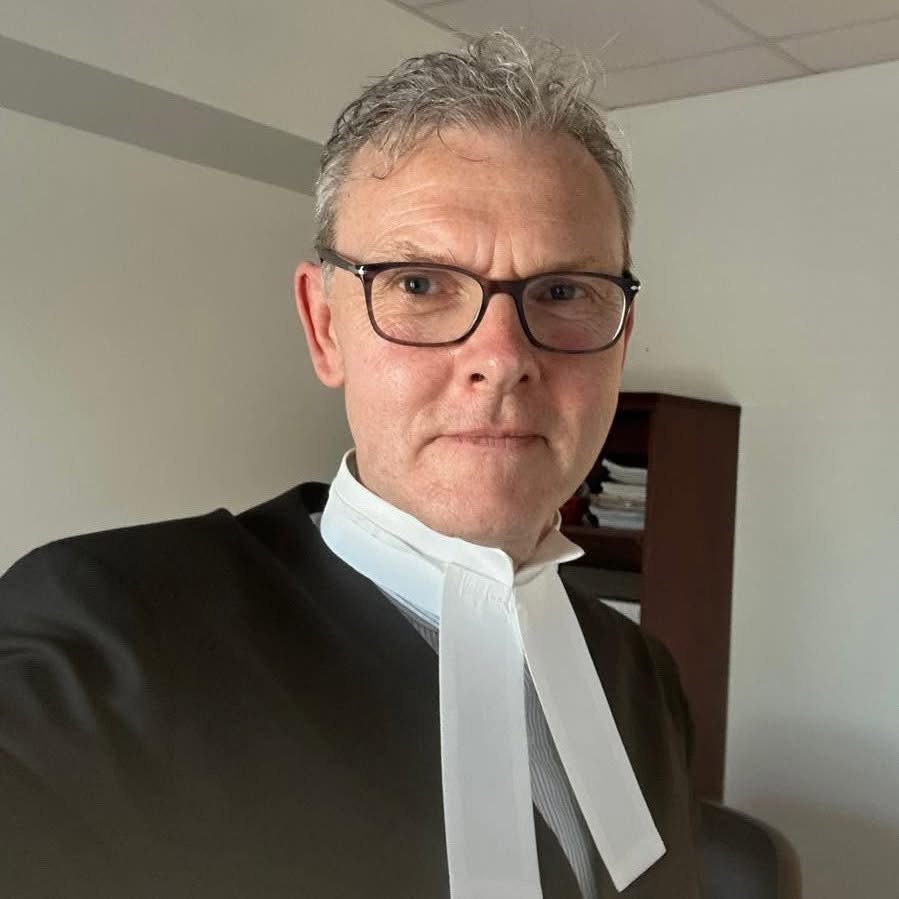
In his opening remarks, Special Prosecutor Martin Hackett said his office is determined to challenge impunity and will work with relevant stakeholders to deliver justice. He noted that the Gambia Bar Association shares that perspective and described the Gambian process as distinctive. Drawing on a PowerPoint presentation, he outlined an approach centered on domestic prosecution under domestic law while applying international standards.
Hackett brings extensive experience to the role. He practiced for 17 years at the Manchester Criminal Bar before taking a senior post in Kosovo as that country addressed war crimes committed during the conflicts of the former Yugoslavia. He has also served as a senior prosecutor at the international court in The Hague. He is currently advising Ukraine’s prosecutorial service on cases involving genocide, crimes against humanity, and sexual violence.
He stressed that the work ultimately depends on gathering evidence for victims and sitting with them to listen. He said that a victim-centered approach will guide the Special Prosecutor’s Office as it moves forward.
Earlier in the session, Neneh Cham Chogan, President of the Gambia Bar Association, reaffirmed the association’s commitment to the rule of law, which observers have characterized as a necessarily shared endeavor. She also underscored the Bar’s firm position on human rights.
Registrar General Abdoulie Colley placed the meeting in the broader institutional context. He reminded participants that the Special Accountability Mechanism was established in 2024 by the Gambian government in line with recommendations of the truth commission. The mechanism rests on three pillars: the Special Prosecutor’s Office, the Special Tribunal, and the Special Criminal Division of the High Court.
Colley said the early stage of the process offered a timely opportunity to strengthen legal practitioners’ and other key stakeholders’ knowledge of the Special Prosecutor’s Office. He urged those present to learn from one another, exchange experience and best practices, and consider the roles they can play as the accountability process advances.
The gathering marked the first formal engagement of its kind between the new prosecutorial office and the wider legal community. Organizers presented it as an opening step toward closer cooperation among the institutions charged with addressing serious crimes from the country’s past, while keeping victims’ accounts and evidence at the center of the work. Participants were encouraged to raise practical questions about procedure, coordination among the three pillars of the Special Accountability Mechanism, and applying domestic law to international crimes.
By convening lawyers, public legal officers, and students at the outset, the Special Prosecutor’s Office signaled an intention to build familiarity with its mandate before major casework intensifies. Hackett’s remarks linked that mandate to both local ownership and international practice, drawing on his prior roles in Kosovo, The Hague, and advisory work related to Ukraine. The Bar Association’s intervention reinforced the view that the effort depends on sustained professional engagement rather than on the prosecutor’s office alone.
No specific cases or timelines were announced during the session. The emphasis remained on institutional design, professional collaboration, and how evidence will be collected and assessed. Officials indicated that further outreach to stakeholders is expected as the Special Accountability Mechanism develops.