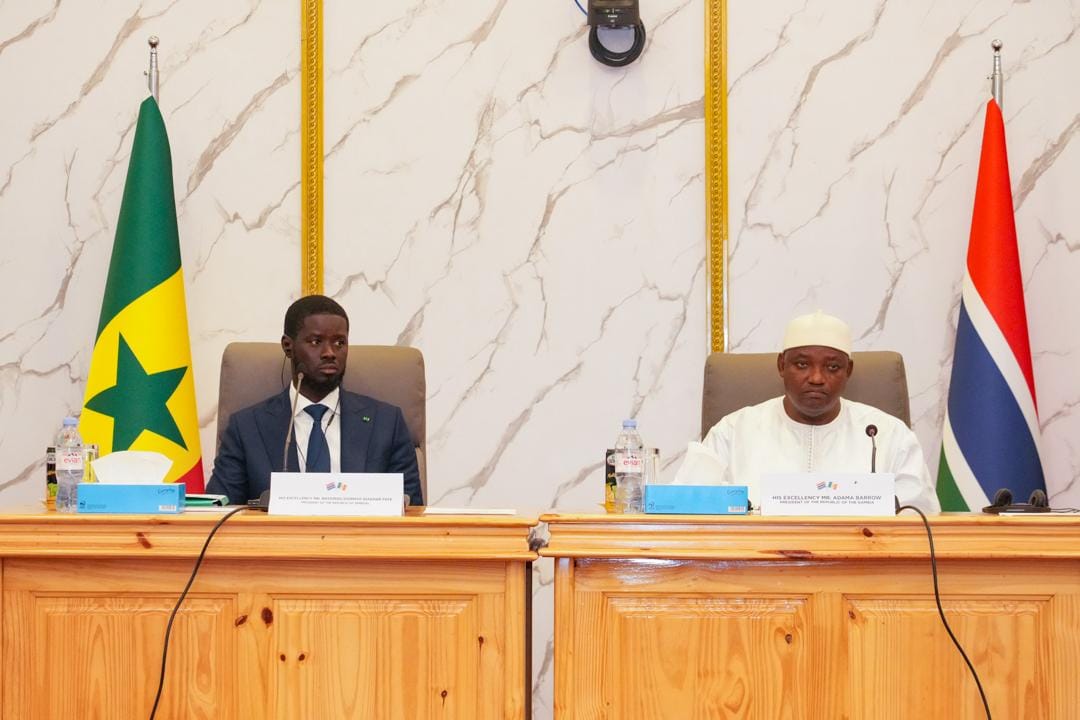
President Adama Barrow’s government announced Thursday that The Gambia and Senegal have made significant progress in resolving recent border disputes that disrupted farming communities along their shared frontier.
Following a visit by Foreign Affairs Minister Sering Modou Njie as special envoy to Senegalese President Bassirou Diomaye Faye, the two countries’ Border Commissions and the Senegalo-Gambian Permanent Secretariat held productive talks. Officials said the farmland issues affecting Gambian farmers have been amicably resolved through diplomacy. Farmers are now encouraged to return to their fields and continue cultivation while talks continue.
Government Spokesperson Ebrima G. Sankareh said Gambians must remain law-abiding and respect rules governing land use and cross-border movement. The Border Commissions, working with the Permanent Secretariat, will pursue sensitization, consolidation and reaffirmation of the boundary. The public will be updated as engagements advance.
The latest tensions flared in July 2026 when Senegalese security personnel entered the Gambian border village of Bullock in the West Coast Region and demolished part of a military post’s perimeter fence.
Reports followed of notices issued to farmers in communities including Jimbala Kerr Musa, Panchang Makka Gui and others, ordering them to vacate land claimed as Senegalese territory. The moves heightened anxiety among farming households mid-season.
The roughly 740-kilometer border, largely set by late-19th-century colonial agreements between Britain and France, runs through communities with deep family, linguistic and agricultural ties. For decades, residents farmed nearby land with limited disruption, though unclear demarcation, occasional military activity linked to Senegal’s Casamance conflict, and past trade or transit disputes have periodically created uncertainty.
The current resolution underscores the priority both governments place on dialogue and good-neighborly relations.