By: Momodou Gagigo
The Gambian government has announced it will hold the price of fertilizer steady at D1,100 per bag for the entire 2026 cropping season, injecting a massive D1.601 billion subsidy to shield farmers from sharp increases in international prices and supply chain disruptions.
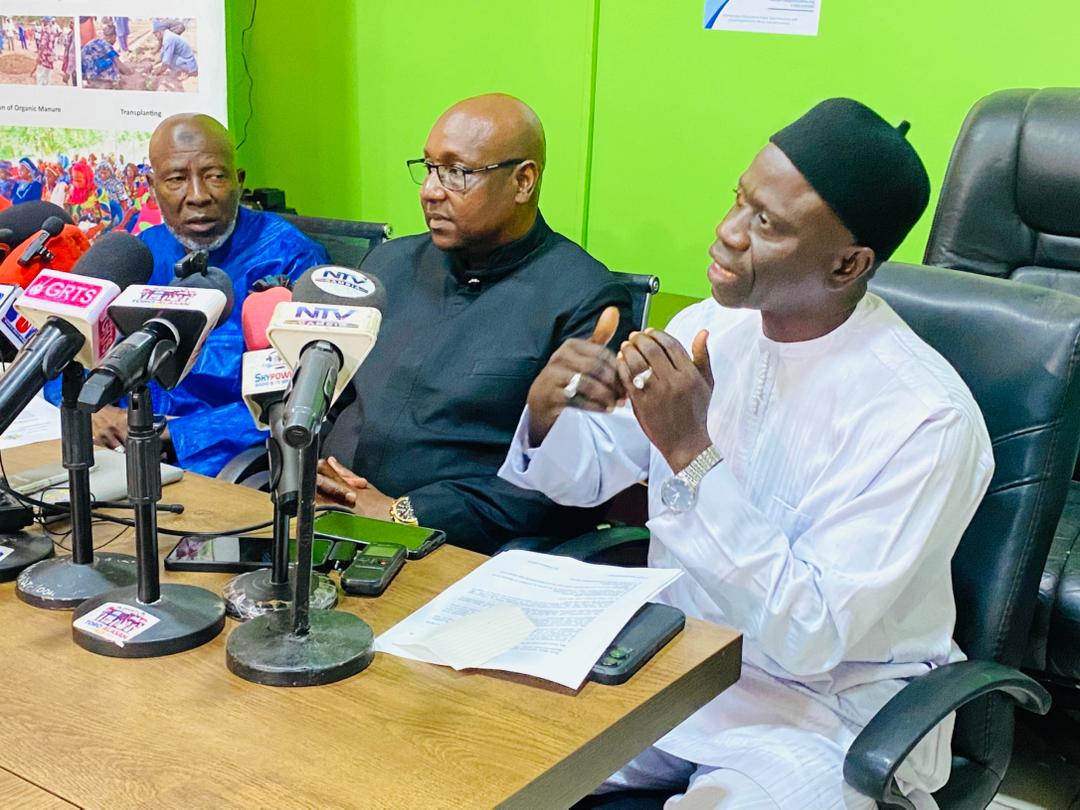
Agriculture Minister Demba Sabally, speaking ahead of the rainy season, said the decision reflects the government’s commitment to protecting local food production and farmers’ livelihoods at a time when many countries are grappling with higher input costs.
“Despite the increase in global fertilizer prices and challenges in international supply chains, the government has decided to maintain the price of fertilizer at D1,100 per bag for the 2026 cropping season,” Sabally stated. “To achieve this, we are providing a subsidy of D1.601 billion to support our farmers and safeguard agricultural production.”
The move comes as Gambian farmers continue to battle high production costs, volatile global commodity markets, and rising transportation expenses. Fertilizer, in particular, has become a major burden on smallholder farmers, who form the backbone of the country’s agricultural sector.
According to the minister, substantial quantities of fertilizer have already arrived in the country. The government has received 17,085 metric tons of NPK 15:15:15 and 4,000 metric tons of NPK 6:20:10, while the remaining allocation of Urea 46 percent is expected shortly.
“We have already received 17,085 metric tons of NPK 15:15:15 and 4,000 metric tons of NPK 6:20:10 fertilizer. The remaining allocation of Urea fertilizer will arrive shortly to ensure farmers have access to the inputs they need for the season,” Sabally said.
To prevent diversion and ensure the subsidy benefits genuine farmers, the government has imposed strict distribution and pricing controls. Subsidized fertilizer will only be sold through Seccos (cooperative societies) and authorized private agents. Retailers and farmers have been warned against selling above the official price of D1,100 per bag, with individual purchases capped at 25 bags unless special clearance is obtained from the Ministry of Agriculture.
“No farmer or dealer should sell fertilizer above the approved price of D1,100 per bag. We have also limited individual purchases to 25 bags unless authorization is granted by the Ministry. These measures are necessary to ensure fairness and equitable distribution,” the minister emphasized.
In a bold move to curb cross-border smuggling, the government has banned the movement of fertilizer across national borders. Security agencies, including the police, immigration, Gambia Revenue Authority (GRA), regional governors, chiefs, village heads (alkalolu), and farmer organizations, have been mobilized to enforce the directive.
“We will not tolerate the smuggling or diversion of subsidized fertilizer,” Sabally warned. “All relevant authorities have been directed to strictly enforce the ban on cross-border movement of fertilizer to ensure that these inputs benefit Gambian farmers.”
Beyond fertilizer, the government and its development partners are rolling out a broader support package that includes improved seeds for rice, maize, groundnut, cowpea, and findi, along with mechanization services and free fertilizer under various agricultural projects.
The Ministry has urged farmers to buy only from approved outlets and to use the inputs efficiently to maximize yields.
Agriculture remains the cornerstone of The Gambia’s economy, employing a large portion of the population and playing a vital role in rural development and food security. Stakeholders believe that keeping fertilizer affordable is crucial for boosting productivity and reducing reliance on food imports.
With the 2026 farming season approaching, officials say the combination of price controls, strict monitoring, and anti-smuggling measures will help ensure that subsidized inputs reach those who need them most, ultimately strengthening the nation’s agricultural output and household food security.