By Fatou Dahaba
In a powerful display of cross-party consensus, members of The Gambia’s National Assembly have strongly condemned the rising tide of hate speech and tribal rhetoric, warning that unchecked divisive language poses a serious risk to the country’s peace, stability, and hard-won national cohesion.
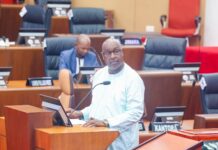
Leading the charge, Hon. Kemo Gassama, National Assembly Member for Lower Badibou, presented a Matter of the Day during Tuesday’s sitting, delivering a passionate call for immediate action against what he described as “dangerous, divisive, and destructive” behavior.
Gassama declared that hate speech “must never be tolerated in any civilized society,” stressing that such rhetoric breeds mistrust, fans hostility, and erodes the spirit of unity that Gambians have nurtured since independence.
The lawmaker expressed particular alarm that much of the inflammatory language is being “fueled and amplified by politicians and individuals occupying positions of influence and authority.” He reminded colleagues that those aspiring to leadership bear a special responsibility to act as agents of peace rather than division.
Leaders, he said, have both a moral and constitutional duty to reject hate speech unequivocally.
“The Gambia is a nation blessed with diversity,” Gassama told the Assembly. He highlighted how the country’s various ethnic groups have coexisted peacefully for generations—intermarrying, trading, worshipping, and contributing together to national progress. This diversity, he argued, should be embraced as a source of strength, not weaponized for political gain. Gassama called on the government to enforce existing laws against hate speech and tribal incitement fairly and without favoritism, ensuring accountability for all offenders regardless of status.
Several lawmakers rose in support, signaling broad parliamentary concern. Hon. Gibi Mballow of Lower Fulladu West insisted that hate speech and tribalism must not be tolerated from any quarter—whether from leaders or ordinary citizens—and urged Parliament to send an unambiguous message that such conduct has no place in Gambian democracy.
Hon. Almameh Gibba of Foni Kansala drew on religious principles, noting that both Islam and Christianity explicitly reject tribalism and hatred. He called for greater honesty and consistency when confronting inflammatory statements, irrespective of their source.
Hon. Omar Jammeh went further, describing hate speech as “an indicator of violence” that could undermine the peace and stability for which The Gambia is internationally respected. He urged relevant parliamentary committees to hold state institutions accountable whenever such incidents occur.
Contributing to the debate, Hon. Lamin Ceesay of Kiang West warned that divisive rhetoric is increasingly poisoning communities, institutions, and political spaces, often driven by selfish political calculations. He appealed to fellow lawmakers to speak out forcefully before tribalism further damages the country’s social fabric and national integrity.
In his closing remarks, Hon. Gassama issued a broader call to action, urging political leaders, religious authorities, youth groups, civil society organizations, and ordinary citizens to redouble their efforts to promote peace, tolerance, and mutual respect.
“Let us work together to safeguard the peace and stability of our beloved country for present and future generations,” he said.
The session underscored a rare moment of unity in the National Assembly on a matter many view as critical to preserving Gambia’s multi-ethnic harmony amid growing online and offline polarization.
Observers say the strong collective stance sends a clear signal that lawmakers across party lines are determined to confront division before it escalates.